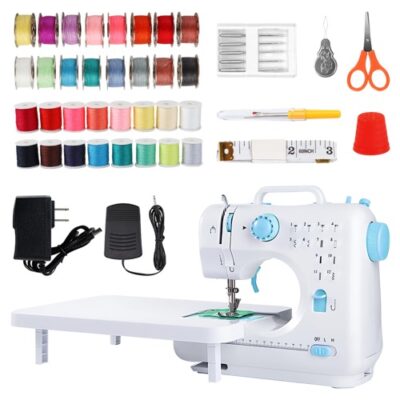
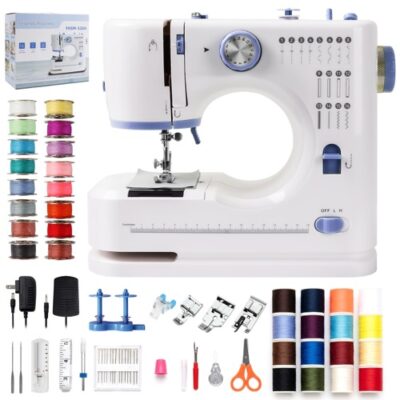
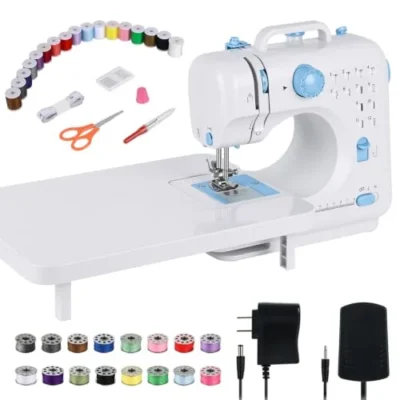
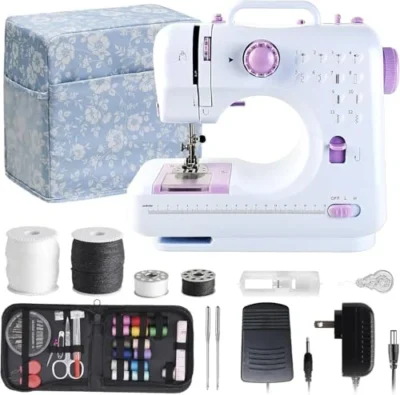
The best mini sewing machine is the one that covers a small, specific job without making the setup harder than the repair. For tiny straight-stitch storage, consider the Magicfly Mini. For reverse and more selections, compare the Rxmeili 12-Stitch and purple Ninonly 16-Stitch. If a table-supported package matters most, inspect Ninonly’s blue 12-stitch offer. The expanded assessment also covers Sew Mighty, KPCB, Flying Banana, Dechow and kidoom. None is an automatic substitute for a full-size beginner machine.
The compact options at a glance
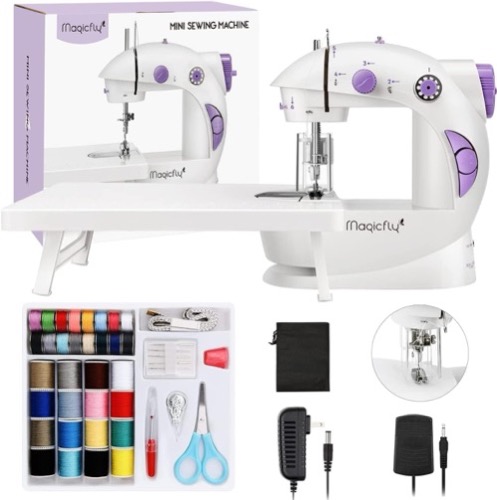
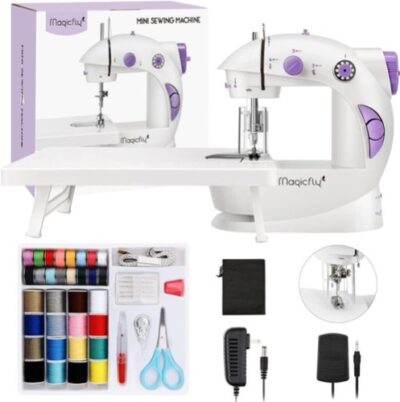
Magicfly Mini
A conditional choice for forward straight stitching and easy storage; no reverse or zigzag.
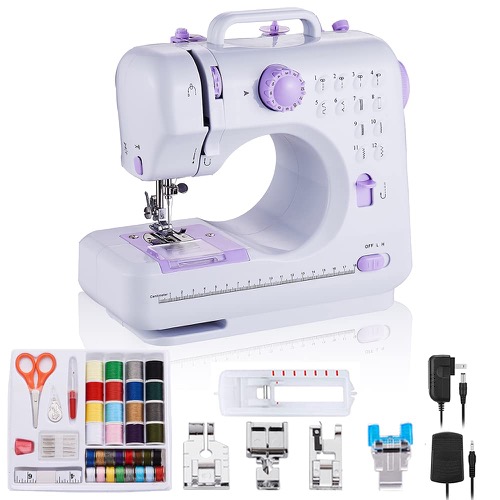
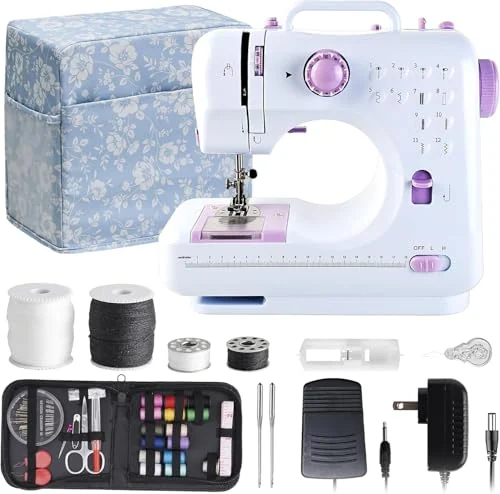
Rxmeili 12-Stitch
Reverse and selected patterns offer more repair options, with pedal and threading reservations.
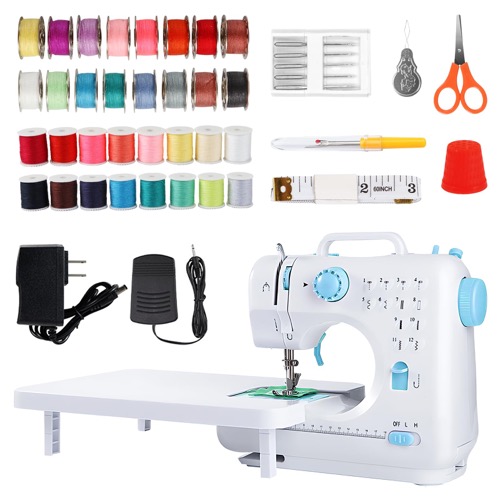
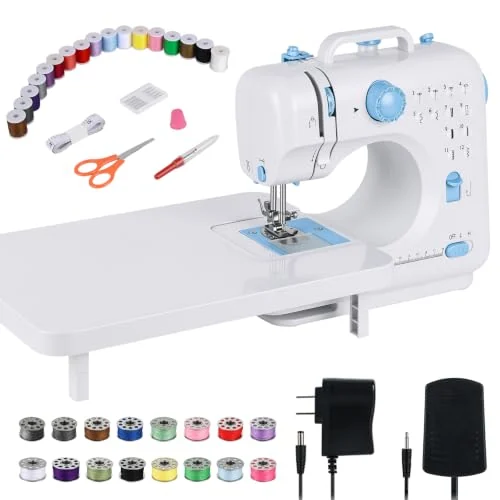
Ninonly 12-Stitch with Table
The blue package adds a table; reverse still needs exact-model confirmation.
Choose a format before choosing a bundle
This shortlist covers tabletop electric minis. A handheld stitcher is a different tool, and a portable full-size machine is not automatically a mini. If you already plan to make clothes regularly, start with our beginner sewing-machine shortlist and compare the usable controls and workspace. A machine that occupies less shelf space can still be harder to thread or guide.
Choose by the work and controls you need, with the model-specific limits kept in view. A larger kit, more advertised stitch choices or a smaller body does not establish a better machine. This shortlist does not rank current prices or claim a measured reliability winner.
On a narrow screen, scroll across the table to compare all columns.
| Your first requirement | Candidate to inspect | What could reverse the choice |
|---|---|---|
| Very small storage and a straight seam | Magicfly Mini | You need zigzag, reverse or independent stitch adjustment. |
| Light mending with reverse | Rxmeili 12-Stitch | The selected low speed or switch-like pedal feels uncomfortable. |
| An included support table | Ninonly blue 12-Stitch | Reverse is essential and cannot be confirmed. |
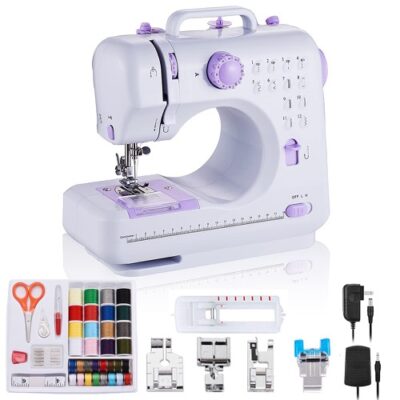
| More selected patterns with reverse | Ninonly purple 16-Stitch | Your existing spools do not fit or regular sewing needs more room. |
Magicfly: choose the storage advantage deliberately
Magicfly’s one-stitch design is easy to understand on paper. Owners report sleeve alterations, light hems and small crafts, often valuing how easily the machine stores. The difficulty comes later: small thread guides, sensitive tension and the missing backstitch can turn a simple repair into a longer session.
The brand’s illustrated Mini manual is a useful advantage because it shows the actual setup. That does not cancel reports of persistent jams or failed replacements. Choose Magicfly only when the forward-only sewing brief genuinely suits the project. The table does not turn it into a machine for large quilts or thick seams.
For a setup away from an outlet, compare the adapter, battery and USB requirements before treating portability as cordless or rechargeable operation.
Rxmeili: reverse is useful, pedal control is personal
Rxmeili’s B08SCC5JH7 listing documents reverse, two speeds and adapter or AA-battery operation. Retained owners describe cushion covers, shirts and scrunchies. Others describe thread loss, failed bobbin pickup and power trouble. A greater number of controls is useful only when you can repeat the sewing routine successfully.
Pay particular attention to stopping and restarting. Some detailed accounts describe the pedal as an on/off switch and the low setting as quick. The Magicfly versus Rxmeili comparison explores that decision directly. The separate green Rxmeili listing has not been pooled into this recommendation.
Ninonly: decide between the table and documented controls
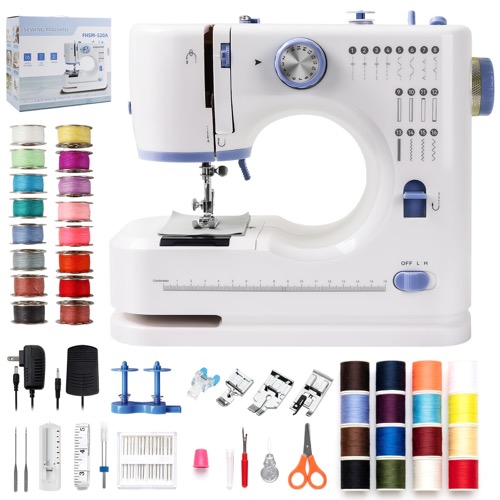
The blue 12-stitch package includes an extension table and receives positive comments about small projects and storage. Its sample is small, and reverse was not established from the exact listing material checked. The purple 16-stitch model explicitly lists reverse and has owner reports of light garment alterations, but not a confirmed included table.
That is a practical tradeoff, not a reason to assume the higher stitch number is always better. Four additional patterns do not prove better feeding or durability. Read the Ninonly 12 versus 16 comparison when these two offers are on your shortlist.
The MEGLE FHSM-505 has useful light-repair reports, but instructions, early faults and an unresolved adapter-voltage field keep it out of the leading choices. The Stoigeld SM-725 supplies practice materials, but repeated jamming and early failures weaken its case. Its file also required removing unrelated sink-accessory reviews.
What about the CraftBud already in our catalog?
The existing CraftBud Mini review remains another starting point for a kit-focused buyer. It is not newly ranked here because this batch did not repeat its current listing and owner-evidence audit. Keeping that distinction visible avoids promoting an older assessment into a fresh comparison without the necessary check.
Use the first week to check recovery, not just sewing
- Complete one suitable scrap seam. Use the matching instructions and a material appropriate for the machine.
- Change both threads. A machine that only works with its factory setup has not yet demonstrated a usable ownership routine.
- Exercise the controls you bought it for. Check reverse where documented, the selected stitch patterns, stopping and table fit.
- Inspect the project’s folded join. A flat fabric sample does not reproduce a hem crossing an existing seam.
- Act on persistent faults. A repeated jam after correct basic checks deserves support, not endless guessing or forced handwheel turns.
The mini sewing-machine setup guide helps organize those checks. If the same concerns keep coming up—too little room, no gradual control, limited stitch adjustment—use the mini versus full-size guide to reconsider the format before buying a different small bundle.
Other reviewed options and why they are not automatic upgrades
On a narrow screen, scroll across the table to compare all columns.
| Exact model review | Reason to compare | Reason to hesitate |
|---|---|---|
| Sew Mighty Mighty Multi | Reverse and a 12-pattern dial | Alignment and control concerns in selected accounts |
| Sew Mighty Mighty Mini | Simple forward straight-seam brief | No reverse; thread changes can expose setup difficulties |
| Original KPCB Mini | Practice-kit arrangement for small straight seams | Original model is forward-only; table and rethreading concerns |
| Flying Banana 202 | Basic one-stitch compact format | Bobbin pickup, cords and abnormal-start reports |
| Dechow 12-Stitch | Small project and table-supported use | Mixed pedal, reverse and early-operation accounts |
| kidoom 16-Stitch | Specific patterns and a twin-needle claim | Instructions and permitted twin-needle settings need clarity |
| kidoom 39-Stitch | Potentially useful additional chart entries | Headline count does not establish unique stitch shapes |
Compare the question that matters to your project
KPCB or Magicfly?
Compare the original straight-stitch kits by documentation, table support and useful practice supplies.
Mighty Mini or Multi?
Compare Sew Mighty formats before buying a forward-only machine for a backtacking routine.
kidoom 16 or 39?
Inspect the chart and controls before treating the larger number as an upgrade.
Plan the first job before buying
Use the children’s teaching-setup guide, denim and folded-hem guide, stitch terminology guide and not-stitching symptom guide for the questions a product list cannot answer. The mini sewing machine reviews bring together the published model assessments.
What the additional mini-machine evidence changes
The new offers do not justify making this shortlist longer by default. The MIRABIN table package has a specific case for small practice projects, with owner-reported support from the table and an important attachment complaint. Its reverse function is listed, but the machine still has mixed setup experiences.
We would not choose the Royalsellpro kit for a child on accessory count: its supplied feedback includes failures and smoke reports. For the distinction between its package and a familiar small starter, see the Royalsellpro versus KPCB assessment.
Before paying for an extra table, check what an extension table actually improves. It can support fabric without increasing the machine’s seam clearance or motor capability.
A new option for guided small home projects
The JUCVNB 12-stitch offer adds concrete customer examples of placemats, pillow covers and tote bags, plus appreciation for tutorials and the LED. It joins this conditional shortlist for that learning-and-project role, with the reported sticking, reverse and foot-attachment problems kept visible in its card.
We have not promoted every newly reviewed mini. The Yiamalen package comparison and BJSWNLY comparison help buyers who specifically need to weigh table support against a smaller setup; their stitch totals do not establish a stronger all-purpose recommendation.