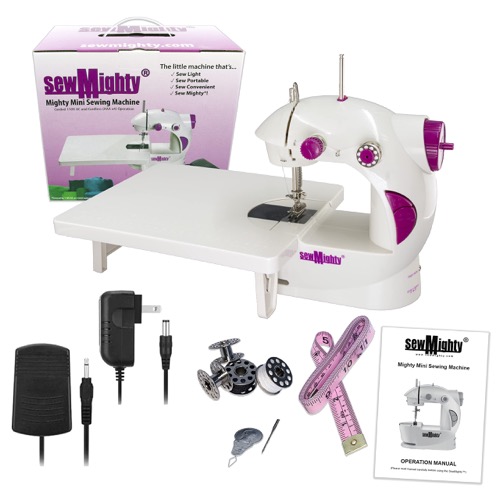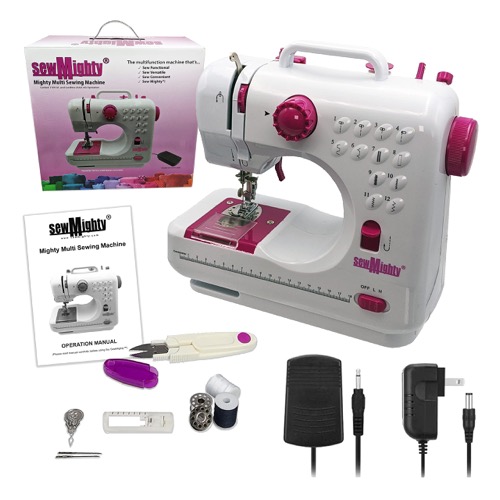
The Mighty Mini and Mighty Multi solve different storage-versus-function compromises. The Mini is the smaller straight-stitch option. The Multi adds a pattern selector and reverse. Those additions matter when your repair needs a different stitch or convenient backtacking, but neither turns a small machine into a dependable thick-seam specialist.
The differences that change a repair
On a narrow screen, scroll across the table to compare all columns.
| Decision | Mighty Mini — B07YBFQSB4 | Mighty Multi — B08C9R6Z9Z |
|---|---|---|
| Stitch choice | One forward straight stitch | 12 listed patterns |
| Securing the end | Plan the finishing method; no reverse lever | Reverse is available, although owners report mixed operation |
| Working routine | Fewer selections to understand, with threading and tension still required | More controls to match to the job and identify in the instructions |
| Fabric support | Small body and extension table need a stable surface | Table support helps positioning but does not establish seam capacity |
Where the Mini earns its place
Selected Mini accounts describe doll clothes and small occasional repairs. Its appeal is storing a basic stitch maker where a larger machine would be inconvenient. A small, light project also asks less of the table than a hanging garment. The owner who used it in an RV noted that larger fabric could move the machine: compact storage does not remove the need for a stable sewing station.
Choose it only if forward straight stitching covers the intended work. A beginner still has to route the thread, seat the bobbin and test tension. Several supplied accounts describe rethreading or trouble after changing thread; the absence of a pattern dial is not the absence of setup.
What the Multi adds—and what remains uncertain
The Multi gives you a more useful range when the job calls for a listed non-straight pattern or reverse. Selected owners describe clothing repairs, a dog-bed project and successful reverse use. Other accounts report needle alignment, spool handling and difficulty identifying dark dial markings. These are individual experiences, not a measured defect rate.
A stitch menu is valuable only when you can select and use it comfortably. Inspect the exact pattern chart before assuming it contains the seam or edge finish you want. A reported successful wool project does not establish reliable feeding over your own folded seam, and a potholder account specifically describes a thickness limit.
Check starting and stopping before fabric choice
Both supplied files include accounts of unexpected operation or early failure. They justify checking the controls and return arrangements; they cannot establish how frequently a problem occurs across all units sold. Stop using a unit that behaves abnormally instead of trying to work around its controls.
Choose by the seam you need
Read the Mighty Mini review for the storage-first tradeoff and the Mighty Multi review for the selector and reverse limitations. The stitch terminology guide helps distinguish a selectable pattern from a marketing application count. For repeated garment construction, compare the full-size alternative before spending time adapting work to either small bed.