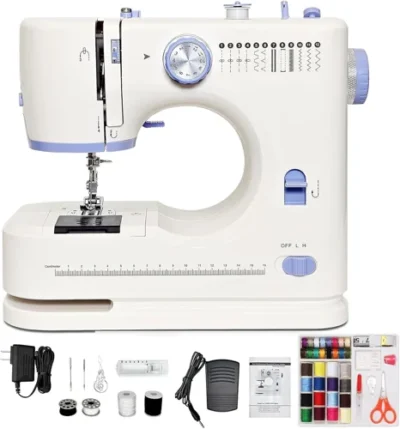
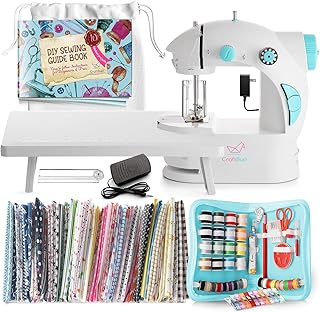
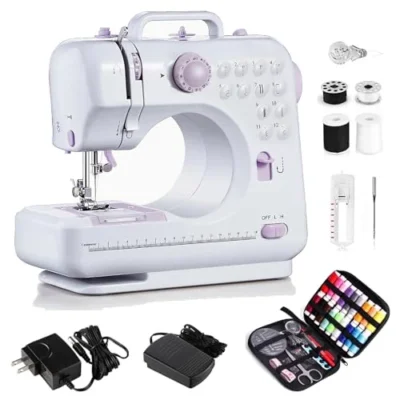
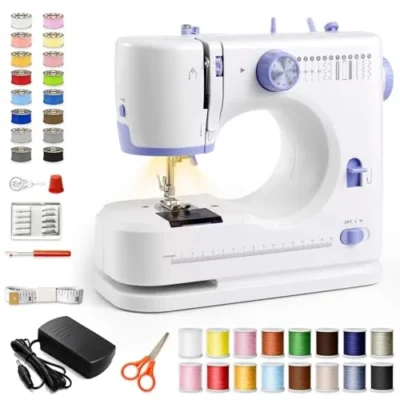
KPCB Tech Mini Review: Practice Fabrics, a Finger Guard and Fixed-Stitch Limits
At a Glance
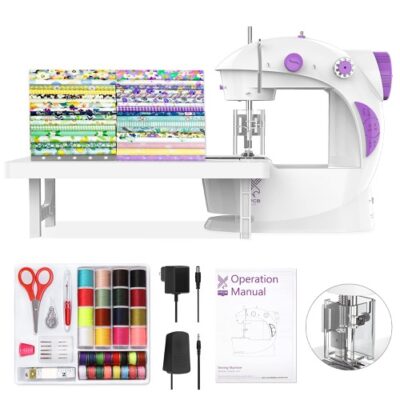
KEY FEATURES
- Original Mini, not Mini 2.0
- Forward straight sewing without reverse
- Listed finger guard and cotton practice squares
- Slow and standard speeds
PROS
- Practice materials offer a concrete starting task
- Reported curtain and pajama hems
- Small footprint for occasional sewing
CONS
- No reverse or stitch variety
- Tension and lower-thread pickup complaints
- Table and pedal faults in supplied accounts
Editorial Rating
Based on supplied customer reviews and verified product documentation
Price and availability subject to change
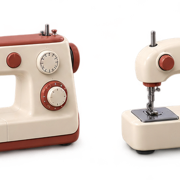
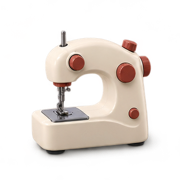
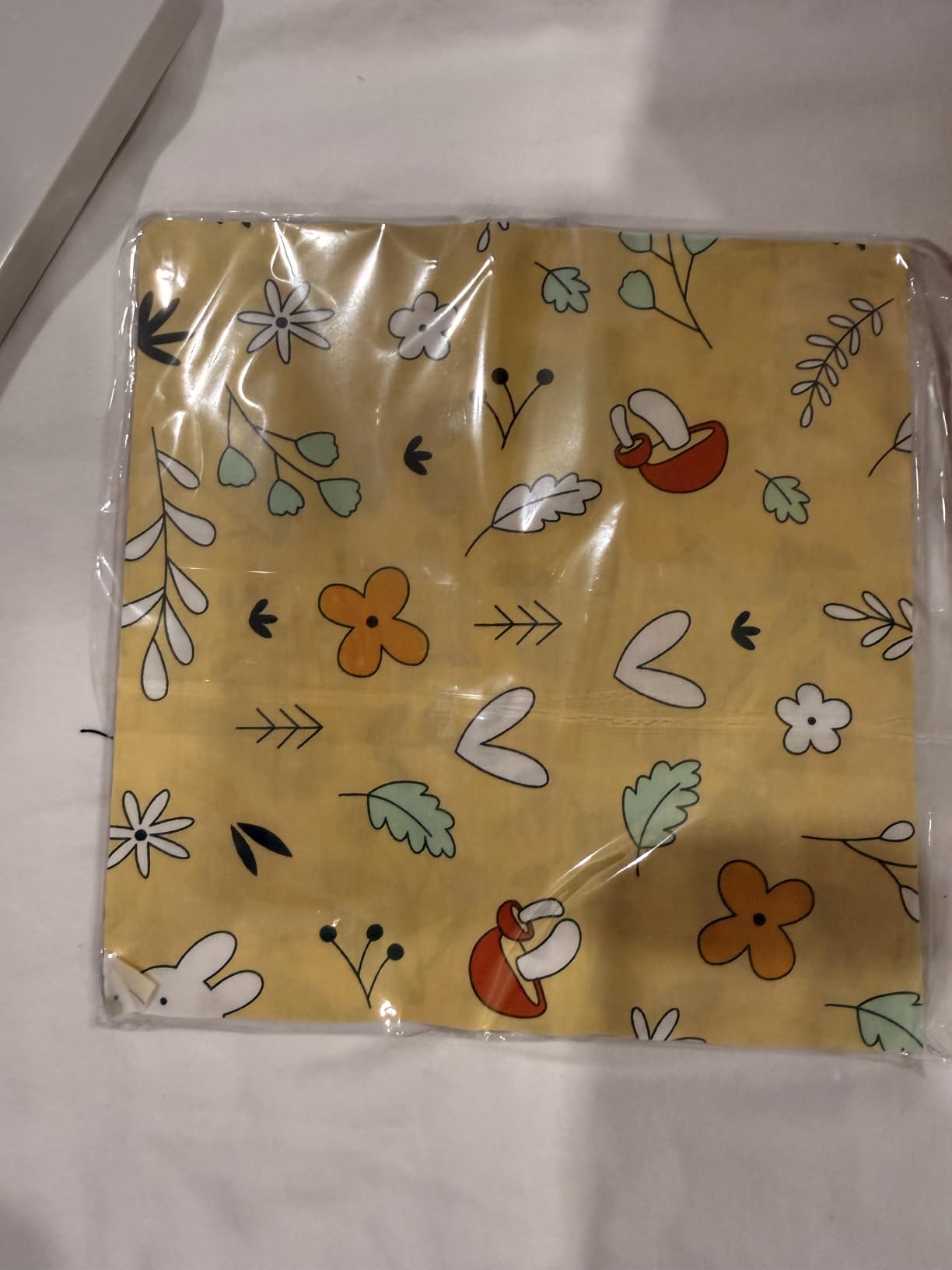
The original KPCB Mini package includes practice fabric and a finger guard. Those are concrete teaching aids, but they do not make the machine a complete sewing course or establish a suitable age. Its forward-only stitch and the adult’s ability to manage threading decide what the first lessons can cover.
Choose the adult-led lesson before the machine
A guard and a small body can make the package inviting, but visibility, stopping and rethreading still matter. Our guide to teaching with a mini machine explains that decision. The KPCB versus Magicfly comparison examines two forward-only options without pretending that their similar appearance proves identical construction.
Original Mini and Mini 2.0 are not interchangeable specifications
The B07GX87P1K offer advertises a finger guard, cotton practice squares and two speeds. Owners repeatedly identify forward-only sewing and no reverse. KPCB’s product range contains other models, so a video showing backstitch on another version is not evidence that this one has it.
| Included aid | What it does not establish |
|---|---|
| Finger guard | Independent child suitability or protection from every moving part. |
| Cotton practice squares | A dependable layer limit across different fabrics. |
| Small support table | The ability to carry the weight of a large project. |
Practice squares should lead to an independent setup
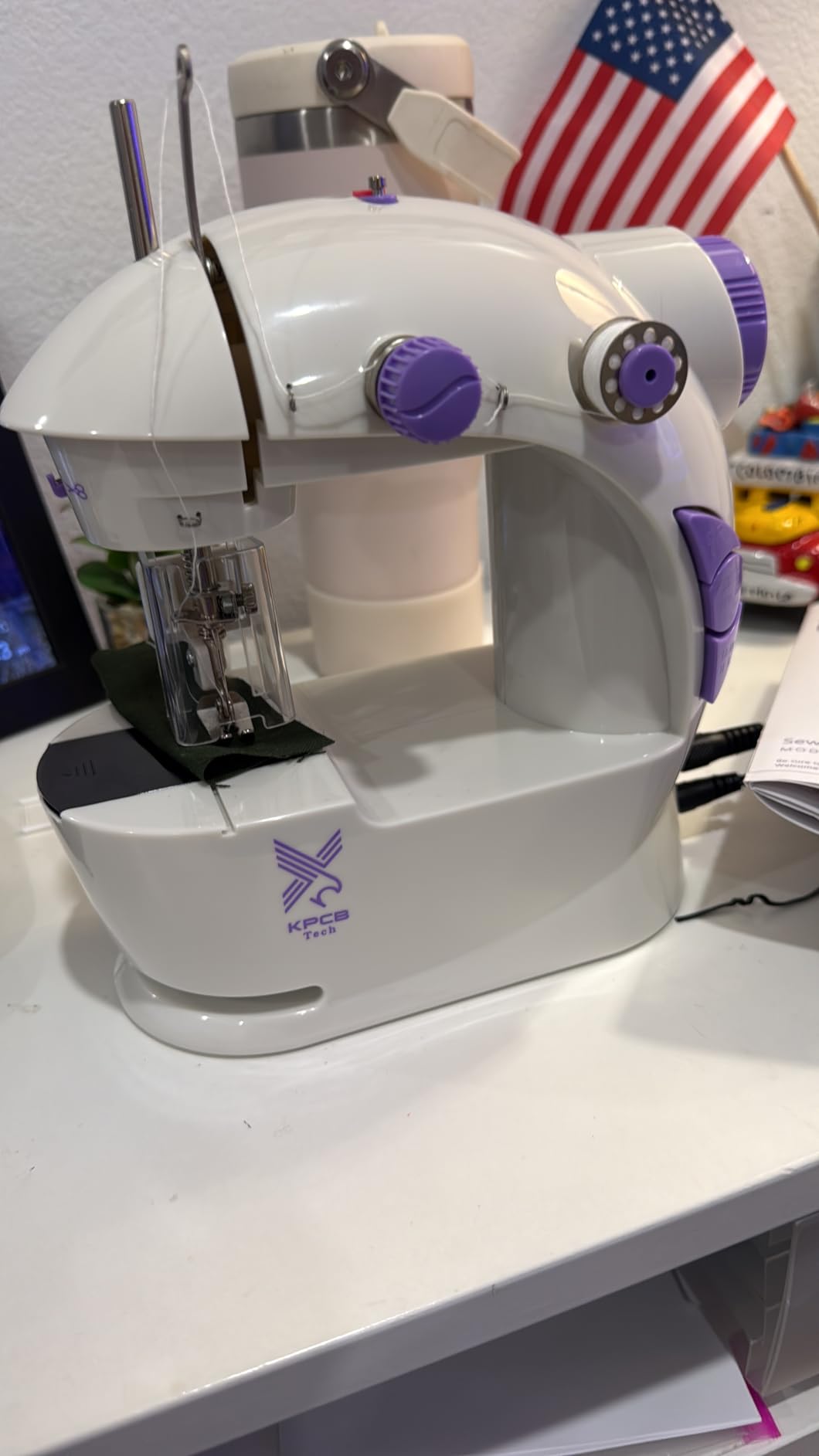
Twenty selected accounts from the 100-text source inform this assessment. Some owners complete curtain hems, pajama hems and patches. Others find that thread loss turns a short project into a long session. One detailed account describes repeated rethreading after a promising start, followed by moving to a larger machine.
The same file includes successful learning with tutorials. That supports checking whether the matching explanation makes sense to you. It does not justify blaming every unsuccessful unit on the person operating it. A machine that repeatedly fails after the correct basic setup needs support.
Curtain and pajama hems show the narrower everyday role
A curtain hem can contain a much thicker intersection than the flat curtain fabric. A tiny doll garment can require awkward turns. The listing’s layer claim is not a measured capacity test across those constructions. Start with the actual folded seam and the ability to guide it normally.
Owners also describe a table that moves or buckles and a pedal that stops working early. Other accounts praise a replacement supplied by customer service. We keep those observations separate: service can resolve a purchase problem, but it does not establish how long the original machine lasted.
Customer photos
Pros & Cons Analysis
Based on supplied customer reviews and verified product documentation
Pros
- The kit can support a first lesson. The listing includes cotton squares and a finger guard. Those are practical aids for supervised practice, provided the delivered contents match the offer and the adult understands the controls.
- Specific light hems have succeeded. Owners describe shortening curtains and pajama pants. These modest completions are more useful evidence than a broad claim that the machine can handle every material named in an advertisement.
- It stores between short tasks. Users appreciate retrieving a small machine for patches or occasional work. Someone who rarely sews may reasonably value that convenience, while still needing a firm surface and adequate fabric support.
Cons
- The fixed stitch arrives at its limits early. No reverse is repeatedly identified by owners. The original Mini cannot acquire a backstitch through a tension adjustment, and Mini 2.0 features should not be transferred to this listing.
- Threading recovery divides users. Some owners praise tutorials; others spend repeated sessions resolving tension or lower-bobbin pickup. A factory-prepared sample is not enough to establish whether the next thread change will be manageable.
- Accessories do not establish dependable operation. Reports include a failed pedal and a table that buckles under pressure. Replacement-service praise is separate from machine performance, and a machine damaged by a fall is not evidence of spontaneous failure.
Our Verdict
A practice kit for a bounded lesson
The kit is most relevant when an adult can demonstrate the setup and select manageable pieces. A guard does not remove the need for supervision, and a small shell is not evidence that small hands can reach every control.
For a learner who already needs reverse, the original Mini is too restricted. For a short straight-sewing exercise, weigh the useful practice supplies against reported bobbin-pickup, pedal and table problems.
Technical Specifications
| Primary functions | Occasional light sewing |
|---|---|
| Built-in stitches / applications | Forward straight stitch |
| Speed control | Slow and standard settings listed |
| Needle threader | Separate tool |
| Warranty | Confirm seller and regional coverage |