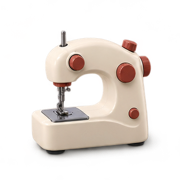
Magicfly Mini Review: Tiny Straight Stitching with Real Limits
At a Glance
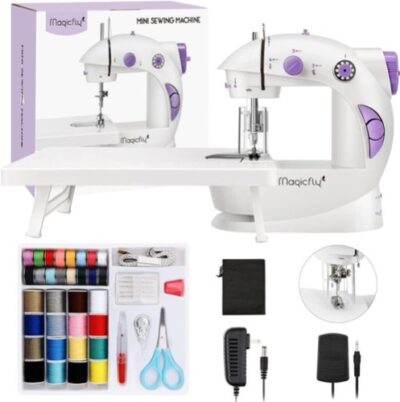
KEY FEATURES
- One fixed forward straight stitch; no reverse
- Two speed settings with button or pedal operation
- Adapter or four AA batteries
- Extension table, sewing kit and manufacturer video support
PROS
- Very compact storage for occasional sewing
- Successful light repairs in the owner sample
- Adapter and battery options
- Model-specific manual and tutorial resources
CONS
- No zigzag, reverse or stitch-size adjustment
- Threading and tension can take patience
- Small work area and foot clearance
- Recurring jams and failed units in supplied feedback
Editorial Rating
Based on supplied customer reviews and verified product documentation
Price and availability subject to change
The useful question about the Magicfly Mini is what happens after its first ready-threaded seam. Owners describe a machine that is unusually easy to store, but not always easy to restart after changing thread. Its illustrated manual gives buyers a concrete advantage when learning that routine; the single fixed stitch sets an equally concrete limit.
After the supplied thread runs out
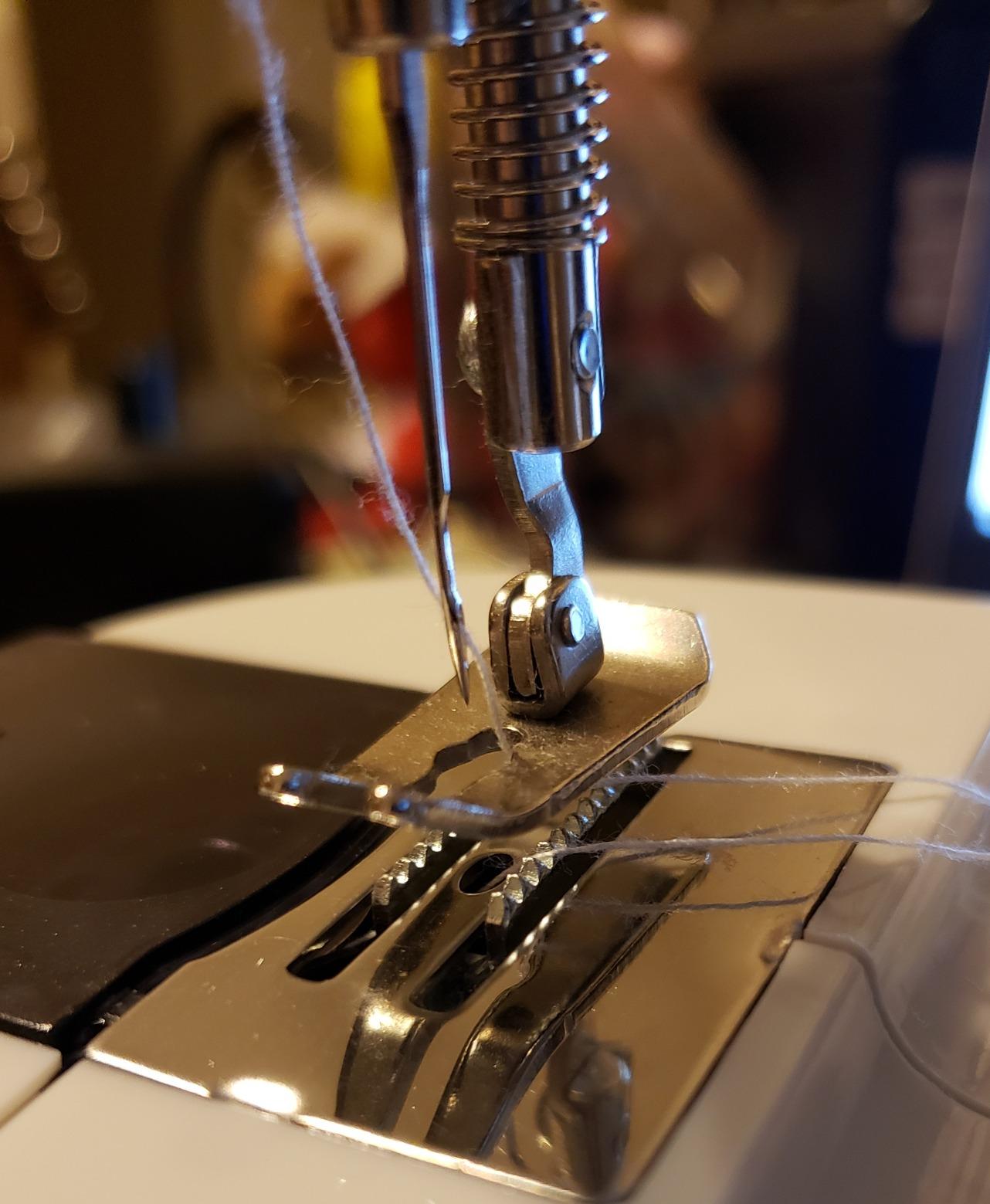
The supplied file contains 100 texts; 91 retain useful observations after screening. Some describe years of occasional mending, while others struggled to finish even a first project. The most useful distinction is what happened after the original thread ran out. Owners mention awkward small guides, difficult spool changes and trouble finding a workable tension.
Magicfly’s illustrated manual shows a specific upper route and side-to-side needle threading. The upper bobbin holder and lower bobbin do not even unwind in the same direction. That is why a generic mini-machine video can be misleading. Our mini-machine setup guide explains which checkpoints require the exact diagram.
Positive accounts of learning with a child do not establish independent child suitability. The manual calls it a sewing machine, not a toy, and requires adult supervision around children. A small body and a needle guard do not remove the need to supervise the moving needle and controls.
What you give up for a machine this small
The exact Amazon listing explicitly rules out reverse and adjustable stitch dimensions. This is also a different product from Magicfly’s 12-stitch machines. Counting accessories or reading feedback about another Magicfly does not add functions to this white B07MQTP258 listing.
Several owners were surprised by the missing backstitch. Think through how you will secure the ends of the particular seam before starting. Simply pressing the operating button again continues forward sewing; it does not create a reverse cycle. A fixed straight stitch also cannot become a stretch stitch through a tension adjustment.
| Your intended task | What to establish first |
|---|---|
| Shortening a lightweight sleeve | The folds and existing seam must fit and feed, not just the flat cloth. |
| A small craft pouch | Check the fastening and seam-finishing needs before cutting fabric. |
| Practicing straight lines | Confirm that the slower setting feels manageable and you can stop promptly. |
The extension table cannot carry the whole project
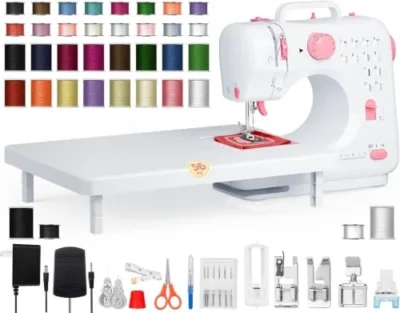
Some buyers appreciate the additional surface; others report folding legs or a table that shifts. Check the delivered fit on a firm surface before allowing fabric weight to pull on it. The table cannot enlarge the opening inside the machine or create more clearance beneath the presser foot.
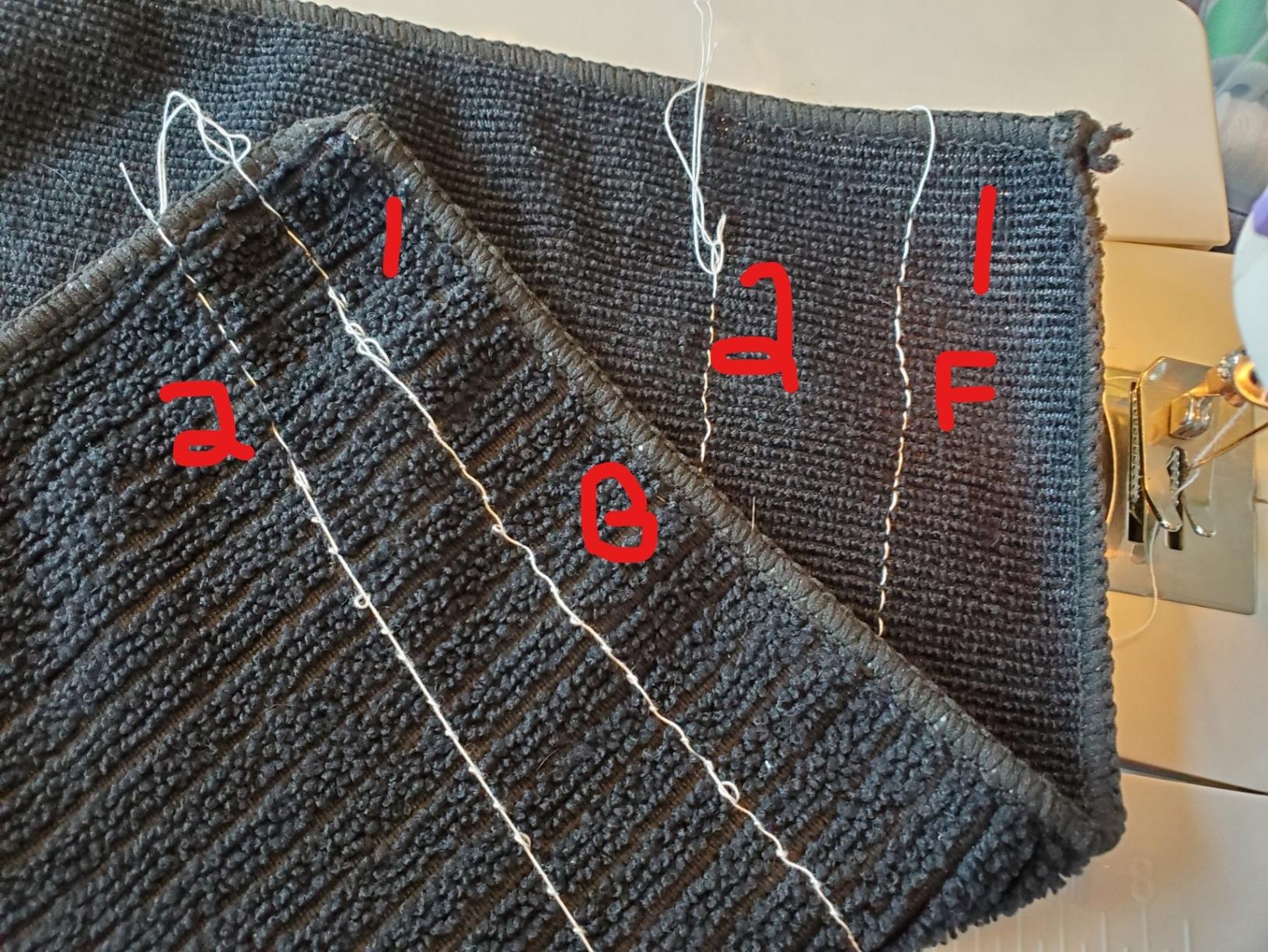
Reports of successful heavier fabric coexist with failed denim work and jamming at seam intersections. We have not run material tests or measured failure rates. Treat those conflicting experiences as a reason to keep the intended workload modest, rather than as a promise that a particular layer count will work.
If reverse and additional stitch choices are essential, compare the Rxmeili 12-Stitch in our Magicfly versus Rxmeili comparison. For frequent sewing, the mini versus full-size guide is the more useful next decision than buying another accessory kit.
Customer photos
Pros & Cons Analysis
Based on supplied customer reviews and verified product documentation
Pros
- A machine you can put away. Owners describe shelf, tote and small-apartment storage. That helps when a small repair would otherwise require unpacking a larger station.
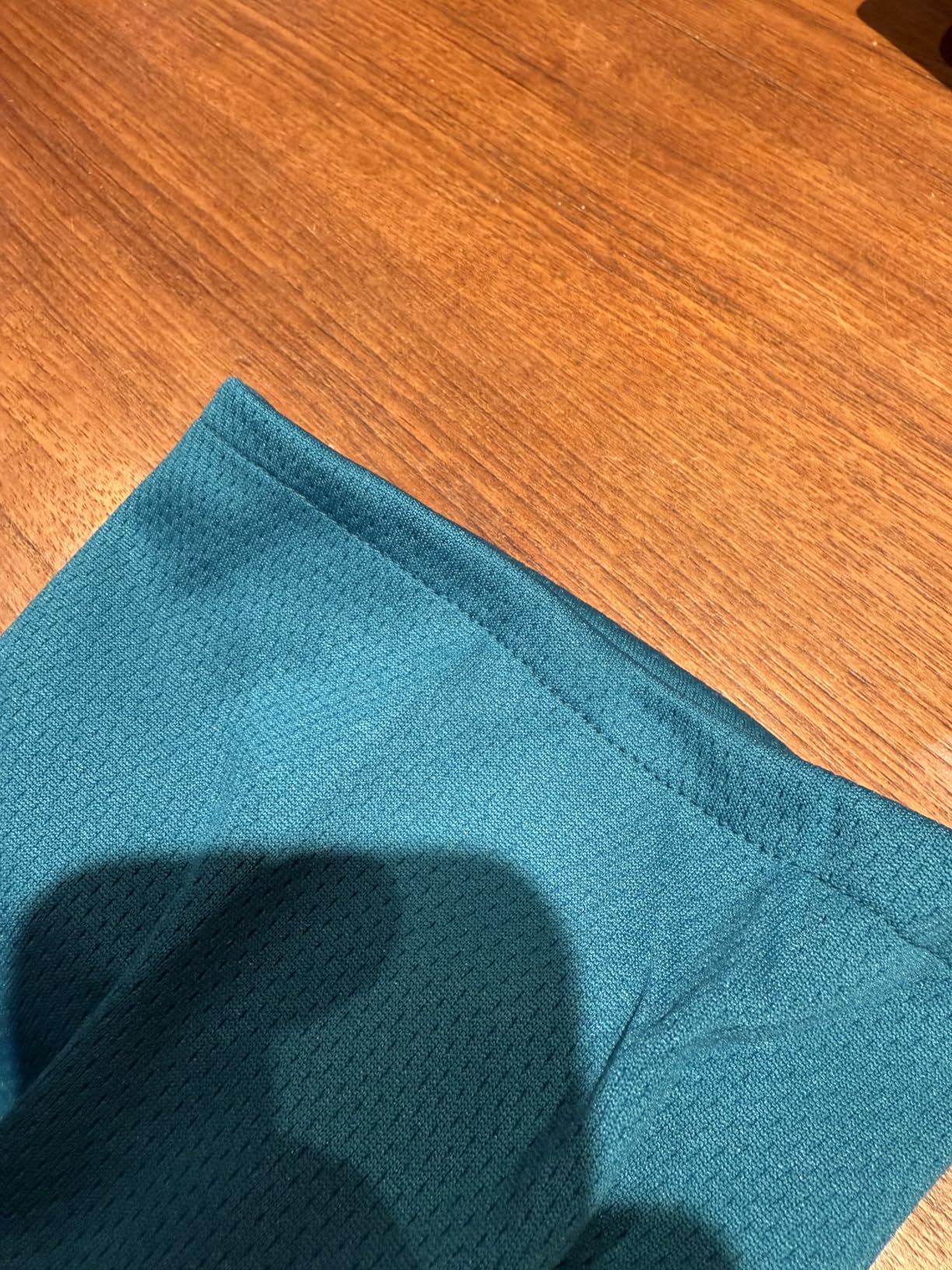
- Useful small completions. Reported successes include sleeve alterations, light hems and doll projects. These support a limited sewing brief, without making every hem equally manageable.
- Choice of power and start control. Battery operation can serve a location without an outlet. The button and pedal provide alternative ways to start; the pedal should not be mistaken for variable-speed control.
- Help beyond a folded leaflet. Magicfly publishes illustrated instructions and videos. Several owners recovered after correcting the thread route, making exact-model guidance a practical part of the purchase.
Cons
- Seam endings need planning. There is no reverse lever or zigzag selection. A buyer expecting familiar backstitching or stretch-seam options can reach the machine’s limits before attempting a complicated project.
- Changing thread can interrupt progress. Small guides, spool handling and sensitive tension recur in the feedback. The supplied prethreading makes the first sample easier than learning to rethread independently.
- Bulk is a physical constraint. Owners report difficulty at folded joins and under the foot. A flat fabric sample does not establish that a complete garment seam will pass comfortably.
- Some problems persist after setup. Reports include repeated jams and replacement machines that also failed. Tutorials are useful, but the evidence does not justify blaming every unsuccessful unit on its owner.
Our Verdict
Where Magicfly earns its place
For a few sleeve repairs or ribbon additions each year, a compact machine with an identifiable manual has a credible purpose. The owner who recovered after correcting the needle-threading direction illustrates the value of that support. Reports of persistent jams and failed replacements prevent us from treating every problem as a missed instruction.
Choose the Mini only after deciding that a forward straight stitch covers the work. If reverse or zigzag is necessary, this is a feature mismatch rather than a skill to learn around.
Technical Specifications
| Machine class | Compact domestic mini sewing machine |
|---|---|
| Control type | Mechanical controls |
| Primary functions | Light repairs and small sewing projects |
| Built-in stitches / applications | One forward straight stitch |
| Speed control | Two selected speeds |
| Maximum stitch length | Fixed; numeric length not confirmed |
| Maximum stitch width | Straight stitch only |
| Needle threader | Separate handheld threading tool |
| Bobbin / looper system | Lower bobbin with cover; exact manual insertion direction |
| Buttonholes / eyelets | No documented buttonhole program |
| Extension table | Included in exact listing; inspect fit |
| Warranty | Confirm exact seller and regional coverage; no verified term supplied |