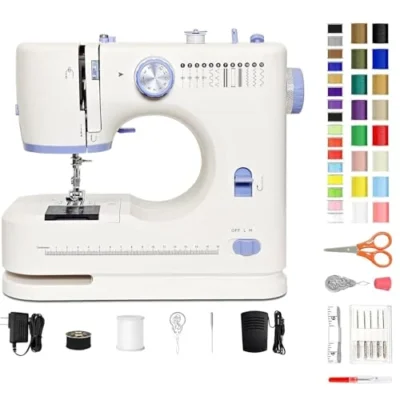
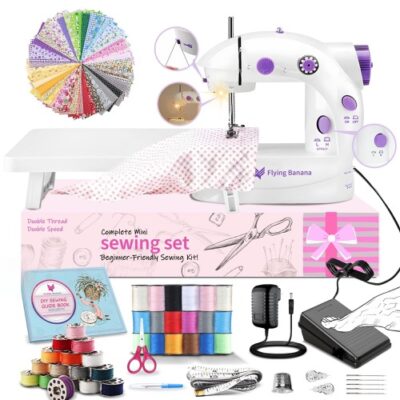
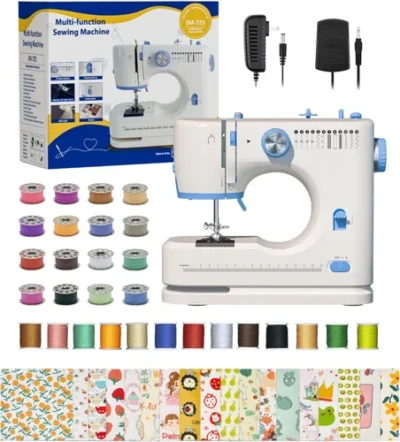
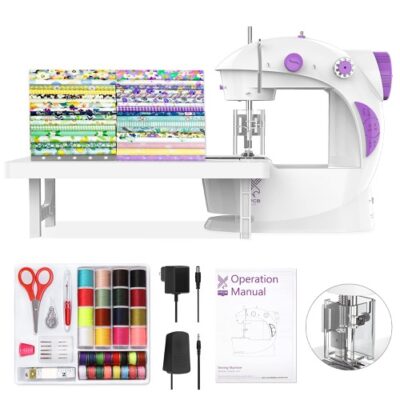
kidoom 16-Stitch Review: Twin-Needle Interest, Small-Control Tradeoffs
At a Glance
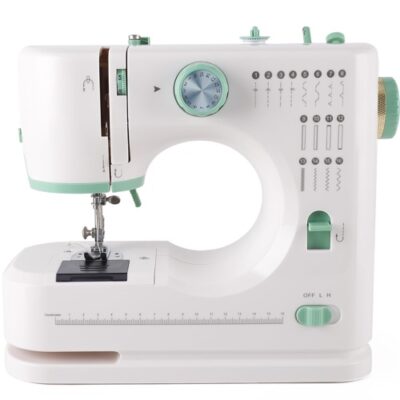
KEY FEATURES
- 16 selected stitches and reverse
- Advertised twin-needle support with two spool holders
- Two speeds with pedal or machine start
- Light, winding and small accessory storage
PROS
- Useful basic sewing accounts
- Twin-needle option in a small format
- Easy storage for occasional use
CONS
- Cramped threading and poor instructions reported
- Selected stitch dimensions may be limited
- Small pedal and fragile twin needles reported
Editorial Rating
Based on supplied customer reviews and verified product documentation
Price and availability subject to change
Twin-needle capability is the feature that makes the kidoom 16-stitch worth a closer look. It is also a feature that needs more than two spools in a photograph: the compatible needle, foot clearance and permitted settings must be established for this exact machine. Owners’ outcomes range from useful experimentation to needle breakage.
Start with the permitted twin-needle setup
The B0DSPVW6BF listing describes two spool holders and twin-needle sewing. That differs from ordinary double-thread language, which can simply mean upper and lower threads. Confirm the compatible needle and permitted settings before trying the feature.
One owner enjoyed parallel stitching but broke both supplied twin needles while ordinary needles remained usable. Another experienced user was interested in the feature but preferred a more capable machine for expanding skills. Those accounts do not establish the reason for breakage or show that every stitch selection is compatible.
The last thread guides are a physical-access issue
This assessment uses twelve selected accounts from a 43-text source. A dog-bed project and clothing repairs provide useful small-task examples. More detailed accounts also describe awkward access to the last thread guides and a manual that assumes too much prior knowledge.
One experienced operator found the numbered marks on the body more helpful than the diagram. That is an observation about this unit, not a replacement threading sequence. Match every guide to the exact instructions and disconnect power before working around the needle.
Two speed positions do not describe the pedal’s feel
| Buyer expectation | What the evidence says |
|---|---|
| A gradual pedal | Owners describe an on/off pedal; impressions of pace differ. |
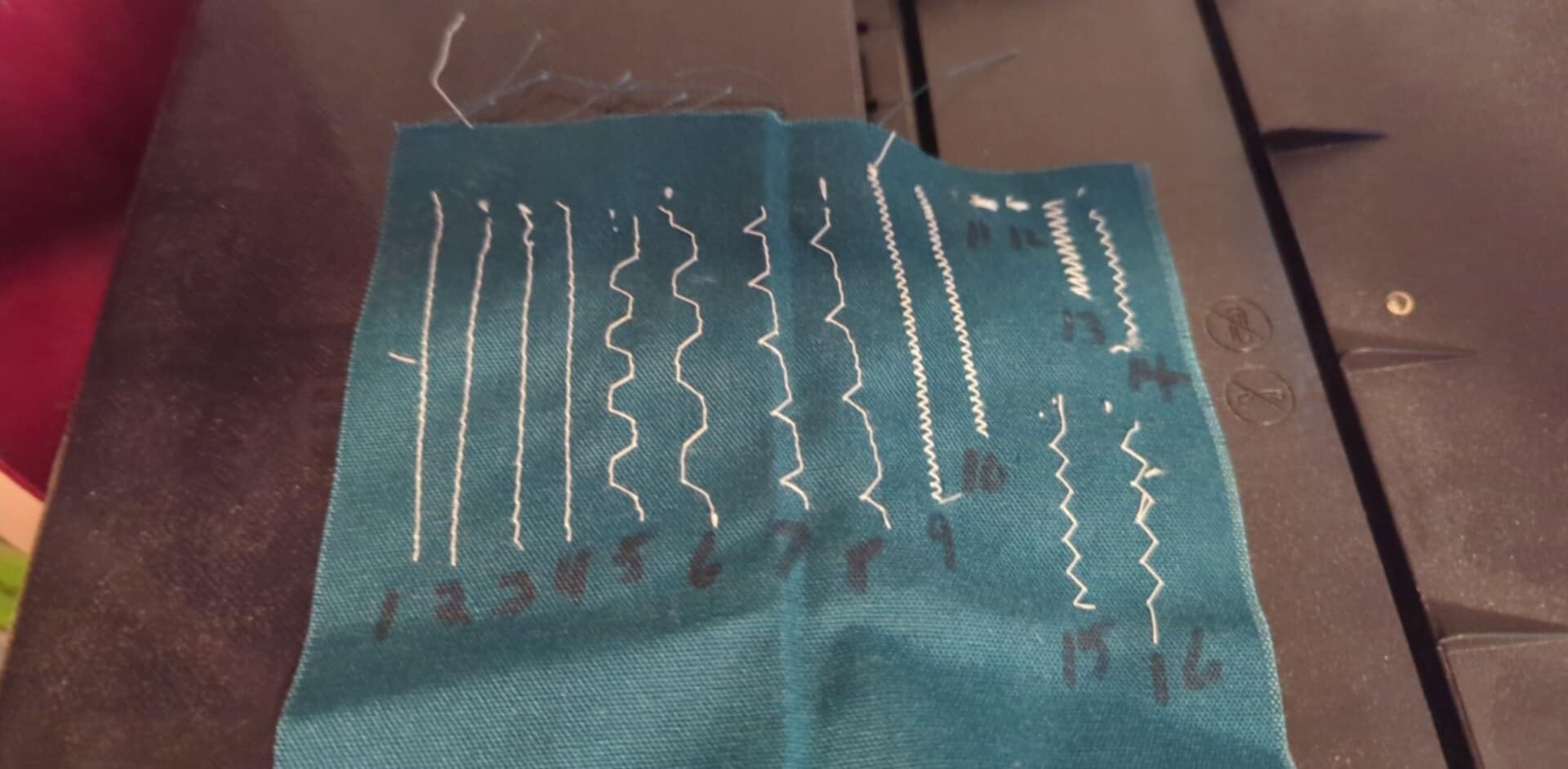
| Sixteen freely adjustable patterns | One detailed account describes fixed selections. Verify the actual adjustment controls. |
| A large accessory drawer | An owner finds the storage too small for the supplied tools. |
The low/high switch and pedal should not be assumed to behave like a full-size electronic speed control. One account reports that the pedal remains active with the front switch in its off position. Use the matching instructions and disconnect power for setup; an “off” label alone is not a reason to work around a connected needle mechanism.
A dog bed is better evidence than a stitch-count promise
Several users value the very light body for limited workspace or occasional sewing. Other accounts describe feeding difficulty around small corners and inconsistent instruction quality. A small garment or pouch can still demand precise control, even if it uses little fabric.
The kidoom 16 versus 39 comparison explains what the larger stitch claim and table add. Read the stitches and twin-needle guide before treating either feature as a guarantee of more useful seams.
Customer photos
Pros & Cons Analysis
Based on supplied customer reviews and verified product documentation
Pros
- The feature serves a specific interest. Owners who wanted to experiment with parallel stitching appreciated twin-needle capability. It remains necessary to establish the compatible needle, foot and permitted stitch settings from the exact instructions.
- Basic completions are reported. One owner made a dog bed, and others describe clothing adjustments. These modest examples support occasional work without establishing broad material capacity or long-term durability.
- Storage is a credible advantage. Experienced users note how easily the machine moves and stores. A buyer who sews infrequently may value that more than a large decorative menu, provided the small controls remain comfortable.
Cons
- The final threading steps are cramped. A detailed owner found numbered marks more useful than the manual but still struggled around the needle. The small body can make a routine change harder than it looks in product photographs.
- Sixteen choices do not prove free adjustment. An experienced account describes preset patterns without independent adjustment. Confirm the exact controls before buying for a specific stitch length or width.
- A pedal is not necessarily a gradual speed control. Experienced owners describe limited pace choices and an on/off pedal response, while other users find the speed manageable. Buyers accustomed to varying speed continuously with their foot may find that more restrictive than the stitch menu suggests.
- Twin-needle interest comes with a setup burden. Some supplied owners welcomed parallel stitching; others reported broken twin needles. Those outcomes do not identify a common cause. Confirming the permitted needle, foot and settings is part of evaluating this feature, particularly for a learner attracted by the double-needle claim.
Our Verdict
Who has a reason to choose the 16-stitch kidoom?
A buyer with a specific parallel-stitching interest may find the feature worth investigating. Someone seeking freely adjustable stitch dimensions should first resolve the experienced owner’s description of preset patterns.
The small needle area and switch-like pedal remain meaningful compromises for ordinary sewing too. The twin-needle option adds value only when its permitted setup is clear and the operator can comfortably use it.
Technical Specifications
| Primary functions | Occasional light sewing |
|---|---|
| Built-in stitches / applications | 16 selected stitches |
| Speed control | Two speeds; on/off pedal in owner accounts |
| Needle threader | Separate tool |
| Warranty | Confirm seller and regional coverage |