Sew Mighty Mighty Mini Review: Forward Stitching for a Very Small Sewing Brief
At a Glance
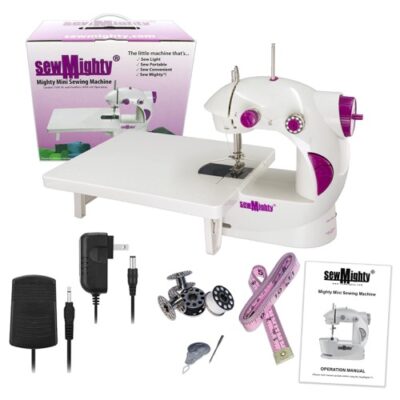
KEY FEATURES
- One forward straight stitch
- Two speeds with pedal or machine start
- Bobbin winder and work light
- Adapter or AA-battery operation
PROS
- Easy to store between occasional jobs
- Reported doll clothes and short hems
- Basic controls introduce machine sewing
CONS
- No reverse or zigzag
- Thread tension can complicate fabric removal
- Light frame can move with larger fabric
Editorial Rating
Based on supplied customer reviews and verified product documentation
Price and availability subject to change
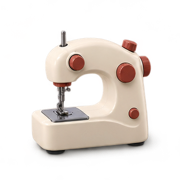
The Mighty Mini’s strongest case is unusually small work in unusually limited space. Owners describe tiny doll clothes and use in an RV. The same compactness creates a different problem when a larger piece of fabric pulls the machine around or leans on its accessory table.
RV storage is useful; a hanging garment still needs support
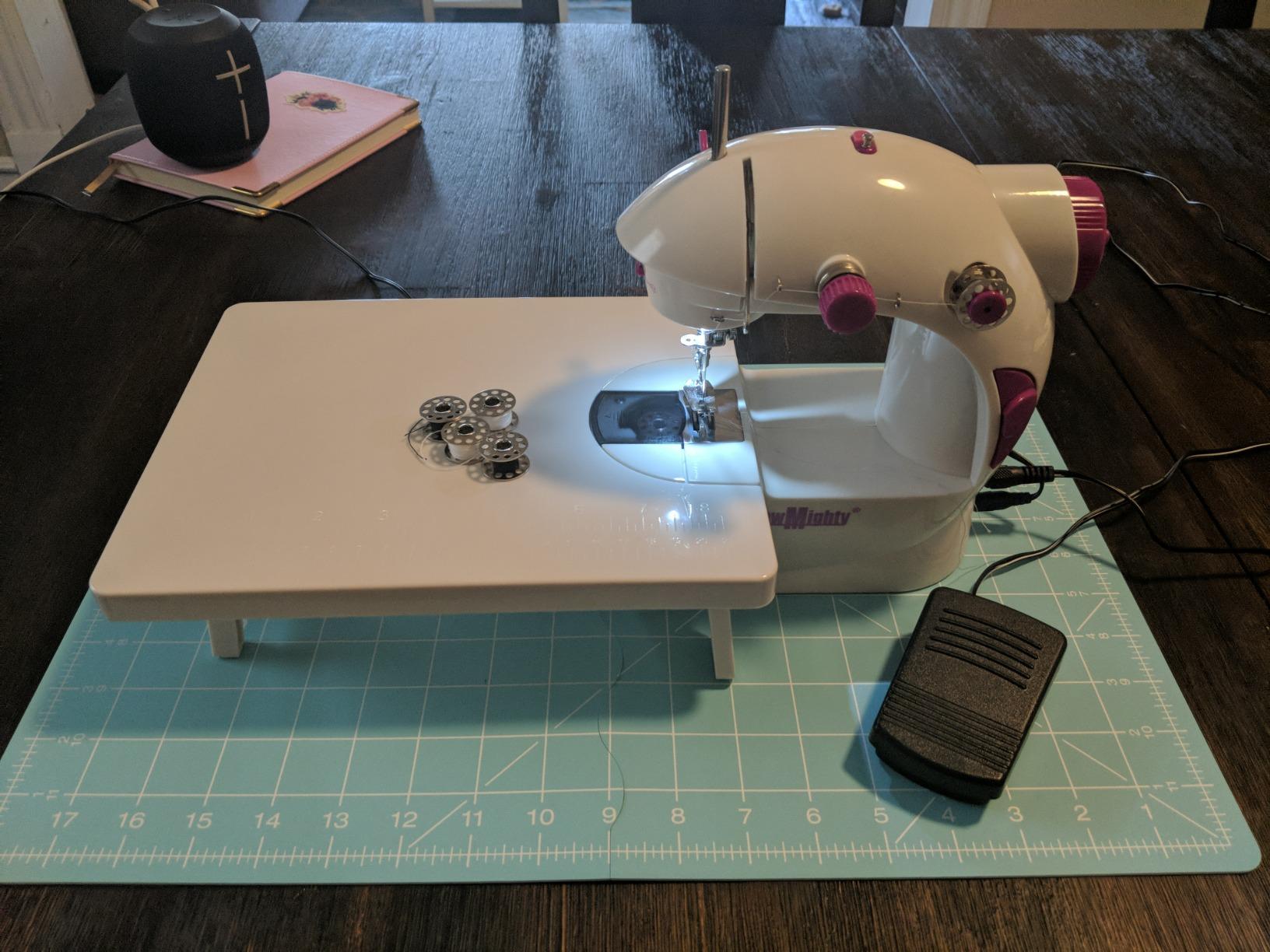
An RV owner was happy with repeated use but noted that larger fabric made the machine move. Another beginner appreciated an extension table but said it could collapse when leaned on. Accessory contents vary across the supplied accounts, so verify the current offer rather than assuming every historical box includes the same surface.
A firm support and manageable fabric weight matter. If the work repeatedly pulls the machine around, the answer may be a different working arrangement. Forcing the fabric or adding more speed does not establish better control over the seam.
Tiny projects must still work with one forward stitch
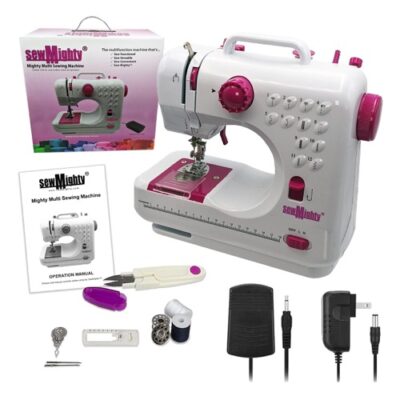
The exact original Mighty Mini listing describes two speeds, a light and bobbin winding. “Two speed” does not mean two stitches. It also does not promise the gradual pedal response of a full-size machine. One detailed beginner account found both selected speeds quick.
Removing the fabric can expose the threading difficulty
The source contains 100 supplied texts; fifteen selected accounts underpin this assessment in detail. Some owners completed many small projects. Others had a good first session and then could not reproduce it after changing thread or starting another piece. These reports are not a measured failure percentage or proof of a common cause.
One owner describes the lower thread failing to catch after the original roll was replaced. Others mention high tension and difficulty pulling the work away. A different owner found a thread change helpful after repeated breakage. The useful lesson is to check the full matching route and suitable supplies, not to assume every fault can be solved by buying different thread.
A child’s interest does not establish the right teaching machine
Several accounts describe learning with children; others describe a frustrating first experience because of threading or breakage. We do not treat those ages as suitability recommendations. A supervising adult needs to understand the controls, needle area and thread changes before choosing this as a teaching machine.
Use the mini-machine teaching guide to assess that fit. For a clearer specification comparison, read Mighty Mini versus Mighty Multi. If reverse is already essential to your planned routine, the distinction settles much of the decision.
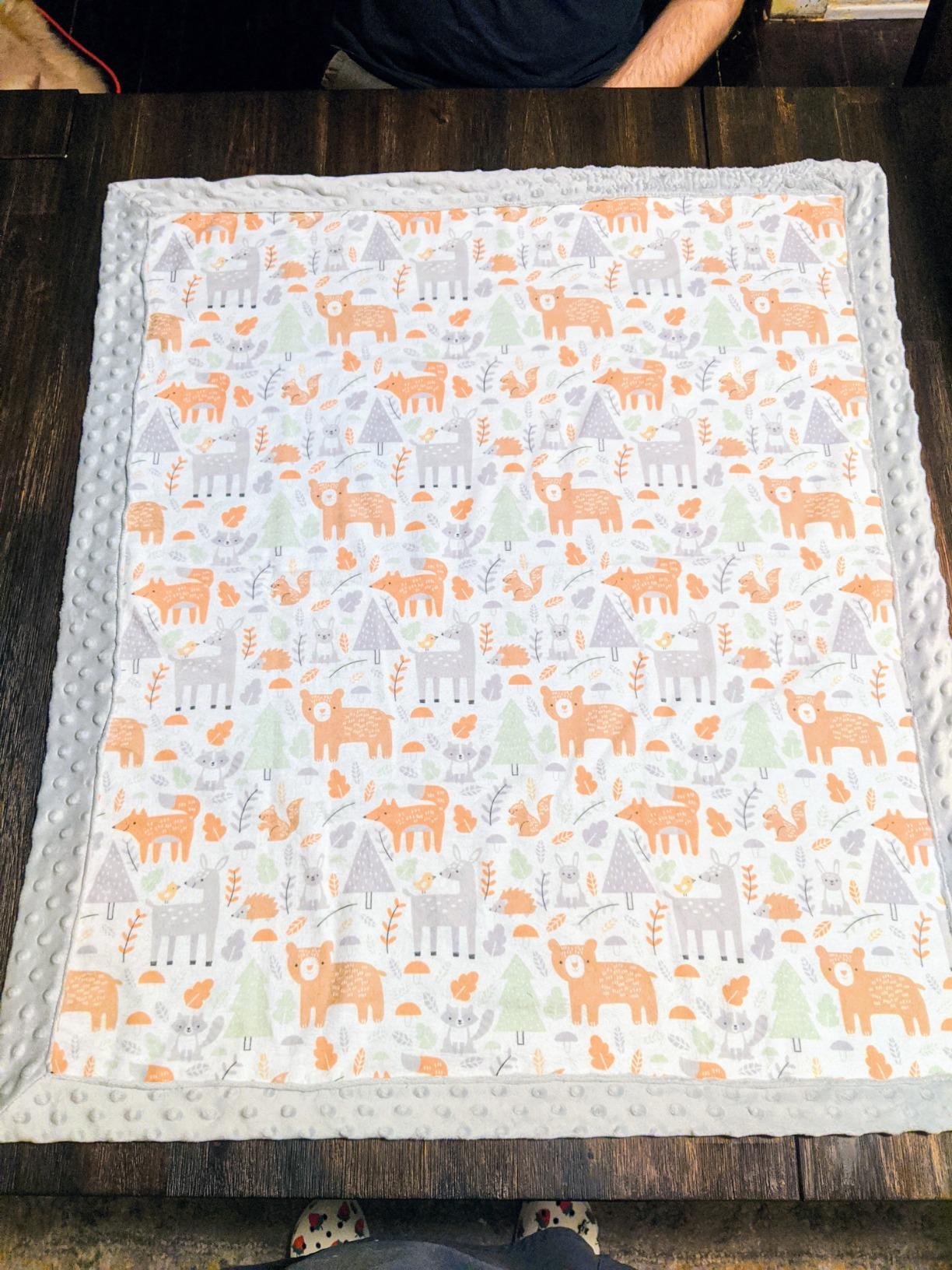
Customer photos
Pros & Cons Analysis
Based on supplied customer reviews and verified product documentation
Pros
- A deliberately small tool. An RV user valued the compact footprint, while another made clothes for tiny dolls. These are plausible reasons to choose the format when a larger sewing station would be inconvenient.
- Simple projects can become independent sewing practice. One first-time owner progressed to masks and pajama shorts after using threading videos. The supplied setup gives a starting reference, but that account also describes a learning curve. The benefit is a small, achievable project rather than an assumption that prethreading removes the need to learn setup.
Cons
- There is no reverse shortcut. Multiple accounts identify the fixed forward stitch and absent backstitch. Plan the appropriate seam ending; do not borrow the reverse instructions from the similarly named Mighty Multi.
- Removing work can expose tension trouble. Owners describe difficulty drawing thread through, repeated breakage and problems after replacing the first spool. A satisfactory first sample does not establish a repeatable sewing routine.
- Portability trades away support. One RV owner reports movement with larger fabric; another describes a table that collapses under pressure. Neither the light body nor an accessory surface should be asked to support the weight of a large project.
Our Verdict
Choose the project size before choosing the Mini
If the intended work is a small forward-only seam, the restricted stitch menu may be acceptable. If the routine relies on reverse, the similarly named Multi is the relevant comparison from the start.
The attraction is a sewing tool that can be stored close to a modest job. It is weaker when the buyer must reorganize a large project around a light base and unstable support.
Technical Specifications
| Primary functions | Occasional light sewing |
|---|---|
| Built-in stitches / applications | One forward straight stitch, owner-identified |
| Speed control | Two selected speeds |
| Warranty | Confirm seller and regional coverage |