A larger number in a sewing-machine title does not necessarily mean more kinds of useful seams. Listings may count patterns, preset variations or applications differently. At the same time, “double thread” and “double needle” can describe very different mechanisms. Begin with the actual chart and instructions.
Four terms that answer different questions
| Term | What to establish |
|---|---|
| Stitch pattern | The path the needle makes and the seam it is intended to form. |
| Preset or application | Whether the count includes size, position or use variations. |
| Two-thread sewing | Whether upper and lower threads form the ordinary stitch. |
| Twin needle | Whether a compatible paired needle and two upper threads are actually supported. |
The Singer Quick+ has a documented two-thread mechanism. That does not mean two needles. The original Magicfly Mini has one forward stitch despite using upper and lower thread. The kidoom 16-stitch explicitly advertises twin-needle capability, which requires its own compatible setup.
Ask the chart to answer a real project question
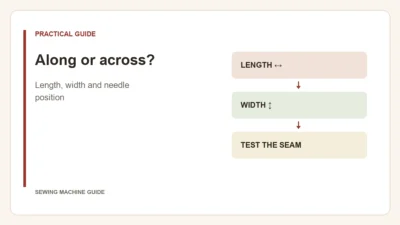
List the seams your project needs before comparing counts. Then find each on the chart and identify what can be adjusted. A fixed zigzag selection may serve a modest task; it is not necessarily an independently adjustable width and length control.
For the kidoom 39-stitch, selected owners describe related variations in the count. Their explanations differ, so the review does not invent a replacement total. A useful comparison asks whether the actual selections add something you need.
Twin needles need permitted settings
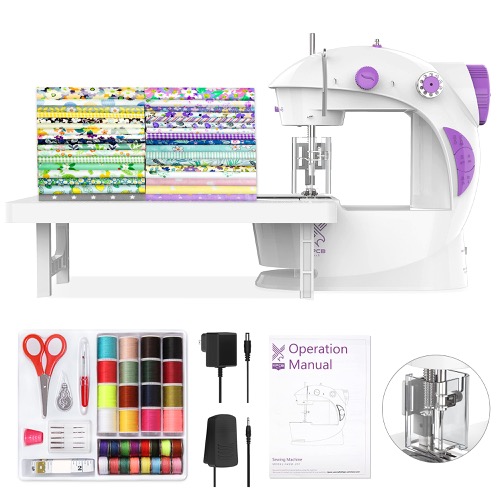
Do not assume every pattern works with a twin needle. The needle spacing, stitch width, foot opening and machine design must be compatible. Follow the exact instructions and check clearance with power disconnected before powered sewing. A photo of two spools is not enough to establish the full procedure.
Nor is a twin-needle seam automatically a substitute for every stretch or edge-finishing technique. Match the finished seam requirements and inspect a sample. If the manual does not establish compatible needles and settings, resolve that uncertainty before using the feature.
Compare the seam you need with the actual chart
A stitch count, an application count and a twin-needle claim describe different things. Find the intended seam on the exact chart, then identify which settings can actually be adjusted. Extra numbered variations are useful only if they add a result you need.
For twin needles, establish the compatible needle, threading and permitted stitch settings before use. Ordinary upper and bobbin threads do not mean twin-needle capability. A smaller, well-understood set of functions is more useful than a larger number whose selections or limits remain unclear. Apply these distinctions in the kidoom 16 versus 39 comparison, where chart variations matter, or the Mighty Mini versus Mighty Multi comparison, where reverse is a clearer functional difference.