Sewing Machine Guide

  • Home
  • Reviews
  • Best
    • All Best Picks
    • Computerized
    • Embroidery
    • Mechanical
    • Quilting
  • Guides
    • All Sewing Guides
    • Computerized
    • Embroidery
    • Mechanical
  • Comparisons
    • All Comparisons
    • Computerized
    • Embroidery
    • Mechanical
    • Straight-Stitch
  • Favorites
Home / Mechanical Sewing Machines / Best / Best Sewing Machines for Beginners

Best Sewing Machines for Beginners

The Janome MOD-15 is the clearest first machine for straightforward garments and repairs. Choose the Janome 1522DG for stronger adjustment and room to grow, or the EverSewn Charlotte when electronic speed control is essential.

OUR PICKS

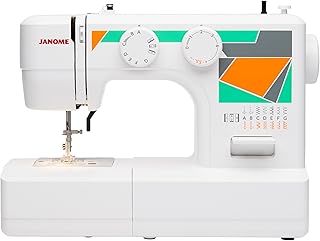
Janome MOD-15 Review: Quiet Mechanical Basics for First Projects

Clearest first start

Janome MOD-15 Review: Quiet Mechanical Basics for First Projects

Check price at Amazon Jump to details
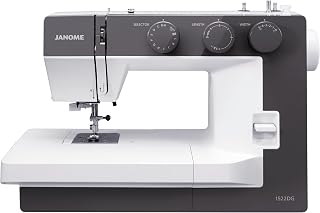
Janome 1522DG Review: Simple Controls, Strong Seam-Crossing Manners

Best room to grow

Janome 1522DG Review: Simple Controls, Strong Seam-Crossing Manners

Check price at Amazon Jump to details
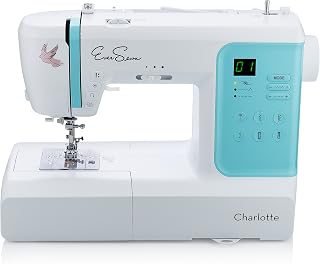
EverSewn Charlotte Review: Friendly Controls Beyond the Pink Finish

Best speed-confidence aid

EverSewn Charlotte Review: Friendly Controls Beyond the Pink Finish

Check price at Amazon Jump to details
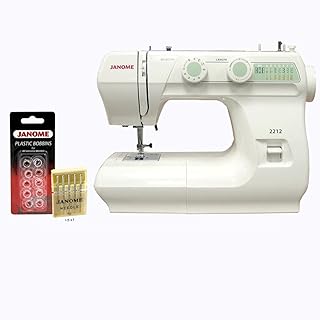
Janome 2212 Review: Honest Beginner Simplicity With Feed Limits

Best old-school basics

Janome 2212 Review: Honest Beginner Simplicity With Feed Limits

Check price at Amazon Jump to details
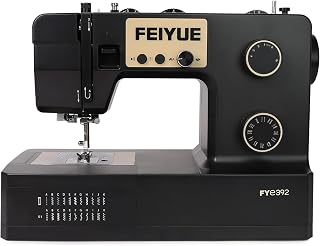
FEIYUE FYe392 Review: Mechanical Power With Useful Speed Control

Best two-speed alternative

FEIYUE FYe392 Review: Mechanical Power With Useful Speed Control

Check price at Amazon Jump to details

The best sewing machine for beginners in this five-model group is the Janome MOD-15 when the first jobs are hems, simple garments, repairs and crafts. Its visible top-loading bobbin, quiet mechanical controls and light body remove several early mysteries. The Janome 1522DG is the better long-term choice when adjustable presser-foot pressure and a one-step buttonhole justify a little more learning.

A beginner machine should make errors easy to identify and recover from. It should not be so limited that the first planned garment forces an immediate replacement. We therefore weighted threading and bobbin recovery, speed management, control clarity, useful garment functions and owner-reported setup friction rather than decorative stitch totals.

Simplest first routeJanome MOD-15
Best mechanical growthJanome 1522DG
Best electronic teaching aidEverSewn Charlotte
Beginner-friendly describes a workflow, not a price. Match the bobbin, speed controls and buttonhole process to how the learner will practice and troubleshoot.

Mechanical simplicity and electronic speed control teach differently

The MOD-15, Janome 2212 and 1522DG respond through dials and a foot pedal. A learner can see stitch length, width and selector positions without navigating a display. The EverSewn Charlotte adds a speed slider, start/stop and needle stop; those controls can lower the maximum pace while the learner focuses on fabric guidance.

30%Error recoveryClear threading and bobbin access shorten stalled sessions.
25%Speed confidencePredictable starts matter more than a fast maximum.
25%Useful growthButtonholes, stretch work and feed adjustment delay replacement.
20%Ownership clarityManuals, accessories and recurring owner friction shape success.

The MOD-15 is the least intimidating complete start

Its 15 stitches cover ordinary construction, and the clear top-bobbin cover lets a learner see thread supply and placement. Owners repeatedly call it quiet and easy to use. The absence of a built-in threader and one-step buttonhole keeps the routine old-fashioned, but also keeps diagnosis visible.

The 1522DG asks more and gives more back

Adjustable foot pressure helps when fabrics feed differently, while a one-step buttonhole removes the four-stage dial sequence used by the MOD-15 and 2212. Its heavier, broader mechanical brief suits a learner who already expects garments, layered hems and longer-term use.

Choose MOD-15

When calm basics are the goal

Visible bobbin access, low weight and direct controls suit ordinary first projects.

Choose 1522DG

When growth matters immediately

Pressure adjustment and one-step buttonholes support a wider garment path.

Choose Charlotte

When speed fear is the blocker

An electronic slider and needle stop can make practice more deliberate.

Where the Janome 2212 still makes sense

The 2212 is a direct 12-stitch machine with a free arm and drop feed. It belongs with a buyer who is comfortable learning a front-loading bobbin and four-step buttonhole. Supplied owners often find it understandable, yet tension, feeding and layered-seam complaints make it a narrower recommendation than the top-loading MOD-15.

The FEIYUE is not the automatic “strong” beginner winner

The FYe392 adds high/low speed selection and a robust mechanical pitch, which can appeal to a learner expecting denim hems or home décor. That does not erase setup responsibility. Choose it only when its control layout, documentation and exact return support are clearer than the alternatives.

Learner concern Feature that answers it Good direction
“I cannot control the pedal yet” Electronic speed ceiling EverSewn Charlotte
“The bobbin still confuses me” Visible top-loading bobbin Janome MOD-15 or 1522DG
“I want to make garments for years” Pressure adjustment and one-step buttonhole Janome 1522DG
“I want the fewest controls possible” Small mechanical stitch set Janome MOD-15 or 2212

A seven-day beginner acceptance plan

  1. Day one: thread from the manual, wind two bobbins and sew straight lines on stable cotton.
  2. Day two: practice corners, reverse and seam allowance without pulling the fabric.
  3. Day three: test zigzag and finishing on a raw edge.
  4. Day four: make a full buttonhole on stabilized scrap.
  5. Day five: change needle and fabric weight, then re-balance tension if needed.
  6. Days six and seven: finish one small project and repeat every step that caused a jam.

Choose the MOD-15 for the least intimidating mechanical start, the 1522DG for a learner with a wider garment plan, or the Charlotte when controlled electronic speed is the decisive teaching aid. The 2212 and FYe392 remain useful narrower fits, but neither should be selected merely because “simple” or “strong” sounds reassuring.

Clearest first start

Janome MOD-15 Review: Quiet Mechanical Basics for First Projects

Janome MOD-15 Review: Quiet Mechanical Basics for First Projects

Get it now:

Check latest price

What to know

  • Visible setup: Top-loading bobbin under a clear cover.
  • Manageable scope: 15 stitches for ordinary first projects.
  • Portable practice: 11.7-pound body stores easily.
  • Known omission: No built-in needle threader.

Best if

  • You want quiet mechanical basics and a visible bobbin
  • Repairs, crafts and ordinary garments are the first brief
  • You are willing to learn manual needle threading

Skip if

  • You need electronic speed limiting
  • Thick layered work is the main purpose
  • A one-step buttonhole is essential

The MOD-15 is the most coherent first machine for a learner who wants direct controls and a visible bobbin. Its 15 stitches, free arm and light 11.7-pound body cover basic garments, repairs and crafts without adding a screen. The top-loading bobbin is easier to inspect than the 2212’s front-loading system.

Owners repeatedly call it quiet and easy, while some beginners found the threading instructions unclear and a few units bound or needed correction. There is no built-in needle threader, so threading remains a skill rather than an automated promise.

Choose the 1522DG when pressure adjustment and one-step buttonholes matter, or the Charlotte when electronic speed limiting is necessary for confidence.

Within this roundup, “Clearest first start” is a conditional role: it applies when you want quiet mechanical basics and a visible bobbin. It reverses when you need electronic speed limiting. Before ordering the clearest first start option, compare its exact controls, delivered bundle and first planned project against that boundary.

Machine classBasic mechanical domestic sewing machine
Built-in stitches / applications15 built-in stitches
Speed controlNot applicable
Needle stop up/downNot applicable
Needle threaderNo
Bobbin / looper systemTop-loading full rotary hook
Feed-dog controlDrop feed
Workspace right of needle6 inches
Buttonholes / eyelets1 four-step buttonhole
Weight11.7 lb
Best room to grow

Janome 1522DG Review: Simple Controls, Strong Seam-Crossing Manners

Janome 1522DG Review: Simple Controls, Strong Seam-Crossing Manners

Get it now:

Check latest price

What to know

  • Growth control: Adjustable presser-foot pressure for changing fabric behavior.
  • Garment convenience: One-step buttonhole avoids a four-stage routine.
  • Broader menu: 22 stitches cover construction and finishing.
  • Learning condition: More adjustment rewards manual reading.

Best if

  • You expect regular garment sewing and varied fabric weights
  • A one-step buttonhole and pressure adjustment matter
  • You will learn mechanical settings rather than avoid them

Skip if

  • You want the smallest possible first-machine brief
  • Electronic speed limiting is essential
  • The machine must be carried frequently

The 1522DG is the beginner pick for someone who expects garment sewing to become a lasting practice. Its 22-stitch mechanical platform adds adjustable presser-foot pressure and a one-step buttonhole, two controls that matter when moving beyond stable cotton into varied fabrics and fitted garments.

Supplied owners describe good seam-crossing manners and straightforward use, but no domestic machine should be judged from one denim sample. The heavier commitment and additional adjustment are worthwhile only when the learner will use them.

Choose the MOD-15 for a calmer, lighter first step, or the Charlotte when a speed slider is more important than mechanical pressure adjustment.

Within this roundup, “Best room to grow” is a conditional role: it applies when you expect regular garment sewing and varied fabric weights. It reverses when you want the smallest possible first-machine brief. Before ordering the best room to grow option, compare its exact controls, delivered bundle and first planned project against that boundary.

Machine classFull-size mechanical domestic sewing machine
Built-in stitches / applications22 built-in stitches
Speed controlNot applicable
Needle stop up/downNot applicable
Needle threaderBuilt in
Bobbin / looper systemFront-loading vertical oscillating hook
Feed-dog controlDrop feed
Workspace right of needle6.7 inches
Buttonholes / eyelets1 one-step buttonhole
Weight14.3 lb
Best speed-confidence aid

EverSewn Charlotte Review: Friendly Controls Beyond the Pink Finish

EverSewn Charlotte Review: Friendly Controls Beyond the Pink Finish

Get it now:

Check latest price

What to know

  • Teaching control: Slider, start/stop and needle stop support deliberate practice.
  • Portable format: 13-pound body suits classes and shared tables.
  • Growth room: 80 stitches without embroidery complexity.
  • Workspace limit: Six-inch throat is modest for bulky quilts.

Best if

  • You want to limit speed while learning fabric guidance
  • Classes or shared storage require portability
  • You will test tension and sound across several stitches

Skip if

  • You prefer purely mechanical controls
  • Large quilts are the immediate goal
  • You need adjustable mechanical foot pressure

The Charlotte is the electronic teaching choice when controlling pace is harder than understanding a screen. A speed slider, start/stop button and needle-stop control let the learner cap the machine and practice pivots deliberately. Eighty stitches create growth room, but the six-inch throat remains compact.

Beginners repeatedly describe easy controls, and the 13-pound body suits classes. Isolated reports of uneven stitching, abnormal noise and tension trouble mean the first week should include more than a single straight seam.

Choose the MOD-15 when direct dials are less intimidating than buttons, or the 1522DG when mechanical fabric-pressure adjustment outweighs electronic aids.

Within this roundup, “Best speed-confidence aid” is a conditional role: it applies when you want to limit speed while learning fabric guidance. It reverses when you prefer purely mechanical controls. Before ordering the best speed-confidence aid option, compare its exact controls, delivered bundle and first planned project against that boundary.

Machine classPortable computerized domestic sewing machine
Built-in stitches / applications80 built-in stitches
Speed controlSlider, start/stop and foot control
Needle stop up/downYes
Needle threaderBuilt in
Bobbin / looper systemTop loading
Feed-dog controlDrop feed
Workspace right of needle6 inches
Buttonholes / eyeletsOne-step buttonholes
Weight13 lb
Best old-school basics

Janome 2212 Review: Honest Beginner Simplicity With Feed Limits

Janome 2212 Review: Honest Beginner Simplicity With Feed Limits

Get it now:

Check latest price

What to know

  • Small control set: 12 stitches keep selection direct.
  • Narrow-work access: Free arm helps cuffs and hems.
  • Traditional setup: Front-loading oscillating bobbin.
  • Project limit: Best for ordinary fabrics rather than demanding stacks.

Best if

  • You want minimal dials and will learn a front bobbin case
  • Repairs and simple garments are the realistic scope
  • A four-step buttonhole is acceptable

Skip if

  • You want the easiest visible bobbin setup
  • Layered home décor is the main workload
  • You need automatic buttonholes or electronic controls

The 2212 suits a beginner who prefers a small mechanical menu and is willing to learn a front-loading bobbin. Twelve stitches, a free arm and drop feed cover repairs, basic garments and darning. Its four-step buttonhole and bobbin case demand more sequence memory than the MOD-15, which is why it ranks lower for a first purchase.

Many owners describe an understandable machine, but tension, feeding and layered-seam complaints recur in the supplied evidence. Pulling fabric through a stalled feed is not a valid solution and can create damage.

Choose the MOD-15 for top-loading bobbin visibility, or the 1522DG when one-step buttonholes and broader garment adjustment justify the upgrade.

Within this roundup, “Best old-school basics” is a conditional role: it applies when you want minimal dials and will learn a front bobbin case. It reverses when you want the easiest visible bobbin setup. Before ordering the best old-school basics option, compare its exact controls, delivered bundle and first planned project against that boundary.

Machine classBasic mechanical domestic sewing machine
Built-in stitches / applications12 built-in stitches
Speed controlNot applicable
Needle stop up/downNot applicable
Needle threaderNo
Bobbin / looper systemFront-loading oscillating hook
Feed-dog controlDrop feed
Workspace right of needleNot applicable
Buttonholes / eyelets1 four-step buttonhole
WeightNot applicable
Best two-speed alternative

FEIYUE FYe392 Review: Mechanical Power With Useful Speed Control

FEIYUE FYe392 Review: Mechanical Power With Useful Speed Control

Get it now:

Check latest price

What to know

  • Two-speed choice: High and low settings create a defined pace boundary.
  • Mechanical brief: Direct operation without a large stitch interface.
  • Fabric caution: Strong framing does not prove industrial feeding.
  • Support check: Confirm parts, manual and return route before purchase.

Best if

  • A simple high/low speed choice is reassuring
  • You accept a less familiar service ecosystem
  • Moderate sturdy-fabric projects are planned

Skip if

  • You want a continuously adjustable electronic slider
  • Local dealer support is non-negotiable
  • You expect sustained industrial production

The FYe392 is the alternative for a learner who wants a mechanical machine with a defined high/low speed choice. That switch can reduce the ambiguity of pure pedal control, and the machine’s construction pitch targets household users expecting firmer materials. It still remains a domestic sewing machine whose real capability depends on seam shape, needle and setup.

The supplied evidence supports specific successful projects and setup cautions rather than a broad reliability claim. Documentation and seller support deserve extra scrutiny because this model has less familiar local-service coverage than Janome or Brother.

Choose the Charlotte for finer electronic speed limiting and needle stop, or the 1522DG for a more conventional mechanical garment path with established pressure adjustment.

Within this roundup, “Best two-speed alternative” is a conditional role: it applies when a simple high/low speed choice is reassuring. It reverses when you want a continuously adjustable electronic slider. Before ordering the best two-speed alternative option, compare its exact controls, delivered bundle and first planned project against that boundary.

Machine classMechanical domestic sewing machine
Built-in stitches / applications23 built-in stitches
Speed controlDial plus foot control
Needle stop up/downNot applicable
Needle threaderAutomatic threader
Bobbin / looper systemDomestic bobbin system; exact hook not published
Feed-dog controlNot applicable
Workspace right of needleNot applicable
Buttonholes / eyeletsIncluded among stitch functions
WeightNot applicable

Product Comparison

Feature Janome MOD-15 Review: Quiet Mechanical Basics for First Projects Janome 1522DG Review: Simple Controls, Strong Seam-Crossing Manners EverSewn Charlotte Review: Friendly Controls Beyond the Pink Finish Janome 2212 Review: Honest Beginner Simplicity With Feed Limits FEIYUE FYe392 Review: Mechanical Power With Useful Speed Control
Product Image
Janome MOD-15 Review: Quiet Mechanical Basics for First Projects
Janome 1522DG Review: Simple Controls, Strong Seam-Crossing Manners
EverSewn Charlotte Review: Friendly Controls Beyond the Pink Finish
Janome 2212 Review: Honest Beginner Simplicity With Feed Limits
FEIYUE FYe392 Review: Mechanical Power With Useful Speed Control
Rating
4.2 / 5
4.4 / 5
4.3 / 5
4.1 / 5
4.4 / 5
Category Mechanical Sewing Machines Mechanical Sewing Machines Computerized Sewing Machines Mechanical Sewing Machines Mechanical Sewing Machines
Stitch Quality & Control
4.1 / 5.0
4.5 / 5.0
4.3 / 5.0
4.1 / 5.0
4.3 / 5.0
Ease of Setup & Use
4.5 / 5.0
4.5 / 5.0
4.6 / 5.0
4.5 / 5.0
4.4 / 5.0
Fabric & Project Fit
3.8 / 5.0
4.4 / 5.0
4.1 / 5.0
3.6 / 5.0
4.4 / 5.0
Build, Accessories & Value
4.4 / 5.0
4.2 / 5.0
4.2 / 5.0
4.3 / 5.0
4.5 / 5.0
Brand Janome Janome EverSewn Janome FEIYUE
Exact model MOD-15 1522DG Charlotte 2212 FYe392
ASIN B01BKTD7PY B0CMFM7XZP B01GSNNZ72 B00AKKM4GI B0F99JJL3G
Machine class Basic mechanical domestic sewing machine Full-size mechanical domestic sewing machine Portable computerized domestic sewing machine Basic mechanical domestic sewing machine Mechanical domestic sewing machine
Control type Mechanical dials and foot control Mechanical dials and foot control Computerized buttons with LCD Mechanical dials and foot control Mechanical dials with adjustable speed control
Primary functions Garments, alterations and crafts Garment sewing, crafts and light quilting Garment sewing, crafts and light quilting Repairs, garments and crafts Garment sewing, crafts and moderate heavy-fabric work
Built-in stitches / applications 15 built-in stitches 22 built-in stitches 80 built-in stitches 12 built-in stitches 23 built-in stitches
Maximum sewing speed Up to 300 stitches per minute on current official listing 860 stitches per minute Not published Not applicable Adjustable; exact ceiling not published
Speed control Not applicable Not applicable Slider, start/stop and foot control Not applicable Dial plus foot control
Maximum stitch length 4 mm 4 mm Not applicable 4 mm Not applicable
Maximum stitch width 5 mm 5 mm 7 mm 5 mm Not applicable
Needle positions 15 15 Not applicable Not applicable Multiple positions
Needle threader No Built in Built in No Automatic threader
Bobbin / looper system Top-loading full rotary hook Front-loading vertical oscillating hook Top loading Front-loading oscillating hook Domestic bobbin system; exact hook not published
Feed system 5-piece feed dog 3-piece feed dog Not applicable 5-piece feed dog Not applicable
Feed-dog control Drop feed Drop feed Drop feed Drop feed Not applicable
Presser-foot pressure Not applicable Adjustable Not applicable Not applicable Adjustable for fabric thickness
Free arm Yes Yes Not applicable Yes Not applicable
Workspace right of needle 6 inches 6.7 inches 6 inches Not applicable Not applicable
Included presser feet Not applicable Not applicable 7 feet Not applicable 5 feet
Dimensions 14.25 × 5.75 × 10.5 inches 17 × 11 × 7.5 inches 16 × 8 × 12.5 inches Not applicable Not applicable
Weight 11.7 lb 14.3 lb 13 lb Not applicable Not applicable
Power / market voltage Verify the delivered market version Verify the delivered market version Verify the delivered market version Verify the delivered market version Verify the delivered market version
Warranty Janome limited warranty; coverage varies by component and seller—confirm current US terms Janome limited warranty; coverage varies by component and seller—confirm current US terms EverSewn limited warranty; confirm current seller and regional terms Janome limited warranty; coverage varies by component and seller—confirm current US terms FEIYUE limited warranty; confirm current seller and support terms
Buttonholes / eyelets 1 four-step buttonhole 1 one-step buttonhole One-step buttonholes 1 four-step buttonhole Included among stitch functions
Foot control Not applicable Not applicable Not applicable Included Included
Buy Now View Deal View Deal View Deal View Deal View Deal

Your First Machine Should Match Your Learning Style

Direct mechanical learner

Janome MOD-15

A visible bobbin and compact set of controls keep early troubleshooting concrete.

Committed garment learner

Janome 1522DG

Pressure adjustment and a one-step buttonhole give the strongest mechanical room to grow.

Speed-cautious learner

EverSewn Charlotte

A slider, start/stop and needle stop reduce reliance on perfect pedal control.

Frequently Asked Questions

What is the best sewing machine for a beginner?

The Janome MOD-15 is the simplest balanced start in this roster for repairs, crafts and ordinary garments. The 1522DG is stronger when the learner wants more adjustment and room to grow.

Is a mechanical or computerized machine easier?

Mechanical controls make settings visible, while computerized models can add speed limiting and needle stop. The easier choice depends on whether menus or pedal control create more anxiety.

How many stitches does a beginner need?

A dependable straight stitch, zigzag, stretch or finishing options and a workable buttonhole are enough for many first garments.

Should a beginner buy a heavy-duty machine?

Only when the planned fabric and seams require it. The label does not replace predictable low-speed control, correct needles or clear threading.

What should be tested during the return period?

Test bobbin winding, slow starts, reverse, zigzag, a complete buttonhole and the thickest planned seam on suitable scrap.

×

About Sewing Machine Guide

Independent sewing machine reviews and practical buying guidance.

Your trusted source for honest, in-depth product reviews and comparisons.

Quick Links

  • Home
  • Reviews
  • Best Articles
  • Comparisons
  • Guides
  • About
  • Contact
  • Privacy Policy

Categories

  • Computerized Sewing Machines
  • Embroidery Machines
  • Handheld Sewing Machines
  • Industrial
  • Mechanical Sewing Machines
  • Mini Sewing Machines

© 2026 Sewing Machine Guide. All Rights Reserved.

As an Amazon Associate I earn from qualifying purchases. We may also earn from other retailer links. Affiliate disclosure