Janome Blue Couture Review: A Friendly First Machine With a Lightweight Tradeoff
At a Glance
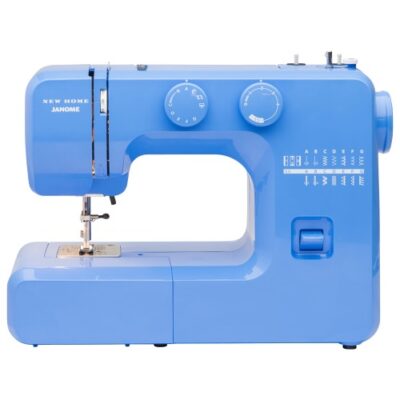
KEY FEATURES
- 15 built-in stitches
- 800 spm published maximum
- 13 lb published weight
- 4-step buttonhole process
PROS
- First-time owners frequently call it easy to understand and enjoyable to use
- The stitch chart, bobbin diagram, and tutorial videos reduce initial setup friction
- A free arm and 15-stitch utility range cover mending, crafts, and simple garments
- Its 13-pound body is practical for classes and shared tables
CONS
- Some owners report bouncing, vibration, or more noise than expected
- There is no electronic low-speed limiter and the pedal can feel quick to beginners
- The front-loading bobbin requires a more deliberate insertion routine
- No built-in needle threader or automatic thread cutter is documented
Editorial Rating
Based on supplied customer reviews and verified product documentation
Price and availability subject to change
For a first Blue Couture, start with the learner’s foot and the place the machine will sit. The stitch dial is straightforward, but the supplied accounts differ on slow starts, movement and noise. Those differences can decide whether its traditional controls are inviting or frustrating.
Can the learner start and stop comfortably?
The Blue Couture uses a standard foot pedal and publishes an 800-spm maximum. Owners split on the pedal: many learn comfortably, while some feel it starts too fast or lacks a slow range. That is a user-machine fit issue worth testing early.
Practice tapping to sew one to three stitches at a time. If the machine jumps beyond the learner’s control even on a stable table, a computerized machine with a speed slider may be a better teaching tool.
Carrying the machine and keeping it settled
At 13 pounds, the Janome is easy to lift from a closet or carry to class. That is an advantage in small homes. The same low mass explains why some supplied owners describe bounce or vibration, particularly at speed or on a flexible table.
Place it on a rigid, level surface and use a non-slip machine mat if needed. If the chassis rocks before sewing begins, fix the surface rather than trying to steer around movement.
A simple purchase still carries expectations
The supplied feedback includes an experienced occasional sewer looking for a basic replacement for household and craft work. That expectation differs from a newcomer learning every operation for the first time. A limited menu can suit both, but neither buyer benefits if the pedal or bobbin routine becomes the obstacle. Judge the familiar-looking controls through actual use rather than assuming that fewer settings automatically mean a gentler learning experience.
Learn one complete sewing sequence
Blue Couture presents 15 stitches on mechanical controls, with diagrams and videos designed for a first machine. That is enough for seams, zigzag finishing, several stretch or decorative options, and a four-step buttonhole without asking a new sewer to navigate a large LCD library.
The simplicity still requires correct threading and bobbin insertion. Follow the entire path, hold thread tails at the beginning, and practice reverse on scrap. A beginner machine should make the process visible; it cannot remove the process.
- Wind and insert the front-loading bobbin
- Thread with the presser foot raised
- Select straight stitch and medium length
- Practice start, stop, reverse, and pivot before a project
Projects that suit these controls
Start with folded cotton, then a small pouch, simple elastic casing, and a hem. Move to denim only after selecting the correct needle and testing a real seam intersection. Owner reports support useful everyday capability, not unrestricted heavy-duty work.
The Blue Couture succeeds as an inviting first full-size machine. It becomes the wrong choice when the buyer already knows that automatic threading, a one-step buttonhole, or electronic speed control is essential.
- Two-layer cotton seam and reverse
- Zigzag edge finish
- Four-step buttonhole from the manual
- Free-arm sleeve or trouser hem
- Real seam hump with a suitable needle
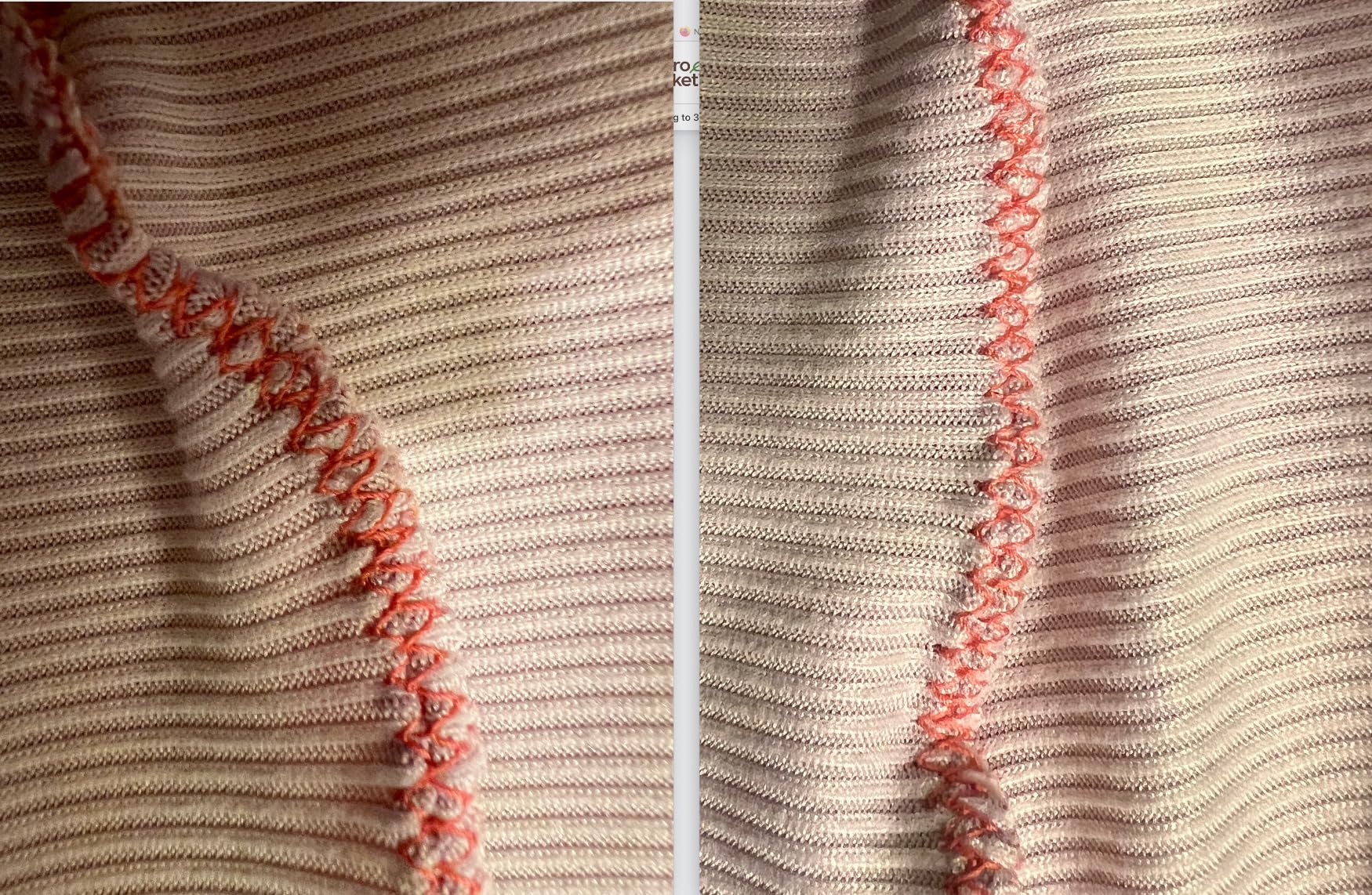
Customer photos
Pros & Cons Analysis
Based on supplied customer reviews and verified product documentation
Pros
- Basic controls can suit a small project list. Owners who need ordinary repairs and crafts value straightforward stitch selection. That is a stronger buying reason than the color or a large stitch total when only a few utility seams are needed.
- Visual guidance can help the first setup. The chart, bobbin diagram and tutorials give a newcomer ways to revisit unfamiliar steps. They reduce the burden of remembering the sequence but do not eliminate practice with the front-loading case.
- Portability has a practical tradeoff. The manageable body suits shared tables and classes. Its benefit is easier moving and storage; stability during sewing still depends on the working surface and the particular unit.
Cons
- Pedal control deserves more explanation than beginner-friendly. Without an electronic limiter, slow work depends on the operator’s foot. A supplied experienced owner describes difficulty starting smoothly, illustrating why simple dials do not guarantee gentle low-speed behavior.
- Lightweight construction may feel less settled. Some owners report bouncing or unexpected noise. Consider those alongside favorable accounts instead of assuming the metal-frame description guarantees the feel of an older, heavier machine.
- Threading convenience is limited. The front-loading bobbin and lack of a built-in needle threader add manual steps at each setup. Someone buying specifically to avoid close needle-area work should give those steps more weight than the stitch menu.
Our Verdict
What earns the recommendation
Blue Couture is a genuinely approachable mechanical starter because it limits decisions and teaches the visible sewing sequence.
Choose it for portability, simple controls, and beginner-friendly learning materials.
The limit to accept before buying
Choose a computerized alternative when speed limiting or automated threading will make practice safer and less frustrating.
- Use a rigid surface to control the light chassis
- Treat the four-step buttonhole as a learned process
- Test pedal response before deciding it suits the learner
Final buying guidance
The supplied exact-product evidence contains 100 owner texts. It supports the recurring strengths and specific cautions described here, but it is not a controlled failure-rate sample. Confirm the exact seller bundle, warranty eligibility, and return terms, then complete the model-specific arrival checks before the remedy window closes.
Frequently Asked Questions
What is the Janome Blue Couture best for?
A true beginner learning repairs, simple garments, crafts, and everyday seams on a portable full-size machine.
What is the main reason not to buy it?
You need a built-in threader, one-step buttonhole, electronic speed limiter, or a heavy table-stable chassis.
Which specification matters most?
15 built-in stitches is the clearest model-level comparison point.
What should I test immediately after delivery?
Complete the threading and bobbin sequence from the exact manual, then test the controls and project conditions highlighted in this review before the return period closes.
How much owner evidence was reviewed?
The supplied exact-ASIN set contains 100 owner-review texts. It supports product-specific patterns and cautions, not a statistical failure rate.
Technical Specifications
| Machine class | Portable full-size mechanical domestic sewing machine |
|---|---|
| Control type | Mechanical dials and foot pedal |
| Primary functions | Mending, crafts, simple garments, and everyday sewing |
| Built-in stitches / applications | 15 built-in stitches |
| Maximum sewing speed | 800 stitches per minute |
| Speed control | Foot control only |
| Maximum stitch length | 4 mm |
| Maximum stitch width | 5 mm |
| Needle stop up/down | No |
| Needle threader | No |
| Thread cutter | Manual thread cutter |
| Bobbin / looper system | Front-loading vertical oscillating hook |

Singer MX231 Review: More Adjustment, Still a Setup Learning Curve