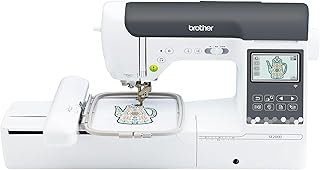
PooLin EOC02 Review: Beginner-Friendly Controls With Thick-Layer Limits
At a Glance
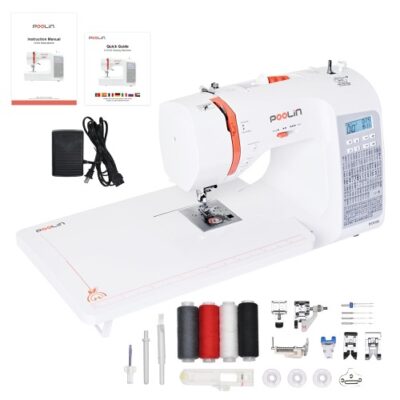
KEY FEATURES
- 200 built-in stitches
- 750 spm published maximum
- 7 included presser feet
- 61 usable owner texts
PROS
- Speed limiting, start/stop sewing, and needle positioning give beginners useful control before they master the pedal
- Owners repeatedly describe straightforward setup, quiet running, smooth ordinary seams, and a broad stitch selection
- Nine one-step buttonholes, alphanumeric stitches, drop feed, and seven feet support more than basic repairs
- The included extension table and 5.5 kg body balance work support with portability
CONS
- Multiple owners report stalls, broken needles, or poor feeding at quilt sandwiches and thicker seam junctions
- Missing small parts and difficulty sourcing model-specific replacements appear in the negative evidence
- Bobbin winding, upper-thread retention, and the semi-automatic threader frustrate some users
- The supplied review file contained one clearly mismatched EOC2720 review, which was removed from the usable evidence set
Editorial Rating
Based on supplied customer reviews and verified product documentation
Price and availability subject to change
The EOC02’s table and electronic controls solve different problems. The table supports material, while the controls help manage pace and needle position. Supplied complaints at thicker intersections show why neither should be read as proof of extra feeding capacity. Begin with the construction you intend to sew.
The quilt intersection is the key boundary
The included 29 × 42 cm table supports fabric around the needle, and the quilting foot plus drop feed create a basic free-motion route. Several owners use the EOC02 for piecing or early quilt projects. Those are meaningful quilting features on a portable domestic machine.
The counter-evidence is specific: some owners describe stopping, needle breakage, or failed feeding at three layers and binding intersections. A flat extension surface cannot enlarge the internal workspace or force a bulky stack through the feed system. Test the real batting, backing, top, and binding junction before keeping it for quilting.
| Quilting need | EOC02 response |
|---|---|
| Piecing and small quilted items | Good feature fit after a sample |
| Free-motion practice | Drop feed and quilting foot are included |
| Large roll clearance | Internal right-side workspace is not published |
| Bulky binding junction | Recurring owner caution; test the exact stack |
Begin with ordinary cotton and verify straight stitch, zigzag, reverse, speed limiting, start/stop, needle position, and one complete buttonhole. Add lettering only after the basic thread path is repeatable. A broad feature list cannot compensate for a unit that loses power, breaks needles, or forms inconsistent stitches on normal fabric.
For quilting or bags, add one intended seam intersection rather than a flat stack of unrelated scraps. If the machine stalls or the fabric stops advancing after correct needle, thread, foot, and pressure-free handling, accept that as a project-fit failure rather than forcing it through.
- Inventory all seven feet and spool hardware
- Wind and insert two bobbins
- Test slider, pedal, and button-operated sewing
- Complete a one-step buttonhole
- Cross the thickest planned seam without pulling
- Confirm the support and return route for the exact seller
Control the ordinary seam before adding patterns
PooLin publishes a speed slider, button-operated start and stop, needle-position control, an LCD, and foot-pedal operation. That combination lets a learner slow the machine before the seam begins, choose whether to use the pedal, and stop with the needle positioned for a turn. Those controls solve practical beginner problems more directly than the headline stitch count.
The library still has purpose. It combines 91 utility and specialty patterns, nine one-step buttonholes, and 100 alphanumeric choices. A returning sewer can start with straight, zigzag, and buttonholes, then add decorative work or simple monograms without replacing the machine.
Finding an accessory and obtaining a replacement are different issues
The source accounts include a buyer who later found feet in the storage compartment and another who struggled to obtain a small replacement. Those stories should not be pooled as identical missing-parts complaints. The first concerns understanding the delivered package; the second concerns continued ownership. For a less familiar model, knowing where instructions and compatible supplies come from can matter as much as the initial bundle.
Small parts, lighting and recovering the setup
Most usable texts describe easy threading and smooth early sewing, but the negative group repeatedly names missing spool hardware, absent accessories, bobbin-winding trouble, thread coming out of the needle path, and an unreliable threader. One buyer reports difficulty obtaining a small replacement part after contacting support.
Remove every accessory from the front storage area before declaring the package incomplete; one owner later found the feet there and corrected the complaint. Then compare the delivered inventory with the exact listing, wind two bobbins, use the threader repeatedly, and confirm that the upper thread remains in the take-up path across speed changes.
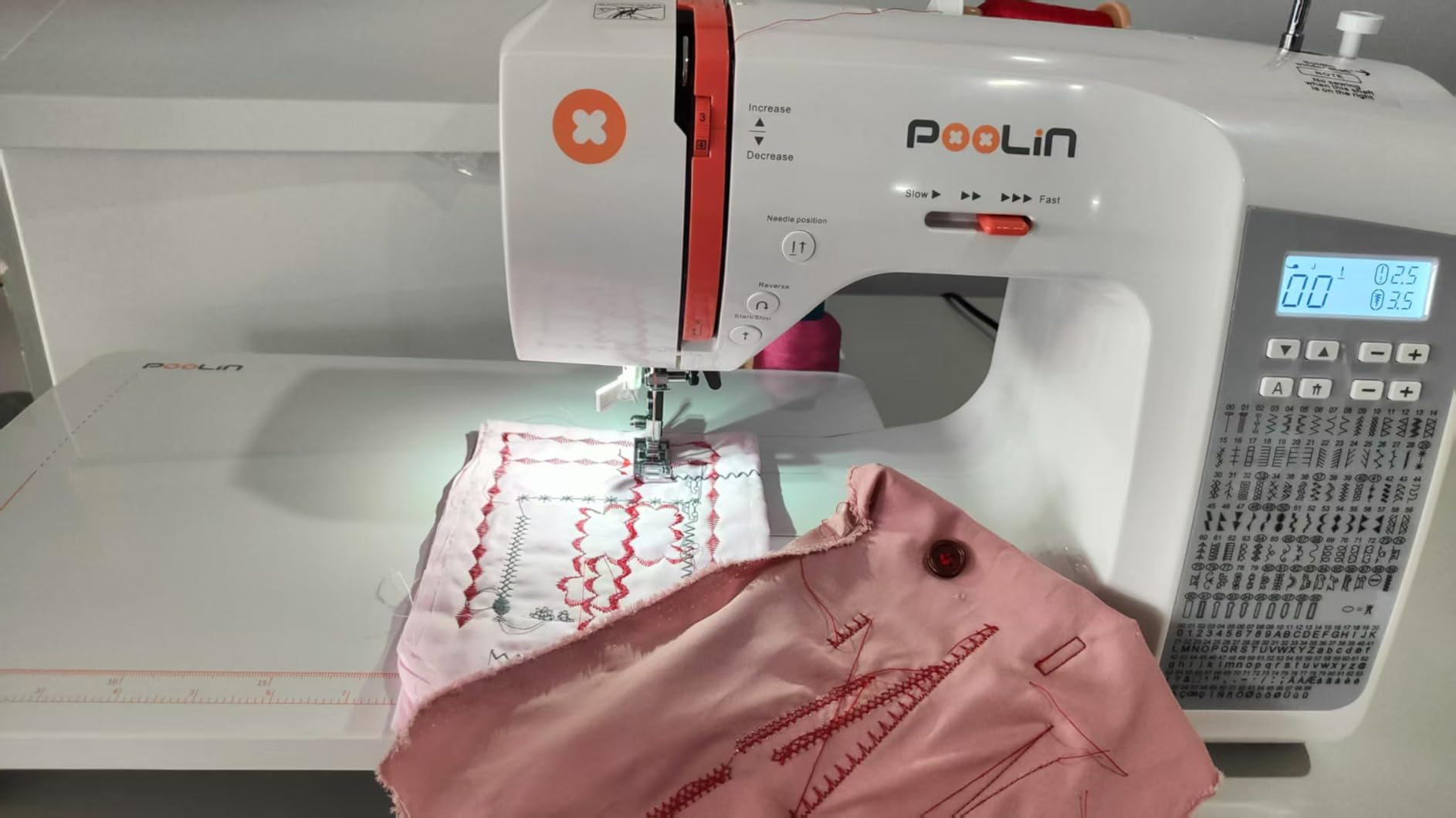
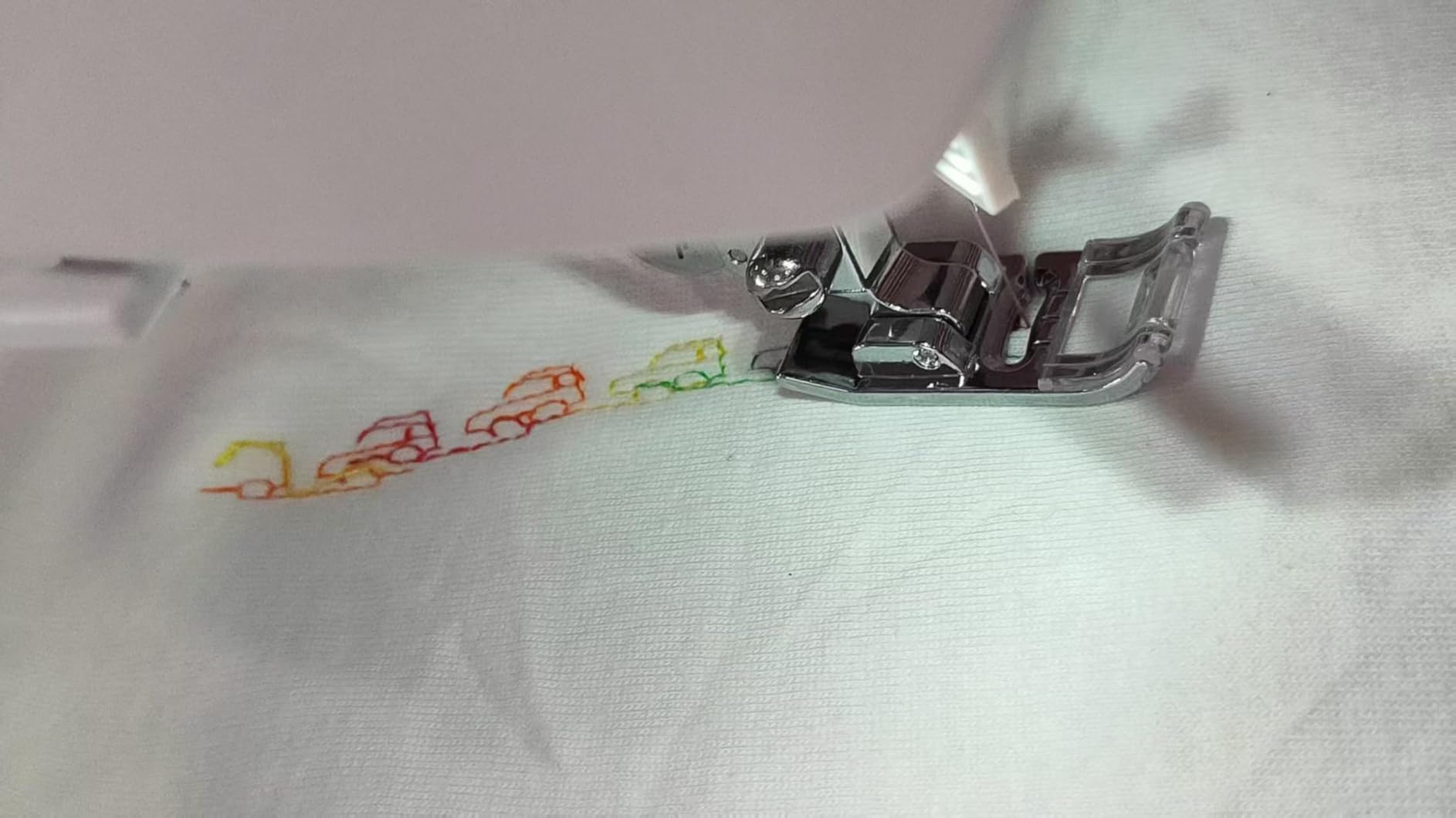
Customer photos
Pros & Cons Analysis
Based on supplied customer reviews and verified product documentation
Pros
- The control layout can ease ordinary sewing. Supplied owners describe progressing from straight seams and zigzag into decorative work. Speed limiting and needle positioning are useful when they make that progression manageable.
- Threading can become easier with repetition. A detailed owner needed time to understand the threader but expected the sequence to become familiar. This supports a learnable routine without promising that every buyer will find it effortless.
- The table and accessories broaden small-project options. The package gives support and tools for experimenting beyond repairs. Their value depends on useful projects and correct setup, rather than the largest possible stitch total.
Cons
- Lighting can undermine the threader’s convenience. One owner found the light weak and described a shadow near the working area. Someone buying for easier close work should consider visibility alongside the presence of a threader.
- Thick seams are not consistently successful. Reports of stalled feeding and broken needles at layered joins limit the conclusions from smooth ordinary seams. A quilt sandwich is a different construction from a flat fabric sample.
- Spare parts and thread handling add reservations. Missing small parts, bobbin winding and upper-thread retention appear in the supplied concerns. These affect continued use and setup recovery, not just the first test stitch.
Our Verdict
EOC02: beginner controls without a heavy-layer promise
The EOC02 offers unusually broad beginner controls and accessories for its class, but its owner evidence does not support a heavy-layer promise.
Choose it when speed containment, start/stop sewing, lettering, buttonholes, and small-project quilting all have practical value.
Parts access belongs in the buying decision
Choose an established dealer-supported or stronger-feeding alternative when thick quilt junctions and readily available replacement parts matter more than feature breadth.
- Count 61 usable texts, not all 62 supplied entries
- Use the table for support, not as evidence of extra throat or feeding capacity
- Inventory small parts and test the threader, bobbin, and thickest seam immediately
Frequently Asked Questions
How many usable owner reviews support the PooLin EOC02 assessment?
There were 62 supplied texts, but one described an EOC2720 rather than the EOC02. The assessment uses the remaining 61 and does not treat them as a statistical reliability sample.
Can the EOC02 sew thick quilt-binding intersections?
Some owners report stalls, failed feeding or broken needles on bulky junctions. Test the real quilt and binding stack; the extension table is not evidence of extra feeding force.
Does the EOC02 cut the threads automatically?
The official record reviewed lists a manual built-in cutter, not automatic trimming. Its electronic conveniences instead include speed limiting, start/stop sewing and needle-position control.
Are walking and quarter-inch feet included with the EOC02?
Neither is listed in the official seven-foot set reviewed. A quilting foot and drop feed provide a basic free-motion route, but verify any extra foot and its compatibility before ordering.
What should I check if EOC02 accessories seem to be missing?
Empty and inspect the front storage compartment first; one owner found the feet there after initially reporting them missing. Then check spool hardware, bobbin winding and the exact seller’s parts-support route.
Technical Specifications
| Machine class | Portable computerized domestic sewing and quilting machine |
|---|---|
| Control type | LCD, selection buttons, speed slider, start/stop button, and foot control |
| Primary functions | Garments, repairs, crafts, lettering, buttonholes, and small quilting projects |
| Built-in stitches / applications | 200 total: 91 utility/specialty, 9 buttonholes, and 100 alphanumeric stitches |
| Maximum sewing speed | 750 stitches per minute |
| Speed control | Slider, start/stop button, and electronic foot control |
| Maximum stitch length | 5 mm |
| Maximum stitch width | 7 mm |
| Needle stop up/down | Yes |
| Needle threader | Semi-automatic / built in |
| Thread cutter | Manual built-in cutter |
| Bobbin / looper system | Top-loading drop-in bobbin |
Janome 9410QC Review: Premium Quilting Control With a Bundle Caveat

Juki HZL-HT740 Review: Useful Sewing Controls, Modest Lettering