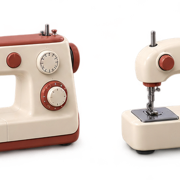
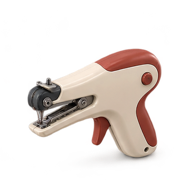
Singer Stitch Quick+ Review: Two Threads, Tight Controls and Mixed Results
At a Glance
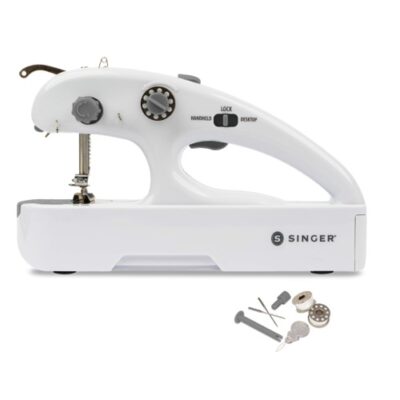
KEY FEATURES
- Upper thread and lower bobbin form a locked stitch
- Handheld, desktop and lock selector modes
- Bobbin winder, manual cutter and notion storage
- Four AA alkaline batteries or a correctly specified optional adapter
PROS
- Documented two-thread construction
- Choice of handheld and desktop positioning
- Successful specific repair reports
- Model-specific manual and videos
CONS
- Repeated threading and bobbin-pickup complaints
- One-speed operation and no reverse reported
- Limited clearance and small controls
- Overheating and failure-to-stop accounts in supplied feedback
Editorial Rating
Based on supplied customer reviews and verified product documentation
Price and availability subject to change
Singer Stitch Quick+ offers two working positions with different stopping behavior. That distinction is more important than the word “portable”: handheld operation stops when the button is released, while desktop operation requires another press and release. Its documented two-thread system also separates it from the similarly named Stitch Sew Quick.
Quick+ changes how you stop when you change modes
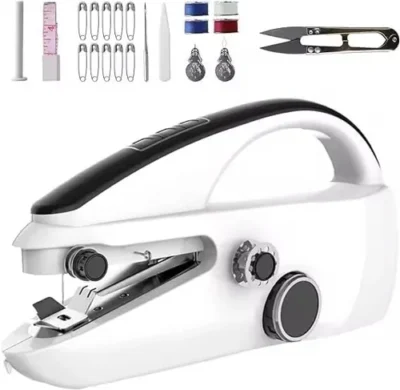
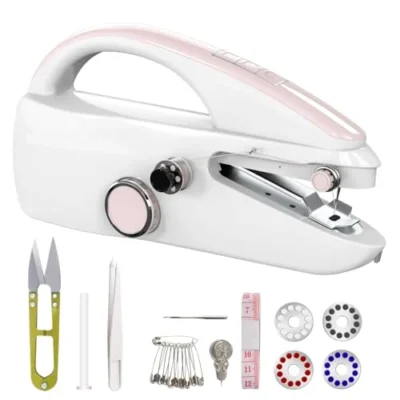
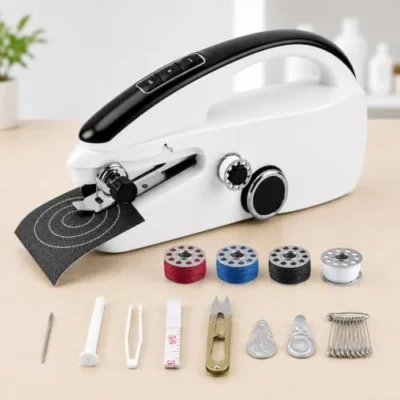
This review concerns B08PQ54B44, the two-thread Stitch Quick+ offer. It is not the similarly named single-thread Stitch Sew Quick. The current exact Amazon listing describes a 39-piece bundle; older supplied accounts describe different accessory contents. We assess the machine observations separately from promises about what every historical box contained.
| Control or feature | Practical consequence |
|---|---|
| Two-thread stitch | Both upper thread and lower bobbin must be set up correctly. |
| Handheld mode | Release the operating button to stop. |
| Desktop mode | Press and release again to stop continuous sewing. |
| Small straight-stitch format | Owner reports of no reverse and abrupt speed limit its broader sewing role. |
Why experienced sewists also struggle to thread it
The difficulties are not confined to first-time sewists. Owners familiar with larger machines describe tiny guides, a difficult needle eye and trouble catching the bottom thread. Several repeatedly lost thread at the start or end of a seam. Others recovered by following the route more carefully, while some could not obtain a usable result after repeated attempts.
The Quick+ manual addresses upper-thread routing, lower-bobbin placement and releasing thread before removing fabric. Treat that sequence as the authority. Do not adopt owner workarounds involving forced mechanisms, different bobbin materials or improvised power supplies as general instructions. Our handheld threading and seam-check guide helps separate the ordinary checks from a fault.
Heat and failure-to-stop reports change the buying judgment
Several supplied accounts describe unusual heat, a burning smell, damaged batteries or operation that would not stop. We have not verified the affected units, their battery condition or a common cause. This sample cannot provide an incident rate. Nevertheless, those accounts materially weaken the case for recommending the machine without reservations.
Use only the power arrangement specified for the exact model and disconnect power before threading or handling the needle area. A delivered unit that overheats, smells burnt or fails to stop needs support and should be taken out of use. A good seam from another owner cannot establish that a malfunctioning unit is acceptable.
Read the Quick+ versus Ninonly comparison for the specific tradeoffs. If you want gradual control, broader stitch choices and regular alterations, start with the beginner-machine shortlist instead.
Where the reported curtain and lining repairs fit
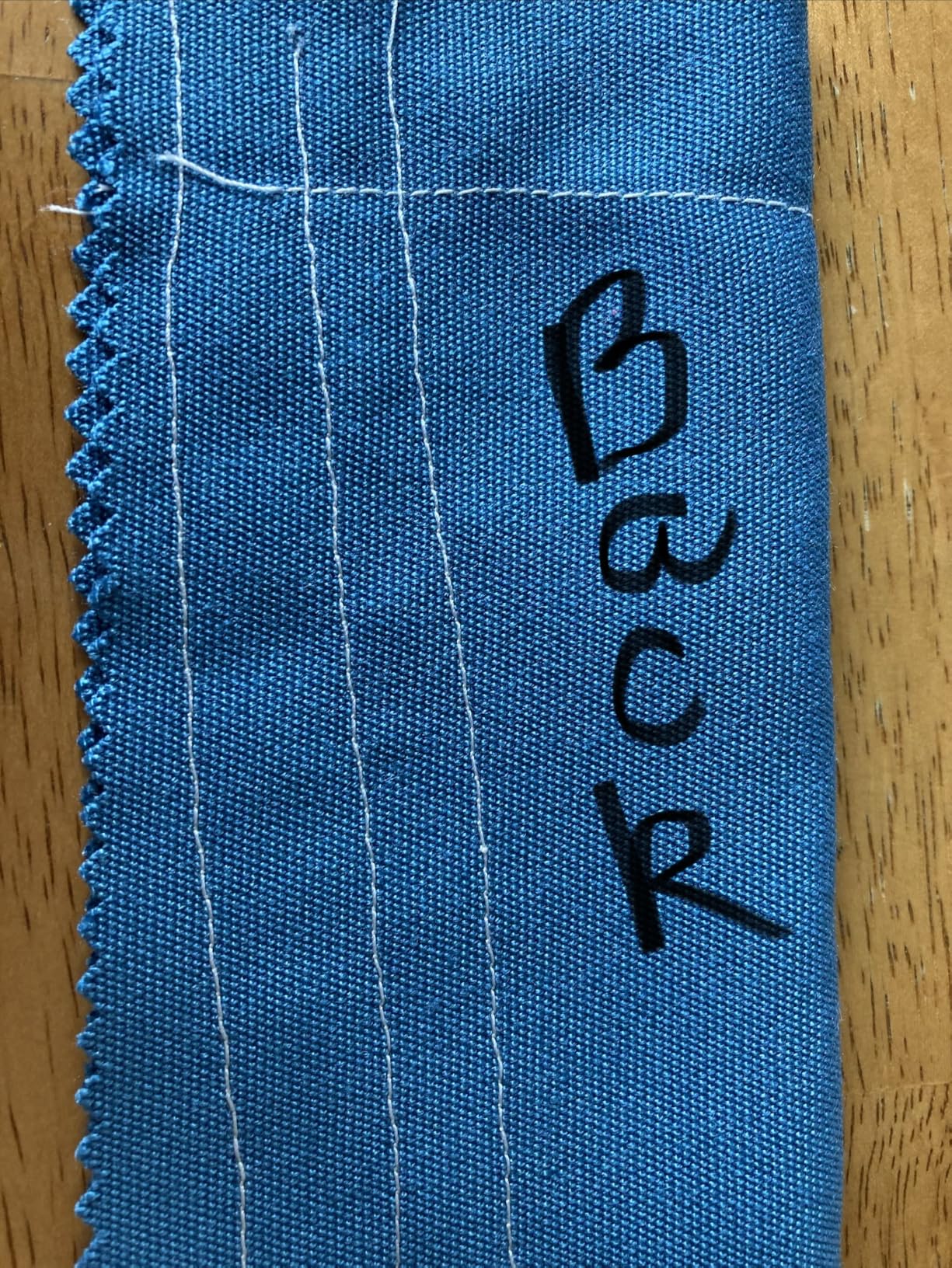
The 100 supplied texts contain 86 retained qualitative observations. Successful examples include cushion linings, curtains, a comforter seam and ordinary hems. A number of owners describe learning from the matching videos. Others prefer desktop use because it feels more stable than holding the machine while steering fabric.
Some accounts describe reaching large items without moving them. Those are reports of individual uses, not permission to ignore the manual’s operating restrictions. For example, the instructions rule out outdoor operation and using soft surfaces that obstruct ventilation. The appropriate location and support still matter even when the machine is portable.
Customer photos

Pros & Cons Analysis
Based on supplied customer reviews and verified product documentation
Pros
- Instructions explain the actual two-thread mechanism. Quick+ has an upper thread and a lower bobbin, and the matching manual explains pickup and fabric removal. Several owners say videos helped after a difficult start. This gives a frustrated user a model-specific recovery route, although it does not establish that every reported fault is a threading error.
- Two working positions. Some owners prefer placing it on a firm desktop; others value taking it to an accessible repair. The mode choice changes start/stop behavior as well as how the tool is held.
- Useful finished jobs. Supplied accounts describe curtains, cushion linings and clothing hems. These show a plausible limited role, without establishing a substitute for regular garment construction.
Cons
- Small setup access remains demanding. Experienced sewists and beginners both report awkward thread guides, loss of needle thread and failed lower-thread pickup. Familiarity with larger machines is not a guarantee of an easy transition.
- Control can feel abrupt. Owners describe one-speed, on/off operation and no reverse. Guiding fabric with one free hand can be awkward; desktop mode also requires a deliberate second press to stop.
- Fault reports affect the recommendation. The file includes overheating, burning-smell and failure-to-stop accounts. Their cause and frequency are unverified. They should not be recast as routine tension problems or ignored because other owners succeeded.
Our Verdict
Documentation is the advantage; it is not a performance guarantee
The matching manual explains the upper thread, lower bobbin and fabric removal. That is a useful reference when deciding whether a seam has been set up correctly. It cannot make abnormal heat or a failed stop control acceptable.
For a reachable, occasional repair, the two operating positions may be worthwhile after the operator understands both. Buyers wanting effortless one-handed fabric guidance or a replacement for regular garment sewing should not infer those abilities from the Singer name.
Technical Specifications
| Machine class | Handheld/desktop mending machine |
|---|---|
| Primary functions | Occasional light repairs |
| Built-in stitches / applications | Two-thread locked straight stitch |
| Speed control | On/off operation; one speed in owner reports |
| Needle threader | Separate wire threading tool |
| Bobbin / looper system | Lower bobbin; manual specifies Class 15 metal for winding |
| Warranty | Confirm seller and regional terms |