Singer 9960 Review: Deep Stitch Choice With Real Quilting Utility
At a Glance
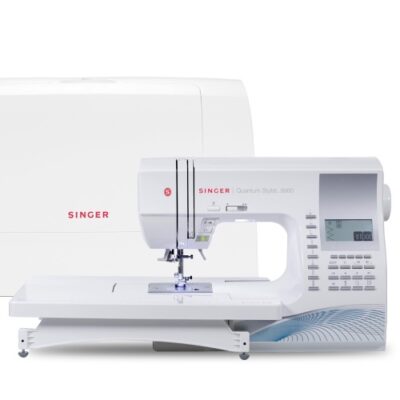
KEY FEATURES
- 600 built-in stitches
- 850 spm published maximum
- 13 one-step buttonholes
- 18.2 lb published machine weight
PROS
- Speed control, needle stop, start/stop, and automatic cutting create a useful daily workflow
- Long-term owners report smooth sewing, attractive stitches, and productive quilting use
- The extension table, walking foot, and quarter-inch foot make the bundle genuinely quilting-oriented
- Five alphabets and extensive stitch editing support labels and decorative projects
CONS
- The 6.4-inch workspace remains compact for rolling a large quilt
- Negative reports include jamming, tension trouble, feed-dog damage, and cutter issues
- The large stitch library creates more interface to learn than a utility-first machine
- Included-foot counts can vary by bundle and should be checked against the exact listing
Editorial Rating
Based on supplied customer reviews and verified product documentation
Price and availability subject to change
The 9960 can be a machine for someone whose projects keep changing. Its useful depth is in moving between ordinary seams, buttonholes and decorative work with controls already learned. The accessory bundle and stitch count need to be judged against that changing workload and the room available for fabric.
One household machine, several kinds of project
Choose the 9960 when one household machine must cover garments, crafts, decorative lettering, buttonholes, and moderate quilting. Its controls remove repetitive hand movements and its accessory set reduces immediate add-on purchases.
Choose a simpler computerized model if 600 stitches feel like clutter. Choose a wide-throat quilting machine for bulky projects, or a straight-stitch specialist if precise long seams matter more than zigzag and buttonholes.
- Confirm the exact included feet and hard cover
- Test low-speed pedal response and the speed slider
- Sew straight, zigzag, buttonhole, and a dense decorative pattern
- Trim thread repeatedly and inspect both feed and bobbin behavior
The controls used between stitches
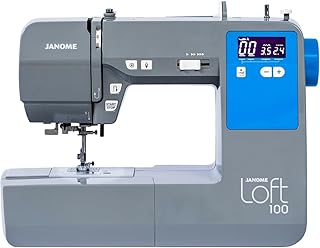
Six hundred built-in stitches attract attention, but the 9960 earns daily value through its speed slider, programmable needle stop, start/stop button, reverse, tie-off, and automatic thread trimmer. Those controls shorten repeated garment and quilting actions even when the user selects only a small group of stitches.
The LCD interface recommends stitch settings and lets the operator mirror or elongate supported patterns. That depth rewards someone who likes experimentation; it is unnecessary for a sewer who wants a straight stitch, zigzag, and buttonhole without menu navigation.
A pattern adjustment can matter more than another pattern
One owner valued changing stitch settings together on the display yet disliked where a balance adjustment was located. That is the kind of detail hidden by a large pattern count. For a decorative project, choosing a motif is only the start; refining its appearance and repeating it comfortably matter too. The best reason to explore the 9960’s depth is a technique you intend to use, not the wish to fill every slot in a specification comparison.
A table helps, but the quilt still has to pass through
An extension table supports the quilt around the needle, while the walking and quarter-inch feet address feeding and seam allowance. Drop feed enables free-motion work. These are meaningful tools rather than a quilting label attached to decorative stitches.
The limit is space to the right of the needle: Singer publishes about 6.4 inches. Bed support helps control weight, but it cannot create more room inside the machine. Large bed quilts will require rolling, repositioning, and patient fabric management.
| Quilting need | 9960 answer |
|---|---|
| Accurate piecing | Quarter-inch foot and needle-position control |
| Layer feeding | Walking foot included |
| Free motion | Drop feed plus compatible foot |
| Large roll management | Extension table helps; 6.4-inch throat remains the limit |
Separate learning problems from later wear
Many supplied owners describe a smooth, quiet machine that handles garments, quilting, and layered projects for years. They value the feature-to-price balance and accessories. Others report bird-nesting, tension problems, cutter trouble, or feed-dog damage. A few reviews trace a problem to threading or bobbin setup; others describe faults that required return or repair.
That mixture calls for a structured test rather than a reliability percentage. Thread with the presser foot raised, use the documented bobbin class, make samples with three stitch families, test reverse and tie-off, and operate the cutter repeatedly. A new machine should repeat the same result without unexplained changes.
See the Singer 9960 vs 9985: LCD Value or Touchscreen Depth? for the direct decision between the 9960’s LCD value and the 9985’s touchscreen, alphabet and presser-foot-pressure advantages.
Customer photos

Pros & Cons Analysis
Based on supplied customer reviews and verified product documentation
Pros
- Stitch editing can make decorative work more deliberate. An owner valued adjusting tension, length and width from the same screen area. That explains the usefulness of the interface better than the large number of stored patterns.
- The supplied feet can reduce early accessory shopping. A satisfied owner found the assortment covered expected tasks. This is practical value when the exact purchased bundle contains the feet the project needs.
- Automation supports repeated sewing steps. Speed control, needle positioning and cutting reduce handling between seams. Long-term quilting reports give those controls a plausible use beyond trying decorative samples.
- Learning resources can ease the transition. Returning sewers describe using the manual and instruction materials to approach computerized sewing. The machine offers room to explore, provided the buyer allows time to learn the controls.
Cons
- A table does not enlarge the opening beside the needle. Large quilts still need rolling and repositioning through a compact throat. Work support and available clearance solve different handling problems.
- Some adjustments are less accessible than the main screen. One owner disliked the location of the stitch-balance adjustment. Extensive editing features do not mean every correction can be made conveniently from the front panel.
- Fault and bundle reports need separate judgments. Jamming, feed and cutter complaints concern operation; foot-count differences concern the purchased package. Neither should disappear behind a favorable overall accessory count.
Our Verdict
9960 value: automation you will actually use
The 9960 remains compelling because its automation and accessories support real sewing workflows, not because 600 is automatically better.
It is the strongest fit for a curious home sewer who will use garment, decorative, and quilting functions.
Where the Quantum Stylist stops being enough
Its compact throat and setup-sensitive mechanisms make it a weaker choice for very large quilts or a buyer unwilling to run an arrival audit.
- Judge the speed slider and needle stop before the stitch count
- Treat extension-table support and throat space as different specifications
- Test cutter, feed, tension, and bobbin behavior while returns are easy
Frequently Asked Questions
Does the Singer 9960 have an automatic thread cutter?
Yes. It has an automatic thread trimmer alongside needle stop, tie-off, start/stop sewing and a speed slider. Test several trim cycles during setup because cutter trouble appears in the supplied owner reports.
Can the 9960 quilt a large bed quilt?
The extension table, walking foot and quarter-inch foot help, but the roughly 6.4-inch space right of the needle remains the limit. Large rolls require repeated repositioning; a wider-throat machine may fit that work better.
Do I need all 600 stitches to benefit from the 9960?
No. Speed limiting, needle-down pivots and automatic trimming can help even with a small working set of stitches. The larger library adds value when lettering or decorative work is a regular project.
What changes when moving from the 9960 to the 9985?
The 9985 adds a color touchscreen, a larger stitch and alphabet library and adjustable presser-foot pressure. Both have a published 850-spm ceiling, so this is primarily a control and creative-range decision.
What do the 9960 owner reports say about reliability?
The 100 supplied texts include long-term success as well as nesting, tension, cutting and feed faults. They identify what to test, but cannot establish a model-wide failure percentage.
Technical Specifications
| Machine class | Full-size computerized sewing and quilting machine |
|---|---|
| Control type | Computerized buttons and LCD |
| Primary functions | Garment sewing, decorative sewing, lettering, and quilting |
| Built-in stitches / applications | 600 built-in stitches / 1,172 stitch applications |
| Maximum sewing speed | 850 stitches per minute |
| Speed control | Slider, start/stop button, and foot control |
| Maximum stitch length | 5 mm |
| Maximum stitch width | 7 mm |
| Needle stop up/down | Yes |
| Needle threader | Built in |
| Thread cutter | Automatic upper and bobbin thread trimmer |
| Bobbin / looper system | Top drop-in Class 15 transparent bobbin |
Brother PQ1600S Review: Fast Straight Stitching With Boundaries
Singer C5980Q Review: Quilting Controls With Early-Hardware Warnings