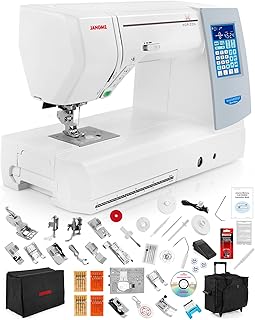
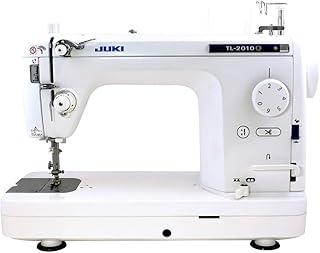
The best sewing machine for quilting in this roster is the Janome 8200QCP Special Edition for a sewist who wants piecing, decorative sewing and free-motion capability in one permanent station. Its 11-inch workspace and detachable AcuFeed Flex system address fabric room and layered feeding directly. The Juki TL-2010Q is the stronger specialist when a beautiful, fast straight stitch matters more than zigzag or buttonholes.
Quilting suitability begins with the opening to the right of the needle—often called throat or harp space—but room alone is not enough. We compared feed support, needle-stop and speed control, table stability, free-motion setup, weight and recurring owner themes. The ranking uses stored documentation and supplied reviews, not first-party stitch tests.
Eleven inches puts the 8200QCP SE ahead
The Janome’s wide opening gives rolled or folded quilt sections more room, and its AcuFeed Flex attachment helps move difficult layer combinations. Automatic cutting, memorized needle stop and a knee lift reduce hand movements during repeated piecing. At 26.5 pounds, it is best treated as furniture, not a class machine.
Straight-stitch specialists trade breadth for control
The TL-2010Q offers one lockstitch at up to 1,500 spm with a rigid bed, sub-tension unit, knee lift and automatic trimming. That narrow design can be excellent for piecing, free motion, bag work and long seams. It cannot zigzag, finish raw edges or make buttonholes, so many owners need a second domestic machine.
Janome 8200QCP SE
Wide workspace, dual feed and garment-capable stitches support mixed sewing.
Juki TL-2010Q
Choose specialization when piecing and free-motion work dominate.
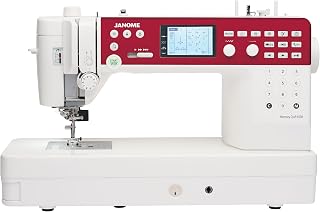
Janome MC6650
A 10-inch seamless bed and 1,000-spm ceiling suit a permanent quilting table.
The MC6650 removes the free arm on purpose
Its 10-inch all-metal flatbed keeps fabric support level, while two plates and a free-motion foot set make the quilting intent clear. The absent free arm is a real compromise for cuffs and narrow tubes. Choose it when the machine will live on a table and quilting outweighs garment convenience.
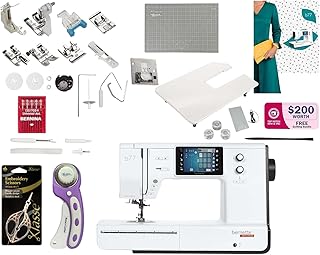
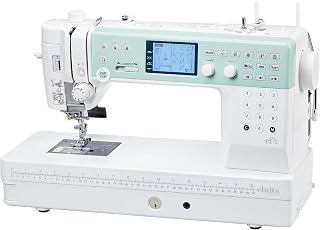
Bernette B77 and Elna ef72 preserve broad sewing range
The B77 combines a large touchscreen, 500 stitches, dual-feed capability and a broad workspace in a premium domestic body. The Elna ef72 brings wide-bed control and strong piecing credentials with a more familiar button-led approach. Both remain more flexible than the Juki specialist, but their larger control systems and bobbin-specific cautions require a complete setup audit.
| Quilting priority | Feature to require | Best direction |
|---|---|---|
| Large quilt in one mixed-use machine | 11-inch class workspace plus layered-feed support | Janome 8200QCP SE |
| Fast straight piecing and free motion | Rigid straight-stitch platform | Juki TL-2010Q |
| Stable fixed flatbed | 10-inch seamless table surface | Janome MC6650 |
| Decorative and garment breadth | Wide stitch menu plus quilting controls | Bernette B77 or Elna ef72 |
For mixed sewing with additional handling automation, compare the Juki HZL-DX5 and DX-2000QVP by their pivot, trimming and pattern controls—not as substitutes for a larger throat. The DX-1500QVP review also flags conflicting table and knee-lever information that should be resolved with the seller before valuing its package.
Match a specialist upgrade or class machine to a specific need
The Juki TL-18QVP Haruka is a conditional alternative to the TL-2010Q: investigate micro-lift when a difficult seam transition justifies it. The direct TL comparison distinguishes the added adjustment from controls both already provide.
For classes and retreats, the Janome 3160QDC-G places portability ahead of a large opening. At a fixed station, the Continental M6 addresses a different space requirement, with optional-accessory caveats. The original Skyline S6 remains a mixed-use option whose discontinued status and edition must be checked.
Before buying any of them, use the current-machine quilting assessment to separate a need for better fabric support from a need for another machine.
Measure the room, then audit the controls
- Measure the clear opening to the right of the needle, not the overall machine width.
- Confirm whether a walking or dual-feed system is included, optional or merely compatible.
- Test needle-down pivots, speed limiting and automatic cutting repeatedly.
- Wind several bobbins and free-motion quilt a layered practice sandwich.
- Decide whether the loss of a free arm or zigzag is acceptable before choosing a specialist.
Does a larger extension table create more quilting space?
It creates external fabric support, which is valuable, but it does not enlarge the machine opening. A table and generous throat solve different handling problems.
The 8200QCP SE is the broadest high-end quilting answer here. The TL-2010Q is the more disciplined specialist, the MC6650 the fast fixed-flatbed choice, and the B77 or ef72 the alternatives for sewists who refuse to surrender decorative and garment flexibility.
Three additional domestic quilting routes are the Singer 9960 Review: Deep Stitch Choice With Real Quilting Utility, the Singer C7250 Review: Practical Quilting Controls With Cutter Concerns and the Singer C5980Q Review: Quilting Controls With Early-Hardware Warnings. Compare their throat limits, included feet and acceptance tests before treating a table as extra internal workspace.
A separate QOV option for classes
The Janome 3160QOV review focuses on portable piecing, seam-ending controls and the limits of a compact working area. It covers a different listing from the 3160QDC-G; compare the exact delivered accessories rather than combining their review pools.