Singer 6700C Review: Fast Computerized Control With Heavy-Duty Limits
At a Glance
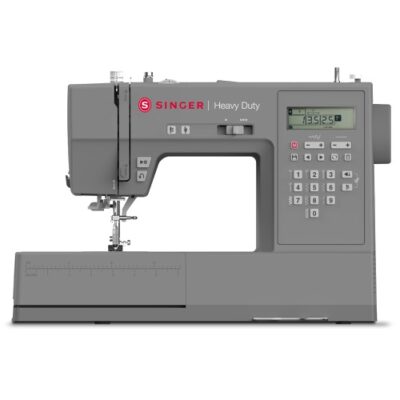
KEY FEATURES
- 411 stitch applications
- 1,100 spm published maximum
- 7 one-step buttonholes
- 6.4 in right-side workspace
PROS
- Button selection and the LCD reduce stitch-setting guesswork
- The speed slider and start/stop control provide a useful alternative to pedal-only operation
- Owners report smooth work on ordinary garments, rope bowls, vinyl, and some layered projects
- The accessory kit includes walking, open-toe, cording, and other useful feet
CONS
- Several owners report poor control at the lowest pedal range
- Timing, feed-dog, bobbin-case, and skipped-stitch faults appear in negative reports
- Thicker materials produce inconsistent results across the owner sample
- The “heavy duty” label does not turn a domestic machine into an industrial walking-foot system
Editorial Rating
Based on supplied customer reviews and verified product documentation
Price and availability subject to change
The 6700C’s heavy-duty name does not answer the owner’s most practical question: can the intended seam be started and fed at a comfortable pace? Supplied accounts disagree on thicker work and low-speed behavior. The controls and included feet should be assessed against that specific job.
A denim seam can reveal more than the top speed
Singer publishes an enhanced motor, metal frame, stainless bedplate, adjustable foot pressure, and high speed. Those features make the 6700C a more assertive domestic machine than a tiny entry model. They do not specify presser-foot clearance, compound feed, or an industrial duty cycle.
The supplied reviews include success on rope bowls, vinyl, and ordinary garments, but also complaints about four-layer jobs, skipped stitches, and stalled or damaged units. Move from woven cotton to denim layers and then to the exact project seam. Use the correct needle and stop when feeding becomes the problem.
A critical owner still valued some controls
An experienced buyer who disliked the machine’s heavier-material performance still appreciated tie-off and the visible top bobbin. This is useful evidence because it separates convenient operations from overall suitability. A feature can work as intended while the machine remains a poor match for a construction. Do not add the positives and negatives as if they cancel numerically; decide which ones govern the job that motivated the purchase.
Choose how to start and finish the seam
A 1,100-spm ceiling matters on long seams, but beginners usually benefit more from a reliable low ceiling. The 6700C slider can restrict the machine before the pedal or start/stop button is used. That makes topstitching, curves, and dense stitch beginnings more manageable.
Some owners still dislike the pedal’s very-low-speed response. Test a slow five-stitch start with the slider reduced, then repeat with start/stop. The machine is only beginner-friendly if the control method fits the user’s coordination.
- Set the slider below halfway
- Start on two layers of stable cotton
- Stop with the needle down at a marked point
- Repeat with a seam hump and listen for a change in sound
Stitch choice and accessory usefulness
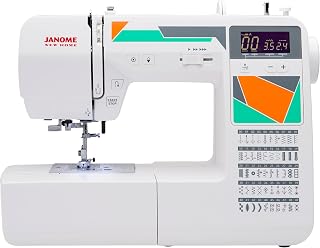
The 6700C offers 411 applications, one lettering font, and seven buttonhole styles. It covers substantially more decorative and construction work than a mechanical heavy-duty model, while keeping selection on direct buttons and an LCD.
That middle position is useful for garments and crafts. A sewer seeking a huge alphabet and decorative library should compare the 9960 or 9985; someone sewing mostly straight seams may prefer fewer electronics and a simpler mechanical model.
| Decision | 6700C fit |
|---|---|
| Need fast garment utility plus lettering | Strong fit |
| Need a very large decorative library | Consider 9960/9985 |
| Need industrial leather or upholstery duty | Wrong machine class |
When a fault is more than a setup disagreement
Negative owner reports mention thread nesting, skipped stitches, timing trouble, feed-dog problems, and failures that surfaced early. These reports do not establish a failure rate, but they identify the exact systems to test.
Run the same seam repeatedly at low, medium, and high speed. Make every buttonhole style you realistically need, wind and insert multiple bobbins, use reverse, and cross a realistic seam hump. Keep the machine only when the result is repeatable.
Customer photos

Pros & Cons Analysis
Based on supplied customer reviews and verified product documentation
Pros
- Tie-off and bobbin visibility have practical value. An experienced owner with substantial reservations still appreciated those controls. They help finish and monitor an ordinary seam without proving that the whole machine suits heavier work.
- Alternative start and speed controls broaden the workflow. The slider and start/stop option matter to buyers who dislike pedal-only operation. Evaluate their usefulness separately from the published maximum sewing speed.
- The foot assortment can support varied techniques. Walking, open-toe and cording feet address different tasks. Their value depends on using those techniques, rather than treating a larger bundle as proof of stronger feeding.
Cons
- Low-speed behavior remains a concern. Several owners describe poor control near the bottom of the pedal range. For thick transitions or precise starts, that can matter more than fast uninterrupted straight sewing.
- Fabric results are inconsistent. One experienced owner reports struggling on flat denim while others describe useful layered projects. The heavy-duty label cannot resolve that disagreement or establish a universal material capacity.
- Display and documentation affect daily use. A supplied account found the screen hard to read in some lighting and needed a downloaded manual. These are practical setup issues despite the convenience of computerized stitch selection.
- Operational failures are also reported. Timing, feed, bobbin and threader complaints go beyond preference for a different interface. Attribute them as owner experiences without diagnosing a shared cause or calculating a failure rate.
Our Verdict
6700C: a fast domestic machine, with conditions
The 6700C is best understood as a fast computerized domestic machine with a stronger chassis—not as a portable industrial machine.
Buy for garment and craft versatility, a 1,100-spm ceiling, and direct computerized controls.
Do not confuse piercing power with industrial feed
Skip it when true walking-foot feed, production duty, or highly refined pedal creep is essential.
- Test the slowest controllable speed
- Cross the thickest planned seam with the correct needle
- Check timing, feed, bobbin, and buttonholes before the return window closes
Frequently Asked Questions
Is the Singer 6700C an industrial sewing machine?
No. Its metal frame, enhanced motor and stainless bedplate belong to a domestic machine. They do not establish an industrial duty cycle or compound-feed capability.
Can the 6700C speed slider help with slow starts?
It can cap the speed before sewing with the pedal or start/stop button. Some supplied owners still find the lowest pedal range difficult, so test short starts with both control methods.
How fast does the 6700C sew?
Singer publishes a maximum of 1,100 stitches per minute. That ceiling is useful for long seams, but it does not describe feeding capacity through a bulky intersection.
What does the 6700C add over a mechanical Heavy Duty model?
It provides LCD selection, speed limiting, 411 stitch applications, a lettering font and seven buttonhole styles. These are workflow and stitch-selection differences rather than proof of industrial strength.
Which faults should a new 6700C owner check for?
The 100 supplied owner texts mention nesting, skipped stitches, timing and feed-dog trouble alongside successful projects. Test reverse, multiple bobbins, speed changes and a realistic seam hump before relying on it.
Technical Specifications
| Machine class | Computerized heavy-duty domestic sewing machine |
|---|---|
| Control type | Computerized touch buttons with LCD |
| Primary functions | Garment, craft, decorative, and moderate heavy-fabric sewing |
| Built-in stitches / applications | 411 stitch applications with one lettering font |
| Maximum sewing speed | 1,100 stitches per minute |
| Speed control | Slider, start/stop button, and foot control |
| Maximum stitch length | 4.5 mm |
| Maximum stitch width | 7 mm |
| Needle stop up/down | Yes |
| Needle threader | Built in |
| Thread cutter | Manual thread cutter; no automatic trimmer documented |
| Bobbin / looper system | Top drop-in Class 15 transparent bobbin |
Bernette B77 Review: Premium Control With a Real Learning Curve

Janome 3160QOV Review: A Class Machine with Useful Quilting Controls
Janome Loft 100 Review: Smooth Computerized Sewing in a Compact Body