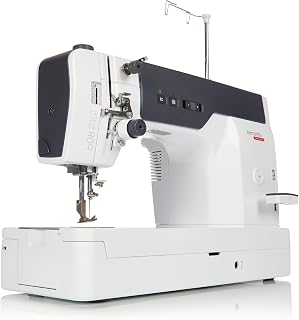
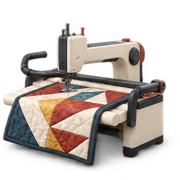
Janome 3160QDC-G Review: Class-Friendly Controls in a Compact Machine
At a Glance

KEY FEATURES
- 12.6 lb published machine weight
- 6.8 × 4.5-inch published workspace
- 60 stitches including six one-step buttonholes
- Manual tension and adjustable foot pressure
PROS
- Transport to classes and retreats is a recurring positive theme
- Cutter and needle-position controls suit repeated piecing
- Free arm and conventional stitch selection retain garment utility
- Janome lists a hard cover and extension table
CONS
- Compact opening can restrict handling of larger quilt sandwiches
- One text reports movement and an uneven extension-table join
- Layered feeding and buttonhole complaints appear as isolated accounts
- Bonus-kit contents and G-specific owner identity are not fully documented
Editorial Rating
Based on supplied customer reviews and verified product documentation
Price and availability subject to change
The 3160QDC-G is most persuasive when sewing happens away from a permanent workstation. The relevant comparison includes the packed machine, table and accessories as well as the controls used for piecing. The supplied family-level feedback needs care when judging the exact G bundle.
We examined Janome’s G-model specifications and 32 supplied Amazon review texts. Twenty-three texts contained decision-useful detail after screening. This is a documentation and owner-feedback assessment, without site testing. Amazon’s listing groups G and T variants, while the supplied texts lack variation labels. We use those comments as family context; they cannot establish reliability unique to the G version.
Pack the actual class setup, not just the machine
Transport to classes and retreats is one of the clearest recurring themes in the sample. Some owners keep a larger Janome at home and use this machine for travel. Others appreciate the reduced weight after replacing an older machine. Those are more relevant endorsements for this model than a vague claim that it suits every quilt.
Janome lists a machine weight of 12.6 pounds and includes a hard cover and extension table. The complete travel load will be heavier once you add the pedal, cord, table and project. The cover protects the machine for storage; choose a carrying arrangement appropriate to the full load.
| Planned use | What to check on the 3160QDC-G |
|---|---|
| Classes and retreats | Carry the complete kit and check the space at the class table |
| Repeated block assembly | Try short seam starts, intersections and the cutter |
| Garment details | Make the intended buttonhole on the actual stabilized fabric |
| Quilting a large sandwich | Check roll clearance and support before assuming the extension table solves handling |
The captured Amazon listing identifies a 3160QDC-G with a bonus quilt kit. That title is not a current inventory of every foot in the box. Ask the seller to identify the included walking or free-motion accessories and check them against your planned techniques.
The preserved Janome 3160QOV review concerns a separately named variant. Shared family features do not make its offer, accessories or owner comments interchangeable with this G listing.
Choose the 3160QDC-G when portability and practical domestic controls outweigh the need for a larger quilting opening. If it will never leave your sewing room and handling a large sandwich is the main difficulty, compare the larger-workspace options in the Best Quilting article before making portability your deciding feature.
A useful family report is not an exact packing list
One buyer describes a satisfactory machine, an extension table and a bonus kit. Other supplied texts name the 3160QDC family without identifying the G offer. These accounts help explain why the format appeals to class and retreat users, but cannot establish every accessory in the current package. Separate what you need to carry from what a historical buyer happened to receive.
Repeat small seams with fewer interruptions
Owners repeatedly value the cutter and needle-threading convenience. Memorized needle position and speed limiting also give the buyer practical controls to assess during a demonstration. Their benefit is a workflow judgment: fewer interruptions while joining many small pieces may matter more to you than rarely used patterns.
The official G product page lists 60 built-in stitches, including six one-step buttonholes, with a 7 mm maximum stitch width. Thread tension is manually adjusted. This is not a model where selecting a stitch removes the need to inspect the seam and change setup when fabric or thread changes.
One text reports difficulty producing a good buttonhole. That is an isolated complaint, not enough evidence to declare the function generally poor. It is enough reason for a garment maker to include a real buttonhole in the buying demonstration rather than testing straight seams alone.
The destination table changes the experience
One owner reports that the machine moved while sewing and that the extension table sat above the machine bed. Another specifically describes stable sewing on a sturdy table. Keep both accounts in view: the available texts do not establish whether their different experiences came from the work surface, assembly, shipping damage or the machines themselves.
Set the machine on the surface you intend to use, fit the table as instructed, and check that fabric crosses the join without catching. A class machine should feel controllable at a comfortable speed, not merely light when lifted.
Judge feeding on the pieces you normally join
A strongly negative text describes poor feeding at seam starts and trouble with several cotton layers. Other texts praise piecing and stitch quality. We cannot reproduce those conditions from the supplied text, so neither the complaint nor the praise establishes a maximum fabric thickness.
Try the smallest patch and the thickest intersection in your usual blocks. Use the needle, foot and threading procedure specified in the 3160QDC manual linked by Janome for the G. Persistent trouble is a reason to obtain a demonstration or service assessment, not to pull the work through by hand.
The published workspace is 6.8 inches wide by 4.5 inches high. That can be a practical compromise for transport, while still feeling restrictive when a larger quilt gathers inside the arm. Our guide to quilting on a regular sewing machine explains how to assess your intended quilting method before deciding that a larger machine is necessary.
Pros & Cons Analysis
Based on supplied customer reviews and verified product documentation
Pros
- Transport is tied to an actual sewing routine. Owners value taking this compact machine to classes and retreats. The advantage is a manageable setup for shared work, rather than unrestricted quilt-handling space.
- Piecing controls reduce interruptions. Cutter, needle-position and tie-off functions receive positive attention in the supplied accounts. They are useful because they reduce repeated handling between small seams.
- Guidance and ordinary garment functions add flexibility. An owner valued the recommended settings and instructions while discussing a learner’s purchase. The free arm and utility stitches make the machine relevant beyond quilting exercises.
Cons
- Compact work support has compromises. One account reports movement and an uneven table join, while another is satisfied on a firm table. These experiences make the workstation part of the evaluation rather than proving either universal instability or perfect support.
- Large or layered work needs a narrower recommendation. Limited opening space, feeding concerns and isolated buttonhole complaints prevent extending class-friendly use to every quilting or garment task.
- Family feedback is not a guaranteed G-bundle inventory. Some supplied texts identify the broader 3160QDC family rather than the exact G offer. Historical bonus kits and prices should remain separate from current package claims.
Our Verdict
A sensible role beside a larger home machine
The 3160QDC-G suits a buyer who values carrying a useful set of controls to lessons and retreats. Cutter convenience and familiar domestic functions support that role.
Let quilt handling decide the compromise
Choose a larger opening if the main task is moving substantial quilt bulk at a permanent station. Before accepting this machine, check short seam starts, the extension-table join and any buttonhole your projects need.
Frequently Asked Questions
Is the 3160QDC-G the same offer as the 3160QOV?
They are separately named variants. This review follows the G listing and its official page; do not assume matching accessory bundles or combine their review pools.
Does it have automatic thread tension?
Janome specifies manual thread-tension adjustment for the 3160QDC-G. Automatic cutting is a separate function.
Can it go to quilting classes?
Its published machine weight is 12.6 pounds, and transport is praised repeatedly in the supplied texts. Check the total packed weight, including table, cord, pedal and project.
Does the table make the throat larger?
No. It supports material outside the machine. The official internal workspace is 6.8 inches wide by 4.5 inches high.
Which quilting feet come with the bonus kit?
The captured listing names a bonus kit but is not a current itemized box inventory. Obtain the exact accessory list from the seller before relying on a particular attachment.
Technical Specifications
| Machine class | Computerized domestic sewing and quilting machine |
|---|---|
| Control type | Backlit LCD with navigation buttons |
| Primary functions | Domestic sewing, patchwork and supported quilting techniques |
| Built-in stitches / applications | 60 stitches including six one-step buttonholes |
| Maximum sewing speed | Not confirmed from reviewed exact-model sources |
| Speed control | Slider, foot control and start/stop button |
| Maximum stitch length | 5 mm |
| Maximum stitch width | 7 mm |
| Needle stop up/down | Memorized |
| Needle threader | Built-in assisted threader |
| Thread cutter | Automatic |
| Bobbin / looper system | Top-loading full rotary hook |

Janome 3160QOV Review: A Class Machine with Useful Quilting Controls
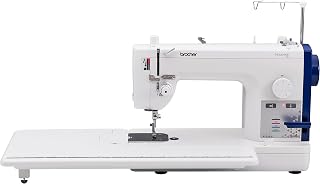
Brother PQ1600S Review: Fast Straight Stitching With Boundaries
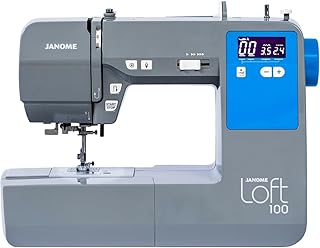
Janome Loft 100 Review: Smooth Computerized Sewing in a Compact Body