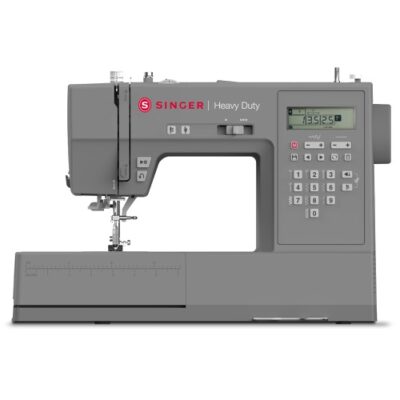
Singer 9985 Review: Color-Touchscreen Depth With Setup-Sensitive Automation
At a Glance
KEY FEATURES
- 960 built-in stitches
- 6 lettering alphabets
- 13 one-step buttonholes
- 850 spm published maximum
PROS
- The color touchscreen makes a very large stitch library easier to browse
- Owners praise smooth, quiet sewing and the sense of upgrading from a basic machine
- Automatic trimming, tie-off, mirror imaging, and needle stop support complex projects
- Adjustable presser-foot pressure and a broad foot set expand fabric and technique range
CONS
- Pedal failure or inconsistent pedal behavior appears in several negative accounts
- Some owners dislike buttonhole results or experience jams and cutter trouble
- The large feature set creates a learning curve and makes the manual important
- Missing or damaged accessories and packaging appear in some arrival reports
Editorial Rating
Based on supplied customer reviews and verified product documentation
Price and availability subject to change
On the 9985, the touchscreen is worth paying attention to only if it helps with a chosen technique. Owners describe decorative exploration, teaching at a limited speed and quieter ordinary seams. Those are different uses of the controls, and each puts a different demand on the operator and the machine.
Teaching slowly and exploring patterns are different benefits
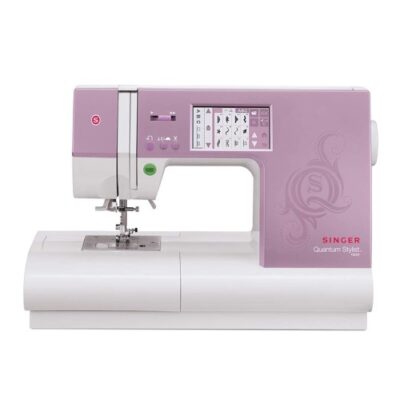
The 9985 uses its color touchscreen to browse 960 stitches, preview settings, and control supported editing. Six alphabets, mirror imaging, elongation, and a 40-character memory can turn labels and borders into repeatable sequences.
That capability is valuable for decorative and garment work. It is excess interface for someone who will use straight stitch, zigzag, and a single buttonhole. Before paying for the screen, identify three projects that need its memory or editing rather than admiring the menu in isolation.
Automatic trimming does not finish every thread end
A supplied owner liked cutting at the end of a seam while noting that starting tails still needed attention. That modest detail is a useful way to assess automation: identify the hand movement removed and the work that remains. The same approach applies to the screen and stitch editing. They can make a repeated operation easier without eliminating preparation, judgment or the need to understand an unfamiliar control.
Tools for changing technique
Singer includes everyday garment feet along with walking, quarter-inch, open-toe, satin, cording, and darning/embroidery options. Adjustable foot pressure, drop feed, automatic trimming, speed limiting, and needle stop mean the chassis can move between garments, appliqué, and moderate quilting.
The machine still publishes only 6.6 inches from needle to tower. A walking foot improves layer feeding; it does not enlarge the throat. A serious large-quilt workflow may need a wider-bed machine even if the 9985 has more stitch choices.
| Capability | What changes |
|---|---|
| Walking foot | Layer feeding |
| Extension support | Fabric weight around the bed |
| 6.6-inch throat | Hard limit on roll space |
| 960-stitch library | Decorative choice, not physical clearance |
Choosing creative range over a simpler setup
At 850 stitches per minute, the 9985 is not the fastest Singer in this expansion set. Its advantage is the combination of a navigable screen, automated thread handling, stitch editing, lettering, pressure adjustment, and accessories.
The 9985 fits a dedicated home sewing area where the owner wants to explore. A simpler 9960 can offer much of the functional range with a less premium interface, while a 6700C is faster for utility work.
- Inventory every presser foot and accessory
- Test the pedal at very low speed
- Make buttonholes in two fabric weights
- Run automatic trim and tie-off repeatedly
- Save and replay a lettering sequence
Positive owners describe years of smooth, quiet sewing, approachable touchscreen control, and a substantial creative upgrade. Negative reports identify pedal faults, mediocre or failed buttonholes, thread jams, cutter trouble, and an isolated oil-on-fabric complaint.
A premium label does not make those signals disappear. Test the pedal from a crawl to maximum, all planned buttonhole styles, the threader, cutter, tie-off, reverse, needle stop, and a dense sequence. If one control behaves intermittently, document it and use the seller remedy instead of assuming it will improve.
See the Singer 9960 vs 9985: LCD Value or Touchscreen Depth? for the direct decision between the 9985’s touchscreen depth and the 9960’s lower feature tier.
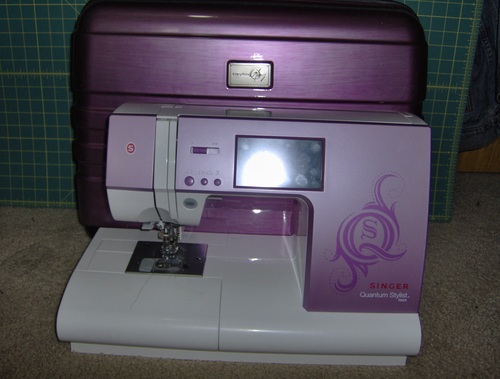
Customer photos
Pros & Cons Analysis
Based on supplied customer reviews and verified product documentation
Pros
- The touchscreen supports deliberate decorative selection. An experienced owner valued browsing and adjusting a large collection of patterns. The benefit is finding and refining an intended stitch, rather than simply owning a high stitch count.
- Speed limiting can help teaching. One owner used the low setting with learners who were uneasy about fast sewing. That is a concrete role for the control beyond describing the machine as computerized.
- Trimming and needle movement reduce handling. A supplied account valued cutting at the end of a seam and removing the work conveniently. The same account notes that starting tails still need attention, so automatic cutting is not a completely finished seam.
Cons
- Automation adds operations to learn. The threader, trimming and pattern adjustments require familiarity with the manual. A favorable first impression does not remove the setup burden of using the full range well.
- Pedal and stitch-function complaints qualify the upgrade story. Other owners describe pedal trouble, jams or unsatisfactory buttonholes. These affect the intended workflow and should not be reduced to dislike of a complex menu.
- Delivery condition is a separate variable. Missing or damaged accessories appear in the evidence. Inspecting the purchased package matters even when the core sewing functions are well regarded by other owners.
Our Verdict
Pay for the 9985 when the touchscreen earns its place
The 9985 is a creative-control machine whose value depends on actually using its screen, memory, alphabets, and automation.
It suits garment and decorative sewists who want a deep but organized feature set.
A premium interface still needs a sound machine
Its domestic throat, 850-spm pace, and owner-reported control faults make arrival testing essential.
- Plan uses for the screen before paying for it
- Test pedal, buttonholes, threader, and cutter as a system
- Do not confuse included quilting feet with wide-throat space
Frequently Asked Questions
What is the purpose of the Singer 9985 color touchscreen?
It helps browse 960 built-in stitches, preview settings and organize supported editing and lettering. Its value is greatest when decorative sequences are frequent rather than occasional experiments.
Does the 9985 allow presser-foot-pressure adjustment?
Yes. Adjustable pressure offers another way to tune fabric handling alongside the included feet and drop feed. Test the setting on the actual material instead of assuming a universal position.
Is the 9985 faster than the 9960?
No. Both have a published maximum of 850 stitches per minute. The 9985 premium is about its screen, six alphabets and editing depth, not a higher speed ceiling.
Is the Singer 9985 a wide-throat quilting machine?
Its documented right-of-needle space is about 6.6 inches. Quilting feet and a table support the work, but they do not turn that domestic opening into a wide throat.
What should I try before keeping a new 9985?
Make buttonholes in two fabric weights, replay a lettering sequence and repeat pedal, trim and tie-off operations. The 100 supplied owner texts include faults in those systems despite many positive creative-use reports.
Technical Specifications
| Machine class | Premium computerized domestic sewing machine |
|---|---|
| Control type | Color touchscreen plus direct controls |
| Primary functions | Garment, decorative, lettering, craft, and moderate quilting work |
| Built-in stitches / applications | 960 built-in stitches / more than 1,000 applications |
| Maximum sewing speed | 850 stitches per minute |
| Speed control | Slider, start/stop button, and foot control |
| Maximum stitch length | 5 mm |
| Maximum stitch width | 7 mm |
| Needle stop up/down | Yes |
| Needle threader | Built in |
| Thread cutter | Automatic |
| Bobbin / looper system | Top drop-in Class 15 transparent bobbin |
PooLin EOC02 Review: Beginner-Friendly Controls With Thick-Layer Limits
Juki HZL-F600 Review: Box-Feed Precision With a Serious Learning Curve
Janome 9410QC Review: Premium Quilting Control With a Bundle Caveat