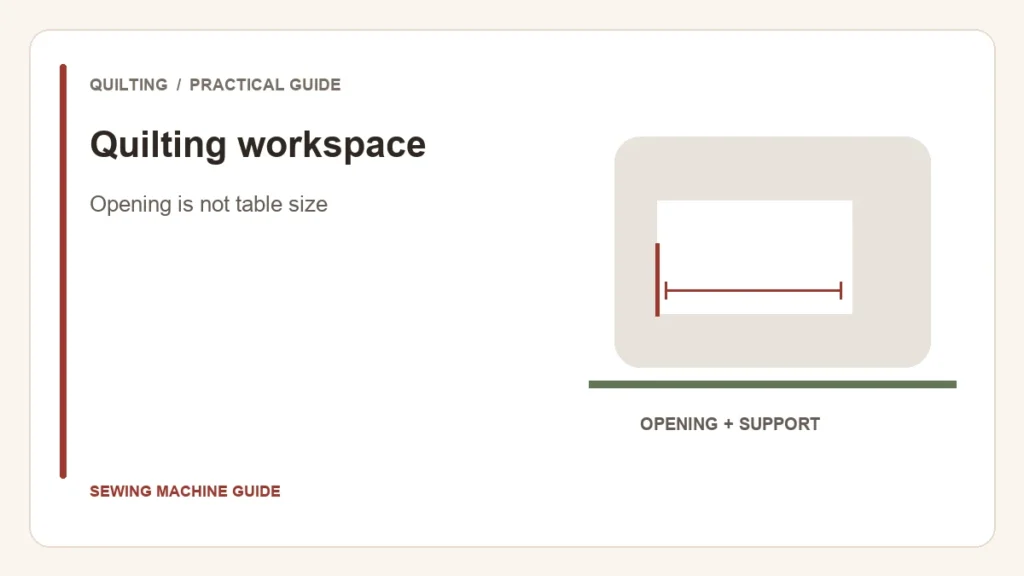
Throat space is the opening you work within; table size is the support around it. Record both before comparing quilting machines. A larger extension table cannot move the machine’s upright farther from the needle.
Make a workspace worksheet
| Measurement | What to record | Why it matters |
|---|---|---|
| Space to the right of the needle | Manufacturer’s horizontal measurement and its stated reference points | Room for the part of the quilt inside the arm |
| Vertical opening | Published height, or a clearly identified measurement | Room above the accumulated fabric |
| Level support | Surface in front, behind and to the left | Whether the quilt hangs and drags |
| Installed footprint | Machine, table and access space | Whether the setup fits the room |
| Operator position | Chair or standing height and reach | Whether the useful sewing area is comfortable to reach |
Keep the maker’s original wording beside converted units. Do not treat an overall machine width as needle-to-upright clearance. If height is not published, mark it unknown instead of calculating a fictitious opening area.
Distinguish moving the fabric from moving the machine
A domestic or sit-down setup commonly asks you to move the fabric. A frame setup changes the arrangement and has its own space needs. Janome’s Quilt Maker range separates frames and adjustable sit-down tables; those are different installations, not just different throat measurements.
Compare machines within the workflow you intend to use. A frame’s advertised size cannot be inserted into a domestic-machine clearance table as though it measured the same thing. Include room to access the actual setup, not only whether its outline fits against a wall.
Bring representative bulk to the demonstration
- Identify the largest recurring project, rather than the largest quilt you might someday make.
- Prepare a representative sandwich or ask the dealer for a comparable handling demonstration.
- Arrange the external support you would have at home.
- Move through a realistic section of the planned quilting path without forcing the bulk through the opening.
- Note the specific restriction: internal clearance, hanging weight, reach or turning room.
Upgrade the restriction you can identify
Improve external support when hanging fabric is the obstacle. Investigate a different opening or work method when internal bulk remains the constraint. The regular-machine quilting assessment covers basic capability; this worksheet is for comparing the physical workspace after that check. Use the quilting shortlist with these measurements rather than ranking machines by one arm-length number.