Juki TL-18QVP Haruka Review: Micro-Lift, Layered Seams and Setup Limits
At a Glance

KEY FEATURES
- Straight-stitch lockstitch machine
- Published maximum 1,500 spm
- Micro-lift approximately 0–2 mm with compatible setup
- Button trimming and heel switch with stopper
PROS
- Micro-lift adds a specific adjustment for uneven material feeding
- Stitch appearance and bulky-seam success recur in the supplied feedback
- Knee lift, speed limiting and trimming support repeated straight-seam work
- Included stopper lets a buyer disable the heel-trimming switch
CONS
- Straight stitch only; no zigzag or buttonholes
- Threader and walking-foot difficulties recur in the sample
- Several owners find the lighting insufficient
- Official weight and table measurements conflict; confirm the delivered package
Editorial Rating
Based on supplied customer reviews and verified product documentation
Price and availability subject to change
The Haruka premium should answer a recurring feeding problem. If micro-lift changes nothing about the buyer’s actual seam, the shared TL-series controls may already cover the job. Start by comparing that need with the practical work of threading, attaching the foot and arranging the workstation.
This review combines Juki documentation with 69 supplied Amazon review texts, of which 52 contained usable detail after screening. We have not tested the machine. The texts do not preserve verified-purchase or variant labels, and two ambiguous model references were excluded.
Does this seam actually benefit from float?
Juki documents approximately 0–2 mm of float. Think of this as another adjustment to investigate on a troublesome seam, not permission to force a thicker stack through the machine. The published lift of the stopped presser foot describes loading clearance; it does not establish a maximum material thickness the machine can sew.
There is an important limit in the TL-18QVP manual, page 11: fully tighten the micro-lifter dial when using a walking or quilting foot. The standard-foot float setting and the free-motion setup are different operating arrangements.
| Adjustment | What the buyer should assess |
|---|---|
| Presser-foot pressure | Whether the selected pressure moves the actual seam stack evenly |
| Micro-lift | Whether a slight float improves the difficult transition with an appropriate foot |
| Knee lever | Whether the seated position lets you lift the foot without disturbing the work |
| Speed ceiling | Whether starts and corners remain comfortable at a deliberately limited speed |
Attractive straight stitches and successful bulky seams recur in the supplied feedback. Quilters, bag makers and a costume maker describe useful improvements over their previous machines. Those accounts help explain the Haruka’s appeal, but they do not establish an approved layer count or a leather-working specification.
Two other texts describe uneven feeding despite adjustments. One changes from early enthusiasm to disappointment after trying a garment fabric. A machine can therefore be a satisfying specialist for one owner and a poor match for another project. Bring a sample with the intersection, lining and seam allowance you actually use to a demonstration.
With straight stitch as its only stitch formation, the Haruka still needs a companion for zigzag or machine-made buttonholes. If you want one machine for garment details as well as quilting, the existing quilting machine shortlist offers a more useful starting point than adding accessories to change this machine’s basic function.
Choose the pedal-cutter arrangement
One supplied owner directly reports uneven pedal speed and unexpected trimming. Another discusses problems they have read about elsewhere; that secondhand account is not an additional observed failure. Other texts praise the cutter.
For a buyer who simply dislikes heel-triggered trimming, Juki lists a foot-switch stopper and shows its installation on manual page 18. It disables that switch while leaving the machine’s cutter button available. It should not be presented as a repair for a controller that malfunctions. Test both the normal pedal action and your chosen trimming arrangement before committing a difficult project to the machine.
Early satisfaction and later repair can both be true
A supplied owner describes an enjoyable initial period followed by thread trouble and service. That chronology prevents two shortcuts: calling the early stitch quality proof of durability, or ignoring the successful work because of the later fault. For an expensive specialist, the decision includes how often its extra adjustment will help and how service will be obtained if the machine stops meeting that purpose.
The threader, foot and light used every session
Needle-threader difficulty appears repeatedly, including accounts from owners who otherwise love the machine. Some learned it successfully; others prefer hand threading. The manual also restricts the threader to particular needle sizes. A demonstration should include threading the needle you intend to use, rather than only watching the machine sew after someone else has prepared it.
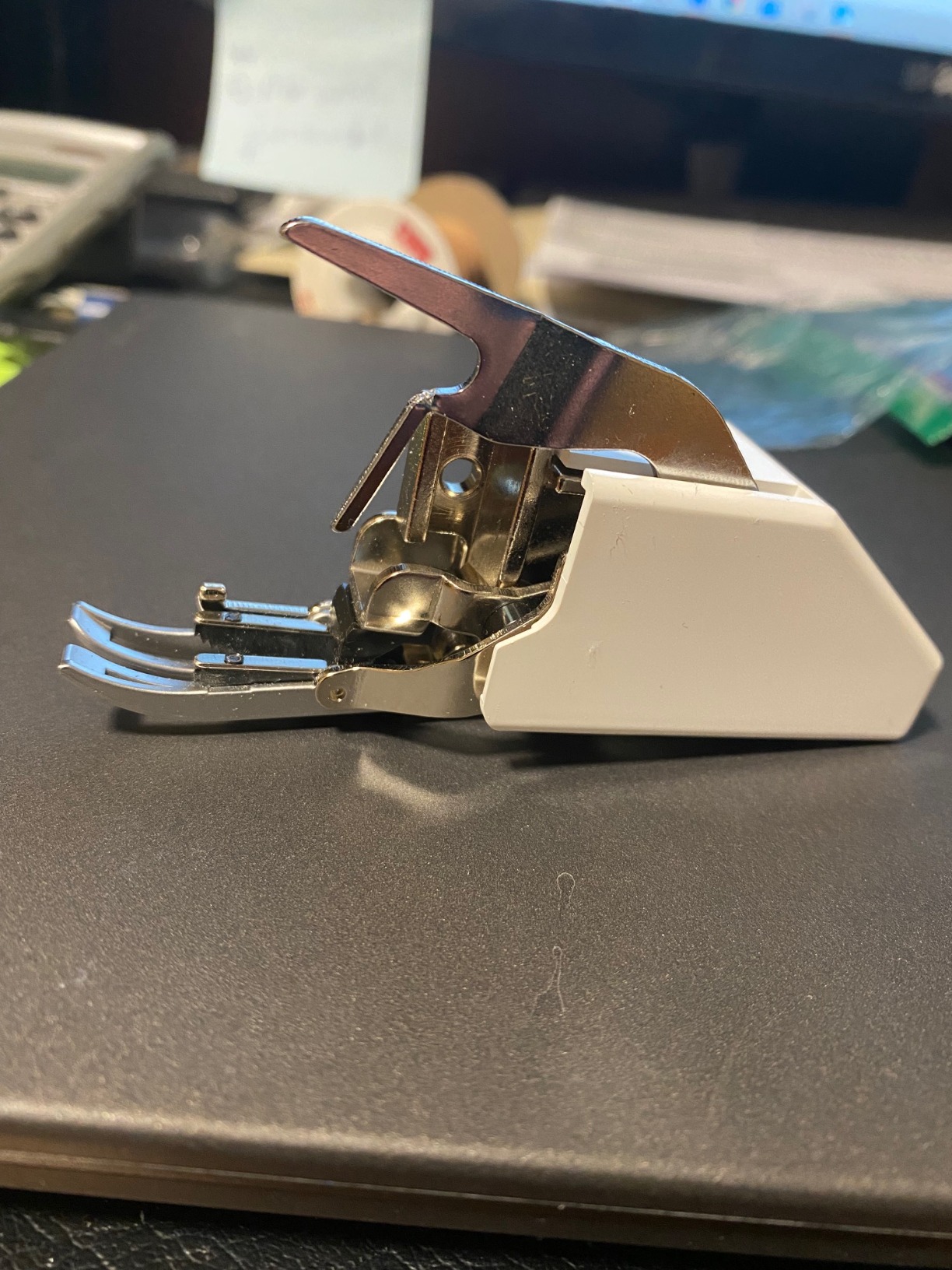
Walking-foot complaints recur too, covering marks, alignment and interference. Another owner praises that foot. These are reports about particular delivered accessories, not proof that every foot is defective or that an online modification is the answer. Check clearance and stitch formation with the correct attachment procedure; refer persistent interference or damage to the seller or authorized service.
Lighting is a separate recurring criticism. The Haruka has adjustable LED brightness, but several owners still wanted better illumination across their work. Judge visibility at your own table, especially with dark thread and fabric.
Fit the whole Haruka station into the room
The official product page and manual disagree on machine weight and auxiliary-table depth. Juki’s page lists 11.5 kg, while the manual lists 11.9 kg. Treat it as a substantial machine to carry, and confirm the delivered table dimensions if storage is tight. The extension table supports fabric outside the machine; it does not enlarge the opening to the right of the needle.
- Try the actual bag seam or quilt intersection, including a restart on the thick section.
- Demonstrate threading, bobbin access and the manual’s maintenance routine.
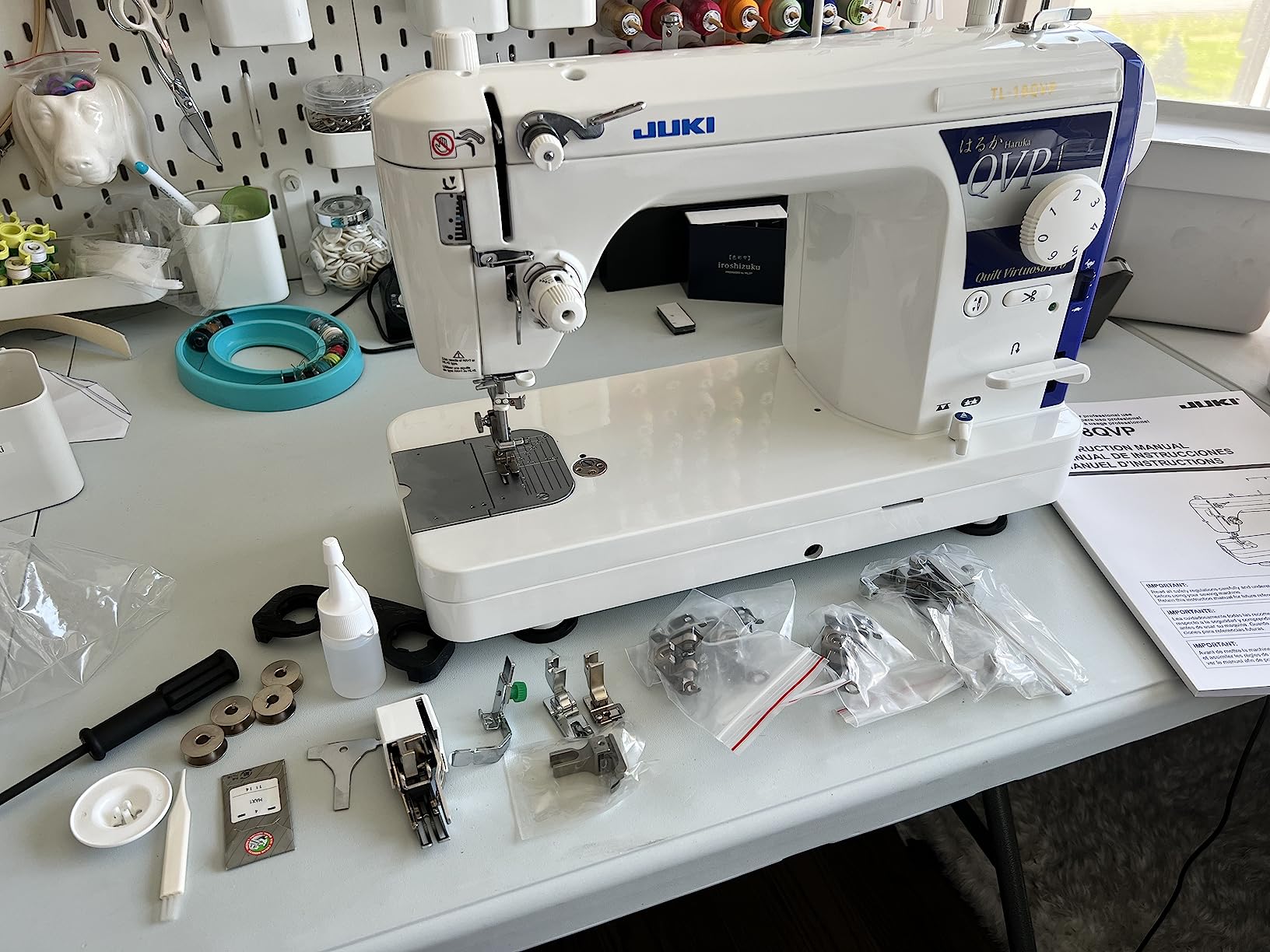
- Inspect the delivered walking foot and compare the box contents with the seller’s written list.
- Check seated knee-lever reach, pedal position and lighting at the intended table.
The TL-18QVP versus TL-2010Q comparison separates the Haruka’s added controls from features both machines already provide. If micro-lift solves no recurring problem for you, the TL-2010Q review deserves attention before paying for the Haruka package.
Customer photos
Pros & Cons Analysis
Based on supplied customer reviews and verified product documentation
Pros
- Straight-stitch quality has detailed owner support. One user reports two years of enjoyable, beautiful sewing before later trouble. The early success is meaningful, while the later update prevents presenting it as uncomplicated durability evidence.
- Micro-lift offers a specific feeding adjustment. Its purpose is handling how material moves under the foot. That is a more useful distinction for layered-seam work than a general claim of greater power.
- Hands-free controls suit repeated seam work. Knee lift, speed limiting and trimming can reduce repositioning between runs. The supplied heel-switch stopper is relevant when the operator dislikes accidental trimming.
Cons
- Later service needs can follow excellent results. The long-term account describes jamming and reported hook-timing work after an initially good period. Attribute that sequence without inferring a failure rate or endorsing an owner diagnosis.
- Lighting and supplied walking-foot quality matter. The same buyer disliked the light and reported an initially misaligned walking foot. Those affect seeing and guiding the work even when the basic straight stitch is attractive.
- Threading aids do not eliminate setup effort. Recurrent threader complaints remain relevant to someone switching from a more automated machine. Allowing for that learning is different from tolerating damaged or poorly aligned parts.
- It is a specialized purchase with package uncertainty. Zigzag and buttonholes still require another machine, and conflicting published measurements should be resolved for the delivered package. A semi-industrial description does not settle either issue.
Our Verdict
Choose Haruka for a recurring seam problem
Its most convincing role is beside an existing domestic machine, where adjustable float helps address a seam transition you encounter often. A useful demonstration should show that improvement on your material.
Pass when the extra controls solve nothing
Routine cotton piecing does not by itself establish a reason to upgrade from a capable TL-2010Q. Allow for threader practice, the prescribed care routine and access to service.
Frequently Asked Questions
Does the TL-18QVP sew zigzag?
No. Its stitch formation is straight lockstitch; buttonholes and zigzag require a different machine.
Can micro-lift stay on with the walking foot?
Juki instructs the user to fully tighten the micro-lifter dial when using walking or quilting feet. Follow the exact foot setup in the manual.
Can heel-triggered cutting be disabled?
Yes. Juki lists a foot-switch stopper and illustrates fitting it in the manual. This disables that switch; it is not a repair for a faulty controller.
Is the Haruka proven to be reliable?
The supplied texts include both sustained satisfaction and breakdown or repair reports. They do not provide a representative reliability measure, and we have not tested durability.
Technical Specifications
| Machine class | Portable straight-stitch sewing and quilting specialist |
|---|---|
| Control type | Mechanical stitch controls with electronic speed control |
| Primary functions | Straight seams, piecing and supported free-motion quilting |
| Built-in stitches / applications | Straight stitch only |
| Maximum sewing speed | 1,500 stitches per minute (published) |
| Speed control | Foot control with maximum-speed slider, 200–1,500 spm ceiling |
| Maximum stitch length | 6 mm |
| Maximum stitch width | Straight stitch only |
| Needle stop up/down | Button control; low-speed inching |
| Needle threader | Lever-operated; manual specifies needle-size restrictions |
| Thread cutter | Automatic button and heel switch; stopper disables heel switch |
| Bobbin / looper system | Vertical full-rotary hook |
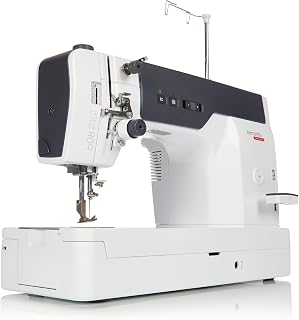
Bernette B08 Review: Straight-Stitch Speed With a Narrow Purpose
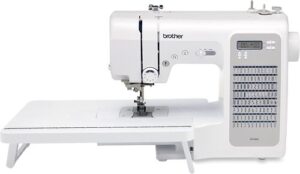
Brother CP100X Review: Speed Control, Quilting and Owner Tradeoffs
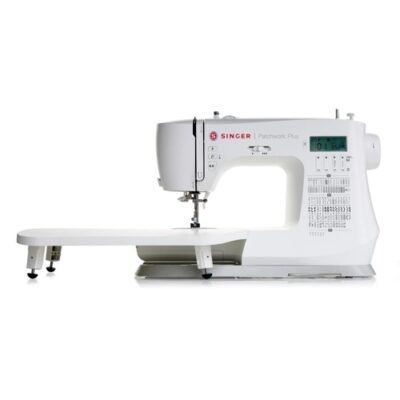
Singer C5980Q Review: Quilting Controls With Early-Hardware Warnings