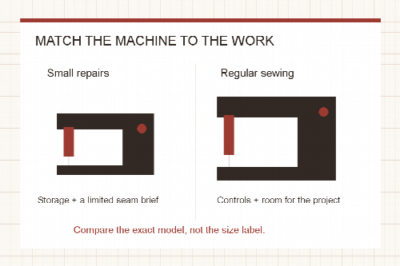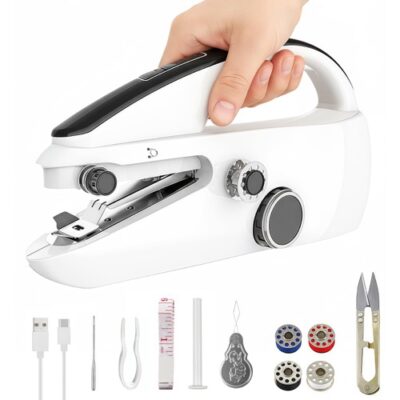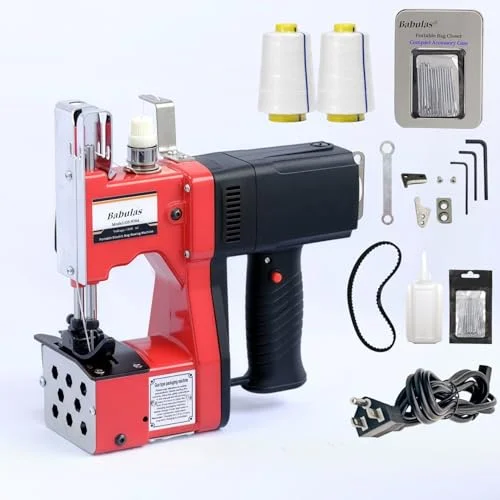
A bag closer and a cobbler patcher solve different access problems. The closer moves along a sack opening; the patcher supports a repair while the operator guides the stitching. Neither becomes a general-purpose sewing machine simply because its listing mentions leather, canvas and bags.
Start with a bag closer for sack openings
If the repeating job is closing feed or similar packaging, this is the more relevant format. The machine moves to the work, and the seam must suit the contents and packaging requirements.
Investigate a patcher for repair access
If the problem is reaching and guiding a small repair, investigate the exact patcher configuration. Motor control, mounting and service support matter as much as the materials in the listing.
“Bag sewing” can describe two unrelated purchases
Closing a filled sack is not the same operation as assembling a backpack. In the supplied Babulas feedback, buyers expecting to make backpacks or purses describe a mismatch despite praising the machine’s power. Owners closing feed bags report a more appropriate use. The Babulas corded review follows that distinction rather than treating every bag project as equivalent.
| Your requirement | What to investigate | What not to assume |
|---|---|---|
| Repeated sack closure | Bag closer, compatible thread and packaging seam | A stitched opening is automatically airtight |
| A small leather repair | Exact patcher access, seam control and support | A motor makes fine control easier |
| Backpack or purse assembly | A machine appropriate to its seams, corners and material | A bag closer replaces a construction machine |
| Routine garment sewing | A conventional machine with the needed stitch functions | Industrial styling supplies garment features |
Look at how the seam is controlled
The Babulas evidence repeatedly describes fast starts and substantial handheld weight. A sensitive trigger appears in one account. These are practical limits for someone who needs deliberate control of a short seam, even when the same speed is useful on a sack.
The ColouredPeas motor-and-base kit presents a different control issue. Several owners report excessive powered speed or an on/off pedal; others obtain useful manual stitching. Buying a powered version does not establish a controllable minimum speed. Verify the exact controller rather than transferring a familiar domestic-pedal expectation.
Price the usable setup, not just the machine head
- Support: ColouredPeas owners report both a substantial base and mounting-fit problems. Those findings are compatible; weight and fit are separate properties.
- Consumables: Babulas feedback includes a spool-format difficulty. Confirm replacement supplies and exact documentation before relying on the first prethreaded sample.
- Service: an owner’s success after a new motor or mechanical alteration is evidence about a modified setup. It is not a reason to assume the original package works the same way.
Should I follow customer repair modifications?
Customer modifications explain why experiences differ, but are not verified operating procedures. Use exact-model instructions and qualified support for mechanical or electrical changes. A kit requiring undocumented corrections may be the wrong purchase for a deadline-driven job.
Choose the format before comparing the offers
- For recurring sack closing: compare bag closers on compatible seams, consumables, handling and controls.
- For repair work: confirm the patcher’s access and a supported setup for the actual seam.
- For bag construction or clothing: choose a suitable conventional or industrial construction machine; these two specialist offers are not a shortlist of substitutes.
There is no useful overall winner between these formats. The better purchase is the one built around the operation you need to complete, with documentation and support adequate to keep doing it.