Babulas Bag Closer Review: Fast Sack Closing, Not Backpack Construction
At a Glance
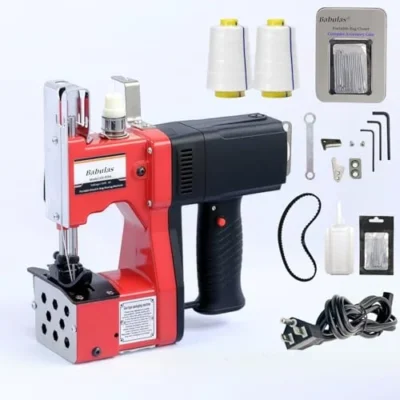
KEY FEATURES
- Red corded 110V bag-closing offer
- Listed 1,600–1,900 stitches/min and 6.4 lb
- Manual/automatic thread-cutting modes listed
- Included starter thread, needles and tools
PROS
- Owners report fast feed-bag and sack closures
- Useful when the stitcher must move to the work
- Starter consumables are included in the corded offer
CONS
- Weight can make handheld operation tiring
- Fast response and a sensitive trigger need care
- Rethreading guidance receives conflicting feedback
- Not a substitute for precise bag construction
Editorial Rating
Based on supplied customer reviews and verified product documentation
Price and availability subject to change
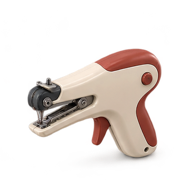
The Babulas red corded bag closer is for someone with sacks to close. That may sound obvious, but two owners bought it expecting a tool for backpacks or purses and discovered that the stitch and handling did not suit their intended construction. Its most convincing customer results come from feed, fertilizer and other bag-closing work.
Closing a filled sack is its clearest job
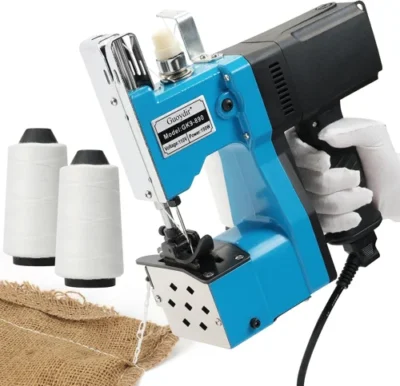
An owner describes resealing animal-feed bags and closing sandbags; another reports a commercial-looking seam when dividing feed into smaller bags. Those outcomes match the current red 110V offer, which identifies the tool as a packaging machine rather than a household sewing machine.
Recurring sack work
The useful advantage is moving the stitcher to a bag and closing its opening. Owners who actually handle feed or packaged material describe a clearer use for it than buyers attracted only by the phrase heavy duty.
Constructed bags
A customer already making backpacks and pouches found the stitch unsuitable for their project. Strong material penetration does not establish the seam precision, access or finish needed to assemble a bag.
Other owners report tents, canvas and sail bags. These are encouraging individual results, not permission to assume suitability for a structural sail seam or every coated fabric. Match the required seam before choosing the tool.
Speed arrives together with a handling burden
The listing specifies 1,600–1,900 stitches per minute and a weight of 6.4 pounds. Owners repeatedly call it fast and powerful, while several emphasize how heavy it feels in use. One found the weight too much for comfortable handheld work. A portable tool can therefore solve access without being comfortable for every operator.
The cord is another practical boundary. One account praises its length while others wanted more reach. Without a verified cord measurement, those comments support planning the workstation rather than promising a particular working radius. This reviewed offer is corded; its evidence should not be reused as a review of a battery version.

The first spool is easier to trust than the next one
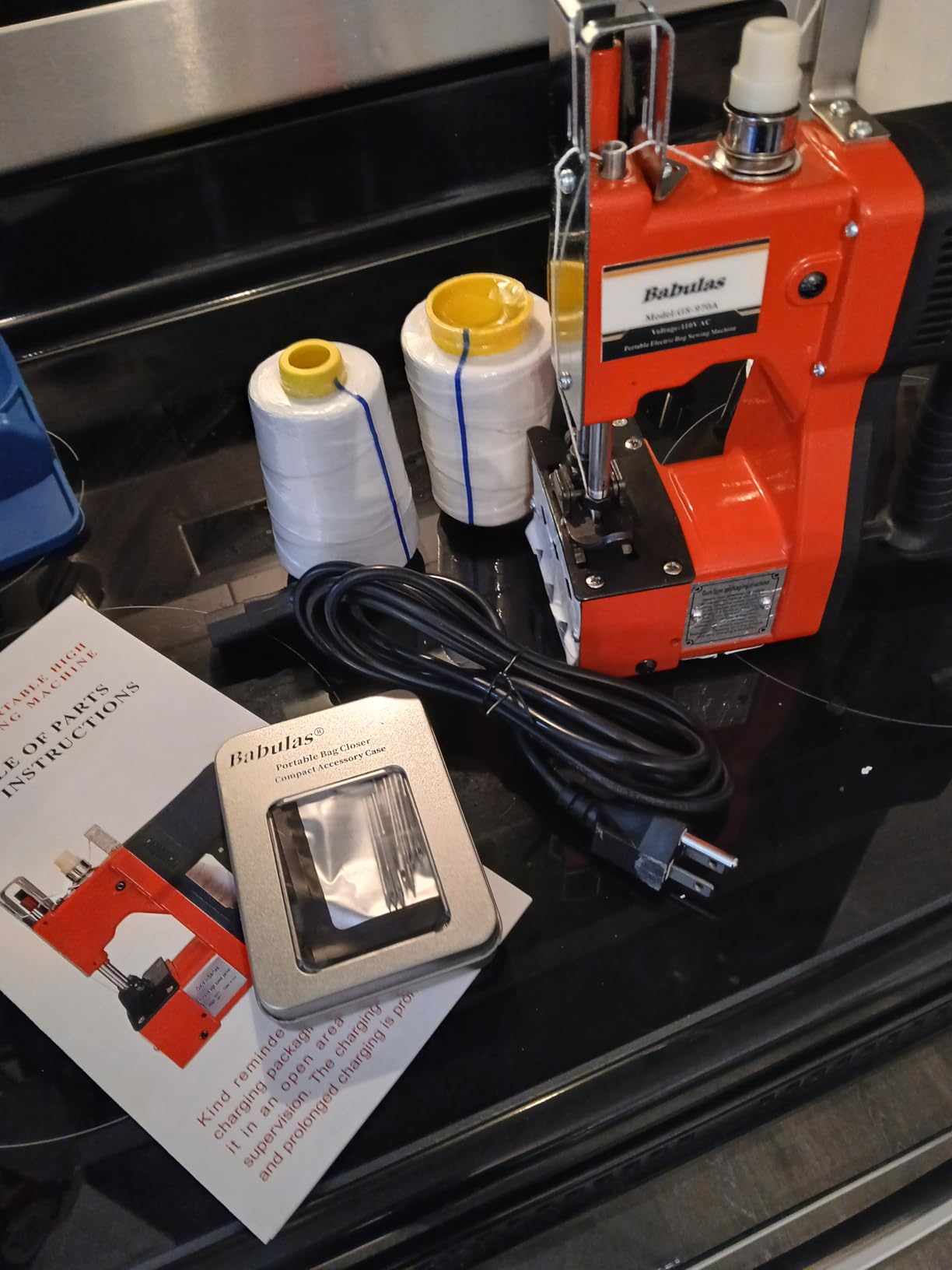
A customer reports receiving the machine prethreaded and ready for use. Others appreciate the extra thread and needles. However, a buyer who obtained an acceptable sample seam could not find a usable rethreading diagram, and another describes the booklet as mainly a parts guide. A different owner praises the manual, so instruction quality is not uniformly reported.
- Get the exact threading instructions: the factory-threaded sample does not show how easy routine spool changes will be.
- Check consumable fit: one owner reports a spool-format problem; the existence of spare thread does not establish compatibility with arbitrary cones.
- Keep package differences separate: the live listing specifies needles, thread, oil and tools, while individual accounts mention additional items that may not be guaranteed today.
Does a stitched closure make a bag airtight?
No airtight or moisture-barrier performance has been established here. One owner describes adding several seams while trying to obtain a tighter closure. That is not a tested sealing method. Food, moisture and contamination protection require packaging appropriate to the contents, not an assumption based on a neat stitch.
Ignore durability multipliers; look at the job completed
The seller’s numerical durability claims are not supported by comparative testing in the supplied evidence. Owners generally describe substantial construction, but one calls the materials flimsy. Neither the weight nor an early successful seam proves long-term service life.
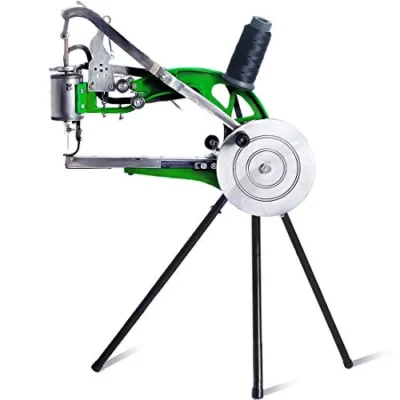
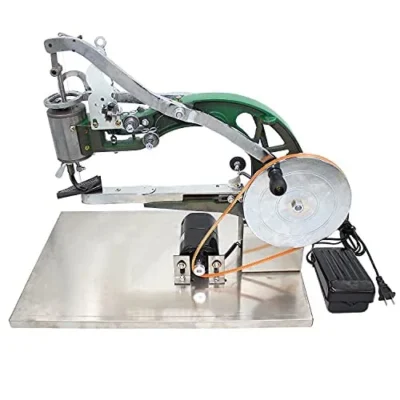
For repeated sack closing, the reported speed and completed feed-bag work are the persuasive points. If your real requirement is reaching a small leather repair or guiding a shaped seam, use the bag-closer and cobbler-patcher distinction before buying a machine simply because it can be carried.
Pros & Cons Analysis
Based on supplied customer reviews and verified product documentation
Pros
- Speed serves an actual repeated task: accounts of closing feed, fertilizer and sandbags align with its packaging role. This is stronger support than generic praise for motor power.
- Large items need not fit a domestic bed: owners describe working on tents and canvas as well as sacks. Those examples indicate useful access, with no universal claim about seam strength or coated materials.
- Starter supplies reduce initial sourcing: owners appreciate thread and needles, and the current offer identifies these consumables. Their presence helps the first job but does not establish compatibility with every replacement spool.
Cons
- Carrying weight remains working weight: several customers find the tool heavy in the hand, including one unable to use it comfortably that way. Portability should not be mistaken for low-effort operation.
- The control response can surprise a new operator: reports of very fast starts and a sensitive button make controlled handling a material buying consideration. A measured minimum speed has not been verified.
- Routine rethreading may require better guidance: one owner obtained a sample seam but lacked a clear rethreading diagram. Positive manual feedback exists too; confirm the actual documentation rather than assuming all kits are alike.
- The seam can be wrong for the project: backpack and purse buyers describe a mismatch between their construction needs and this packaging tool. Strong stitching through heavy material does not resolve that mismatch.
Our Verdict
A useful tool when sacks are the recurring job
The Babulas has a clearer case for a feed room or packing station than for a general sewing room. Owners report fast, effective closures, but its weight and abrupt response need to fit the person doing the work.
- Worth considering: repeated bag closing where moving the machine to the sack is useful.
- Choose a different format: backpacks, fitted garments or controlled small leather repairs where the seam and access requirements differ.
Confirm the threading instructions and replacement consumables before relying on it beyond the first supplied spool.
How the editorial rating was decided
Editorial assessment on a five-point scale, not an Amazon star average or a hands-on test. Scores follow the industrial category criteria in order: stitch quality and control, setup and use, project fit, then build/accessories/value. Reported sack-closing results support project fit; handling weight, sensitive control and conflicting rethreading feedback reduce ease and control. No durability multiplier or airtight performance is credited.
Frequently Asked Questions
Is this for making backpacks?
It is primarily a packaging tool for closing sacks. Customers expecting backpack or purse construction report a mismatch, even while praising its power.
Is this the cordless version?
No. This review covers the red 110V AC corded B0DZDB51Z4 offer. Battery versions need separate verification.
Will the seam keep feed airtight?
The supplied evidence does not establish airtightness, moisture resistance or food-preservation performance. Select packaging suited to the contents.
Technical Specifications
| Machine purpose | Portable sack / bag closing |
|---|---|
| Power source | 110V AC corded; red offer |
| Motor configuration | Electric; wattage not verified for this exact offer |
| Speed control | Fast trigger operation reported; proportional control not verified |
| Published material clearance | Exact clearance not verified |
| Stitch adjustment | Listing speed 1,600–1,900 stitches/min; adjustment range not verified |
| Table / stand included | Handheld format; no bench stand verified |