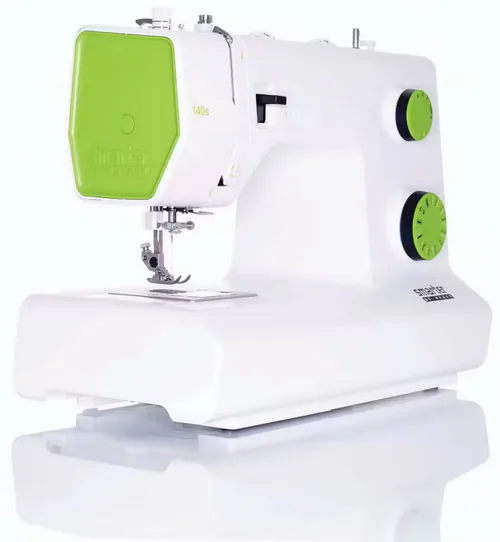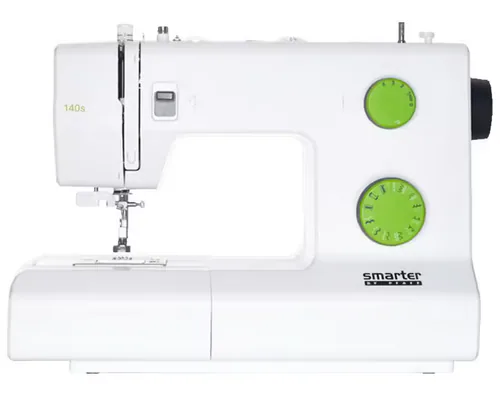
The Smarter 140s is worth considering when you want visible mechanical controls rather than a screen-led sewing routine. Its useful distinction is adjustable presser-foot pressure; its important convenience tradeoff is the manually sequenced buttonhole. Neither the feature list nor the short customer comments establishes flawless results on demanding fabrics.
Choose the buttonhole routine before the stitch total
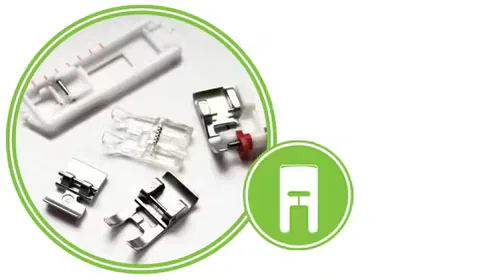
The PFAFF features sheet covers both the 140s and 160s, but their buttonholes are not interchangeable. It lists 21 stitches for the 140s and reserves automatic buttonholes for the 160s. The 140s merchant package includes a four-step buttonhole foot.
For repeated garment buttonholes
A four-step routine leaves more sequencing to the operator. If matching a row of buttonholes is a regular task, weigh that workflow against an automatic-buttonhole model before choosing on stitch count. This is a control difference, not evidence that the 140s produces poor buttonholes.
Adjustability is useful; a perfect seam is not guaranteed
Pressure and feeding
Adjustable presser-foot pressure gives you a setting to change when a fabric needs different handling. Seven-point feed dogs are also documented. Those features do not establish a safe layer count, eliminate every pucker or prove that a bulky quilt will feed successfully.
Stitch placement
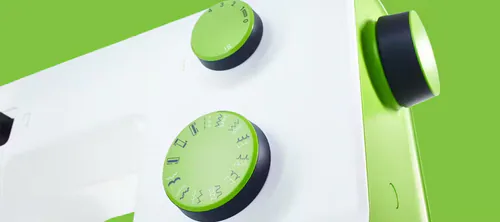
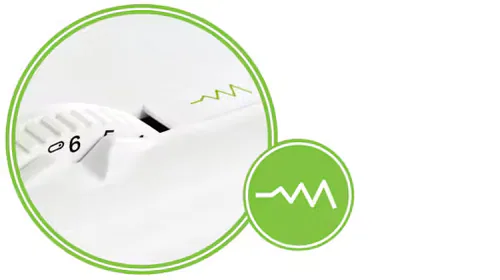
Adjustable straight-stitch needle position and up to 6 mm stitch width address placement and pattern width. A wider stitch is not a substitute for penetration power on thick material.
Documented setup and access features
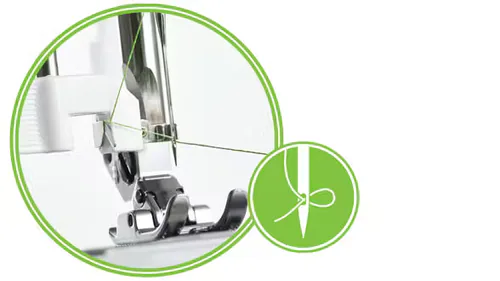
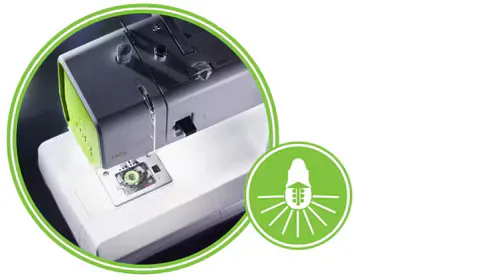
- Integrated needle threader, top-loading bobbin and LED lighting.
- Free arm and externally operated feed-dog drop.
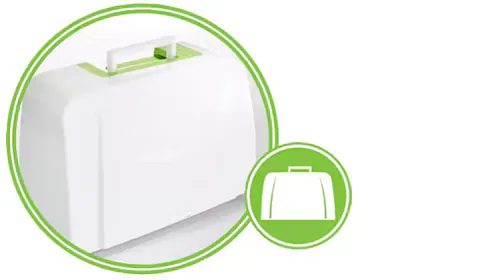
- Snap-on feet, five supplied feet and a hard cover.
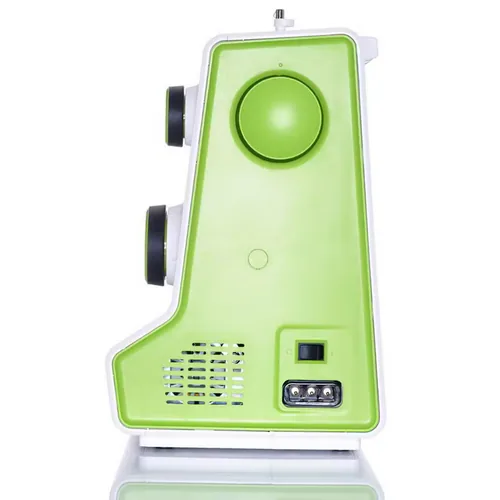
- A side-mounted thread cutter; this is not automatic thread trimming.
These are documented features, not independently measured usability results. The accompanying video covers the 160s as well as the 140s, so automatic-buttonhole demonstrations must not be assigned to this model.
What the customer comments actually tell us
The five displayed entries on the 140s merchant listing contain little project detail. Bradie Ormond expresses excitement about owning a Pfaff; Donna Brubaker says she is learning to use it. Neither describes a completed seam, fabric stack or reliability history.
Stephen Schmidt expresses a favorable quality impression and loyalty across several Pfaff purchases. That brand history is not a service record for this particular 140s. Katie Murphy gives only general approval, while Teresa Ostlund explicitly says she has not used the machine. These comments cannot support a claim that beginners universally find it easy or that it handles heavy work without difficulty.
Pros & Cons Analysis
Practical reasons to consider it
The documented pressure adjustment and needle-position control offer ways to adapt the setup to a task without navigating a display. For someone who prefers mechanical controls, that is a meaningful buying reason. It remains a specification-based assessment: the available comments do not demonstrate those adjustments on particular projects.
Tradeoffs to weigh
The four-step buttonhole is the clearest workflow compromise for frequent garment sewing. Separately, claims of universal heavy-fabric performance are unsupported; pressure adjustment and feeding features do not establish that capacity. No specific recurring malfunction can be inferred from these brief customer entries.
Our Verdict
Shortlist the 140s for its mechanical adjustment options if you are comfortable completing the buttonhole sequence yourself. Choose an automatic-buttonhole alternative when that repeated operation matters more than having simple dials. For bulky layers, seek exact-project evidence rather than treating the Pfaff name or the feed-system description as a capacity guarantee.
Product illustrations