Juki TL-2010Q Review: Straight-Stitch Control and Setup Tradeoffs
At a Glance
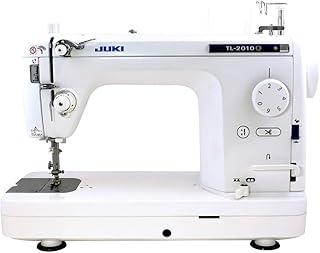
KEY FEATURES
- 1,500-spm maximum
- 200–1,500-spm slider range
- Automatic thread trimming
- Straight stitch only
PROS
- Stitch appearance and speed limiting recur as positives
- Needle positioning and knee lift support repeated seam work
- Useful dedicated straight-stitch role beside a domestic machine
CONS
- Needle-threader learning is a recurring difficulty
- Some owners need more light or dislike heel trimming
- No zigzag or buttonholes; inspect the delivered walking foot
Editorial Rating
Based on supplied customer reviews and verified product documentation
Price and availability subject to change
The TL-2010Q is easier to evaluate when the rest of the sewing room is included. If another machine already covers zigzag and buttonholes, this one can concentrate on repeated straight seams. The ownership questions then become manual setup, pedal habits and the delivered accessories—not whether it can replace every machine.
A specialist beside the machine you already own
Juki publishes a 1,500-spm maximum and a slider for limiting the maximum speed. Needle-position control, adjustable presser-foot pressure, a sub-tension unit and automatic trimming are also part of the machine. These shared TL-series functions should be checked before assuming a more expensive model is necessary.
Stitch appearance and speed are recurring positives in the supplied feedback. Some owners describe using the machine for quilt assembly alongside a domestic or embroidery machine. Their results are personal observations, not proof of industrial duty or a universal ability to sew every thick material.
The TL-18QVP Haruka adds micro-lift and other refinements. Consider it if a demonstration shows the added control solving a seam transition you encounter regularly. Our TL-18QVP versus TL-2010Q comparison explains why the upgrade is conditional.
If the TL-2010Q already provides the control you need, evaluate its complete offer on that basis. If your real requirement is one machine for both quilting and garment stitch functions, compare the broader quilting selections instead.
What changes after automatic tension and easy threading
Many comments describe difficulty with the needle threader, including enthusiastic reviews. Several owners eventually mastered it, while others continued to thread by hand. Ask to thread the intended needle yourself during a demonstration; a pre-threaded machine bypasses one of the most relevant ownership questions.
Bobbin-winding criticism appears in two texts, including one especially dissatisfied account. Several other owners praise the winding. That mixed evidence warrants a practical check, but does not justify treating the bobbin winder as the machine’s defining weakness.
The transition is not only about stitch quality
One free-motion user coming from simplified threading found the manual tension routine demanding and disliked how heel position interacted with cutting. The same account found the table surface useful. A buyer can therefore value the sewing platform and still struggle with the controls between seams. Evaluate those operations together, rather than assuming an attractive sample stitched by an experienced demonstrator predicts the first week of independent use.
Foot position and the decision to use heel trimming
Unintended heel activation or discomfort with the pedal recurs in the sample. Some owners adjusted successfully; others prefer the cutter button. One separate account describes erratic starting, speed and trimming and reports replacing the pedal. That is an individual malfunction account, not the same experience as learning where to rest a heel.
Check starts, controlled slow sewing and trimming in your normal seated position. A machine that starts unpredictably or otherwise malfunctions needs an authorized assessment, not a workaround copied from a comment.
Visibility and the delivered attachment
Walking-foot comments include both satisfactory use and complaints about noise, marks or accessory condition. Some owners also describe tension, jamming or skipped-stitch difficulties, with different outcomes. The texts do not allow a shared mechanical diagnosis.
Lighting limitations recur more consistently than the bobbin-winding criticism. Even with an LED at the needle, check whether the rest of your working area is visible. Support the quilt outside the machine and confirm that the material can be repositioned inside the arm.
- Fit the supplied foot using its documented instructions and check needle clearance.
- Sew a representative piecing intersection and inspect both sides.
- Try the chosen quilting arrangement with supported fabric.
- Confirm the exact included feet, table and service arrangements with the seller.
Customer photos
Pros & Cons Analysis
Based on supplied customer reviews and verified product documentation
Pros
- Straight-stitch specialization has a useful place. One owner described keeping separate machines for serging, general sewing and quilt finishing. The TL-2010Q makes more sense as a focused addition than as a replacement for zigzag and buttonhole functions.
- Control matters as much as maximum speed. Speed limiting, needle positioning and knee lift reduce the interruptions of repeated seams. Positive stitch reports support that working role without guaranteeing an effortless transition from an automatic-tension machine.
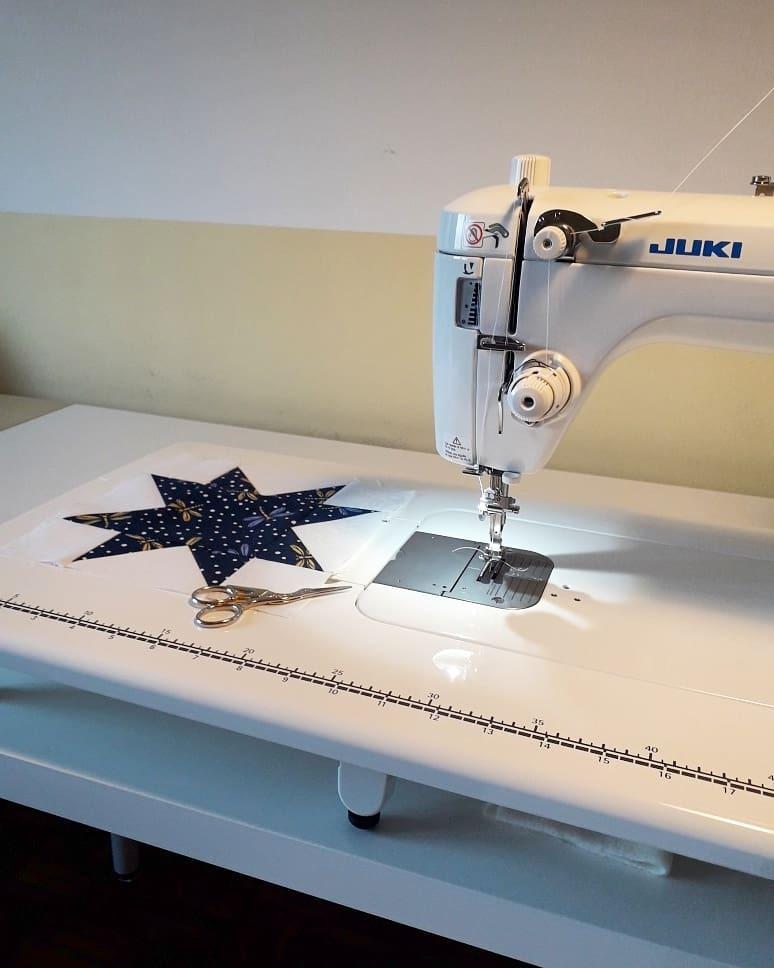
- The table can help move quilting work. A detailed user found the supplied surface already quite slippery and questioned the benefit of an extra mat. This illustrates a practical advantage of the work support rather than an assumption that more accessories always help.
Cons
- Manual setup can be a substantial transition. A user coming from simplified threading and automatic tension found balancing upper and bobbin tension demanding. That is a meaningful learning cost for someone expecting a familiar domestic-machine routine.
- Heel trimming can conflict with foot position. The same owner disliked accidental cutting when resting the heel. The feature saves a hand movement only when its pedal ergonomics suit the operator.
- Lighting and threader convenience remain reservations. These complaints recur in the screened feedback. Strong stitch appearance does not establish comfortable visibility or easy needle threading for every user.
- A straight-only purchase needs clear boundaries. No zigzag or buttonholes means another machine remains necessary for those tasks. Walking-foot condition also deserves its own inspection rather than being inferred from successful free-motion work.
Our Verdict
Keep a dedicated station for straight seams
The TL-2010Q is appealing when its shared TL-series controls meet your quilting and piecing needs and you already have another machine for zigzag.
Try the controls before accepting the machine
Check threading, pedal comfort, the delivered walking foot and project support. Recurring setup complaints deserve more attention than a model-wide judgment based on one strongly worded bobbin-winder review.
Frequently Asked Questions
Does the TL-2010Q sew zigzag?
No. It is a straight-lockstitch machine.
Is bobbin winding its main weakness?
Two screened texts describe winding problems, while several praise it. Threader and lighting complaints recur more consistently.
Does the sample prove durability?
No. The supplied texts contain both satisfaction and problem accounts, without verified ownership or representative sampling.
Technical Specifications
| Machine class | Semi-professional straight-stitch quilting machine |
|---|---|
| Control type | Mechanical controls and foot pedal |
| Primary functions | Straight stitching, quilting, tailoring and home décor |
| Built-in stitches / applications | Straight stitch only |
| Maximum sewing speed | 1,500 stitches per minute |
| Speed control | Slider adjustable from 200 to 1,500 spm |
| Maximum stitch length | 6 mm |
| Maximum stitch width | Straight stitch only |
| Needle stop up/down | Predetermined needle-down stop |
| Needle threader | Built in |
| Bobbin / looper system | Side-loading industrial-style hook |
| Workspace right of needle | Approximately 9 inches |
| Buttonholes / eyelets | None |
| Warranty | Juki limited warranty; confirm current registration and seller eligibility |
Bernette B77 Review: Premium Control With a Real Learning Curve
PooLin EOC02 Review: Beginner-Friendly Controls With Thick-Layer Limits