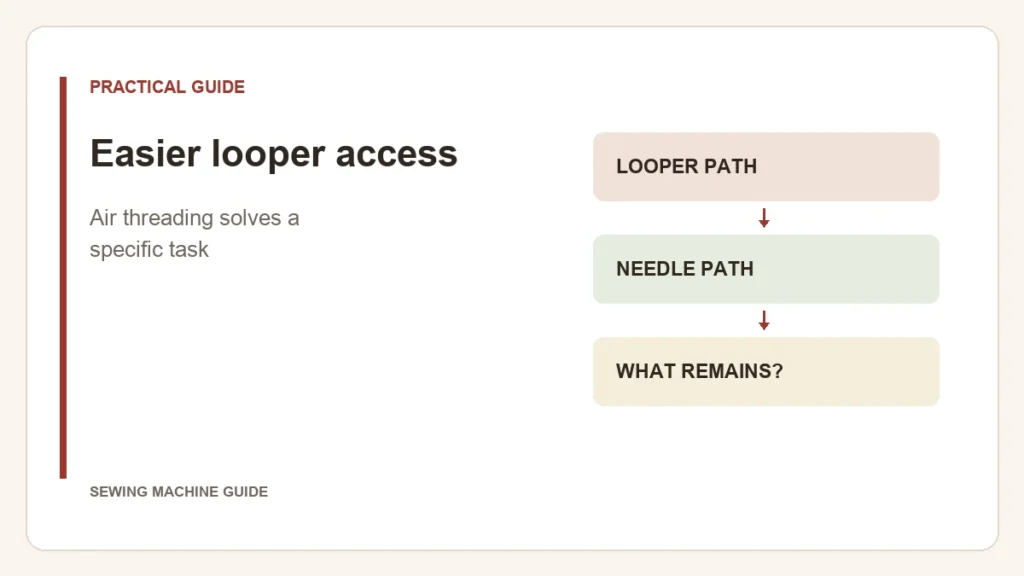
Air threading is valuable when passing thread through the looper paths is what prevents comfortable use of a serger. It does not by itself remove needle changes, select tension or convert the machine to another stitch. Ask exactly which parts of the setup receive assistance.
| Task | What to ask the demonstrator |
|---|---|
| Upper and lower loopers | Are both air-threaded, and how must the machine be positioned first? |
| Needle threads | Are they manual, mechanically assisted or air-threaded on this model? |
| Changing stitch configuration | Which needle, converter or setting changes remain your responsibility? |
| Thread loading and maintenance | Which small steps and cleaning tasks still require access or dexterity? |
The same feature name can cover different systems
The bernette 64 AIRLOCK specifies looper air threading. Baby Lock distinguishes looper-only and needle-and-looper threading technologies. The label on a shopping card therefore does not tell you whether the needle paths are included.
Automatic tension or thread delivery is another function again. A machine can combine conveniences, but they should be checked separately. Otherwise you may buy air assistance for a tension problem that it does not address.
Make the demonstration repeatable by you
Begin with an unthreaded machine rather than accepting a seam made with factory threading. Watch the full sequence, then repeat the permitted operations yourself. Pay particular attention to loading the thread ends, operating a converter and placing needles if vision or hand movement is the reason for upgrading.
A good demonstration ends with you knowing which steps the system removes and which ones you can still perform comfortably. A perfectly stitched sample produced entirely by someone else does not answer that access question.
When the upgrade addresses the wrong problem
If you already thread reliably and the fabric develops waves, investigate differential feed. If the stitch formation remains poor after correct threading, follow the exact troubleshooting guidance. Easier threading does not alone establish stronger seams or a more durable machine.
Choose the assistance around the task you need help with, and assess the remaining manual work before comparing accessory counts or brand claims.