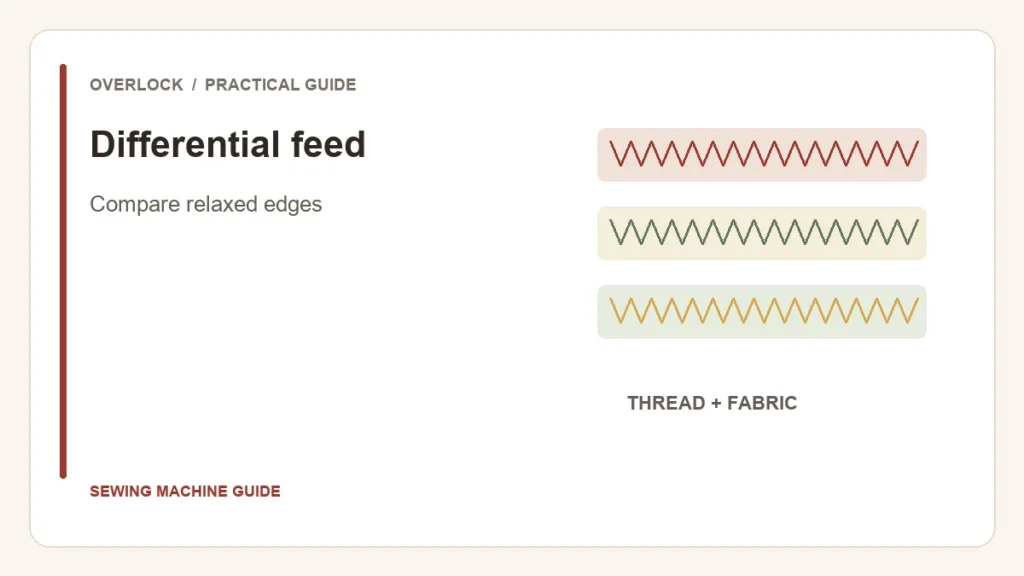
A wavy overlocked edge is not automatically a tension problem. Differential feed changes how fabric moves through the machine; thread tension changes how the threads meet. Identify which result is wrong before turning either control.
Edge grows longer
Investigate fabric stretching during feeding.
Fabric gathers
Check whether the feed setting is intentionally gathering.
Loops hang off the edge
Inspect stitch formation and cutting width separately.
What the feed ratio changes
An overlocker with differential feed has two sets of feed dogs. Their relative movement can feed extra fabric toward the needle or stretch it as it passes. BERNINA’s differential-feed explanation shows a neutral ratio of 1, a higher ratio to counter stretching, and a lower ratio to stretch the edge. Those directions describe that system; use your machine’s scale and operating instructions.
The useful result is a relaxed edge that matches the intended garment shape. A larger number is not a stronger stitch or a better setting. Deliberate gathers and lettuce edges are different goals from a flat T-shirt seam.
Compare the edge after it leaves the machine
- Cut comparable scraps in the same grain or stretch direction as the project. Keep an unsewn scrap beside them.
- Use the manual’s ordinary overlock setup and record the starting feed ratio. Support the fabric without pulling it through.
- Sew one sample, remove it by the documented method and let it relax. Compare its length and shape with the unsewn piece.
- If the edge stretched, move the differential setting in the documented anti-stretch direction by a small amount. Keep thread, stitch length and fabric unchanged.
- Repeat until the edge lies as intended. Test the actual seam intersection before using the setting on the garment.
Separate a feed problem from a thread problem
| Observation | Next question |
|---|---|
| Edge ripples but threads meet neatly | Is the material stretching as it feeds? |
| Edge contracts into gathers | Is the differential ratio gathering more than intended? |
| Fabric puckers between tight threads | Are threading and the selected stitch settings correct? |
| Loops extend beyond the cut fabric | Does the cutting width and stitch formation match the manual? |
If one change improves the outline but leaves loose loops, treat those as two separate findings. Do not keep changing feed to make a threading error disappear. The serger versus sewing-machine guide explains the broader difference between moving fabric and forming an overlocked edge.
Keep a usable setting record
Save the successful sample with fabric direction, stitch choice and feed setting. Recheck when fabric or seam construction changes. The setting is a starting point for that combination, not a permanent “knit” number.