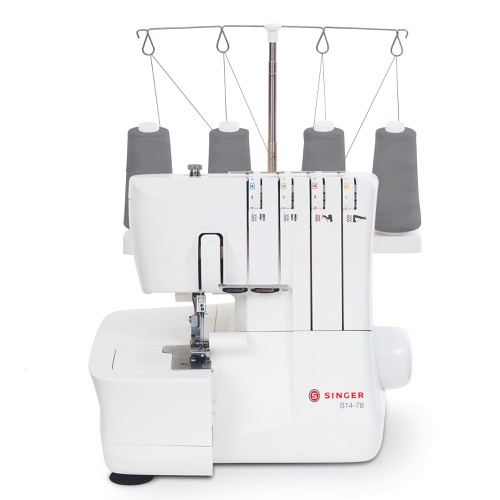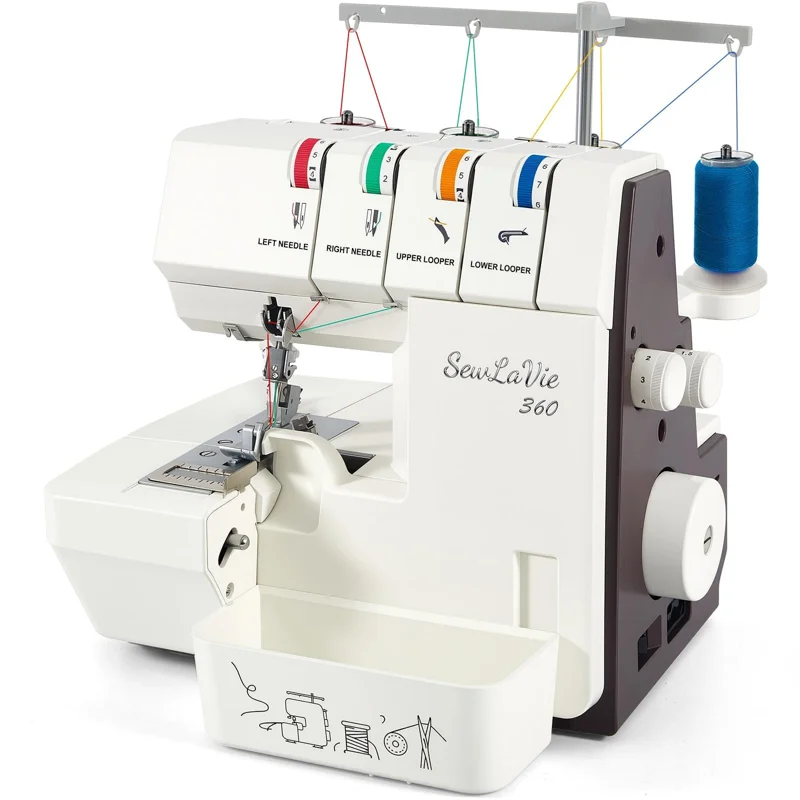
A good first seam is not the end of a serger demonstration. The useful question is whether you can recreate that seam after replacing the thread or changing the finish. This shortlist considers the Singer S14-78 and SewLaVie 360: two manual-threading machines with documentation and supplied owner accounts.
What the finished garment needs
Both models offer overlock configurations for joining or finishing edges, with differential feed for adjusting fabric advance. Neither makes a coverstitch hem. If parallel T-shirt-style hemming is the main purchase goal, settle that stitch requirement before comparing these machines.
Follow the machine from delivery to its next project
- Factory-threaded seam: useful for checking the delivered setup, but it does not show whether you can thread the machine yourself.
- Complete rethread: follow the manual from the beginning, then inspect both sides of a scrap seam. This is where access, lighting and clear instructions matter.
- Change of fabric or finish: make the documented adjustments, then return to the previous setup. Keep a successful sample and its settings as a reference.
Singer owners describe completed garments, alterations and knit projects, as well as difficult threading and failures. SewLaVie owners give more specific accounts of the accessible front and learning the path, but several reports concern early use or factory threading. That difference supports what to investigate on each model; it does not make one a proven durability winner.
Check the whole workstation
- Place the pedal and power connection where they will actually be used; Singer owners specifically report cord-length constraints.
- Work through needle insertion and the looper path yourself, rather than watching someone else do them.
- Identify who handles service and how the machine reaches them. Retain fault reports alongside successful owner examples.
Use the Singer manual or SewLaVie manual for the exact stitch arrangement. If threading remains physically awkward, compare assisted and manual threading before choosing from this limited shortlist. If the problem is a wavy knit edge after correct threading, investigate differential feed separately.