SewLaVie 360 Serger Review: Open Threading and the First Thread Change
At a Glance
KEY FEATURES
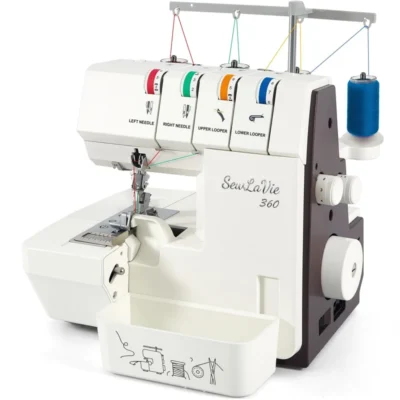
- Open front for manual looper-threading access
- Two-, three- and four-thread configurations
- Differential feed and rolled-hem setup
- Adjustable stitch length and overedge cutting width
PROS
- Open front improves visibility of the threading path
- Several owners successfully rethreaded using the manual or video
- Clean edge finishes and smooth running receive praise
- Compact footprint suits a second sewing station
CONS
- Two accounts describe unresolved stitching problems and returns
- Color guides did not cover every threading point for one owner
- Fast operation takes practice for some beginners
- One owner finds the supplied cover thin
Editorial Rating
Based on supplied customer reviews and verified product documentation
Price and availability subject to change
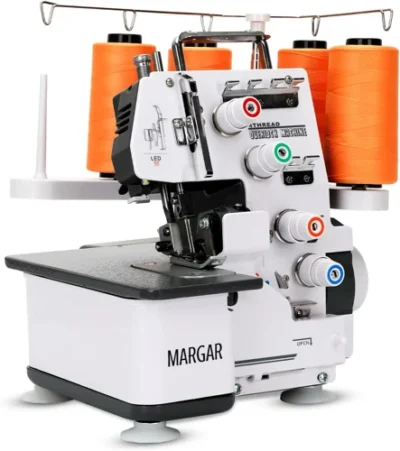
The SewLaVie 360’s most important buying question comes after the first factory-threaded sample. Can you change threads, regain balanced stitches and keep using the machine with confidence? Customer accounts give sharply different answers. That makes the accessible front opening a useful feature, but not a guarantee of effortless ownership.
Follow the evidence past the factory threading
A reassuring first start
Several first-time users appreciate receiving a threaded machine and sewing a sample immediately. That removes one initial hurdle and lets them see what a finished edge should look like.
Successful independent setup
One owner had to rethread after disturbing the threads during unpacking and obtained a good sample using the video. Others describe deliberately rethreading and finding the manual helpful.
Problems that remained unresolved
One buyer returned the machine after losing satisfactory tension following a thread change. A separate account reports unresolved loose stitching and difficulty finding online support.
The last two reports must not be dismissed as beginners making mistakes. The texts do not establish whether the cause was setup, an individual machine or something else. Equally, successful rethreading accounts mean a failed outcome is not inevitable. The useful conclusion is that the ownership experience is more variable than the prethreaded presentation suggests.
What the opening changes—and what it leaves to you
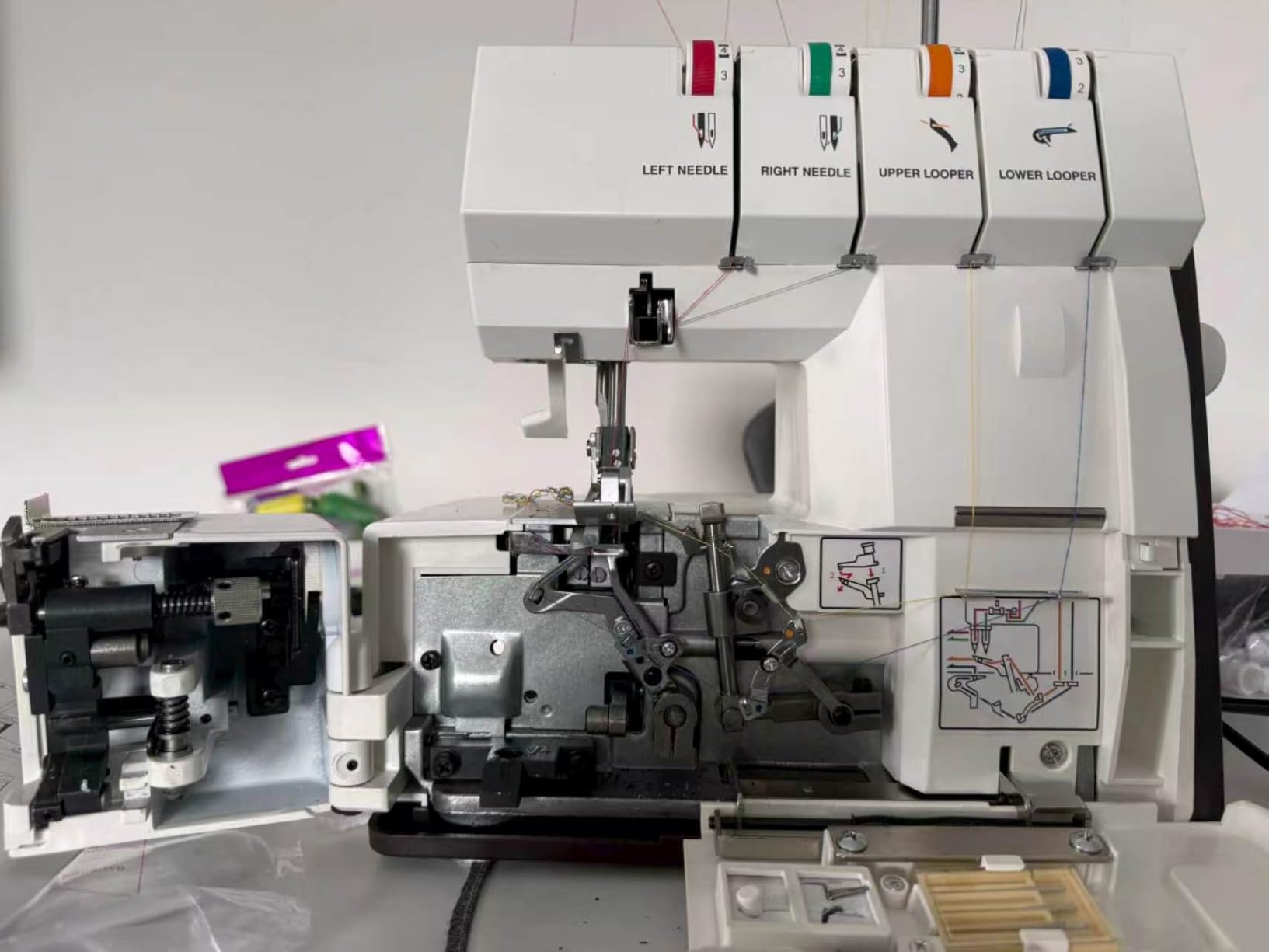
A customer specifically praises being able to see the threading stages when the front is open. Another values the access for clearing lint. Those are practical visibility advantages over having to work through a restricted opening, and they explain why this design attracts people who have found sergers intimidating.
- Access: the open front makes the looper paths easier to inspect.
- Sequence: the 360 instruction manual still gives separate threading procedures; an open cover does not eliminate their order.
- Guidance: one owner found that not every thread location was color marked and needed the setup video as well.
This is manual threading with better access, not a documented air-threading system. Buyers who want the machine to remove threading steps automatically should recognize that distinction before choosing it.
Finishing options beyond a four-thread sample
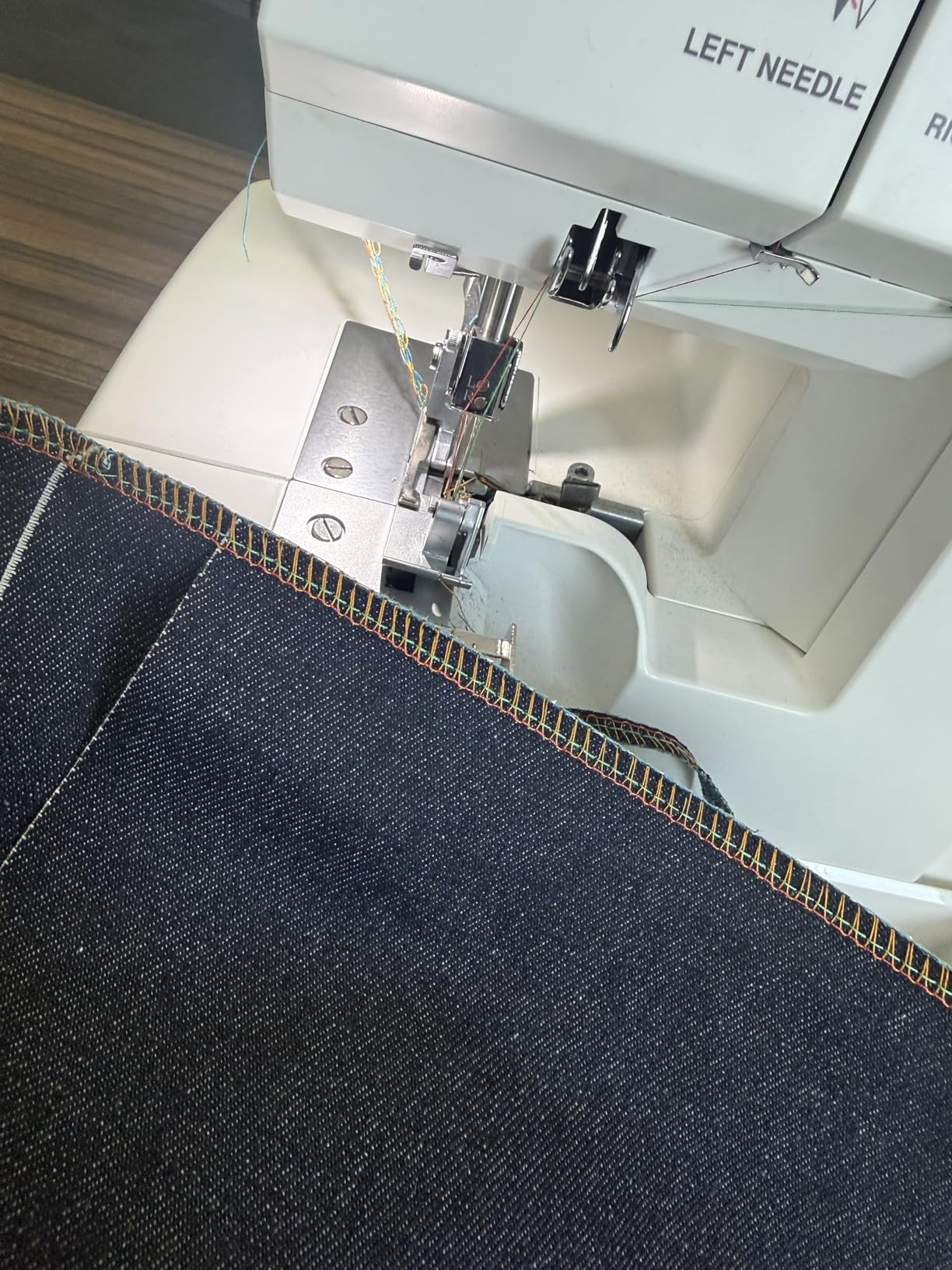
The manual covers two-, three- and four-thread configurations, a two-thread converter, narrow and rolled hems, differential feed and adjustable cutting width. These are documented functions, not separate promises of customer-tested results. The supplied experiences mainly support ordinary edge finishing, clean samples and smooth running.
| Function | Where it matters |
|---|---|
| Differential feed | Adjusting how the fabric moves through the feed system, including gathering applications described in the manual. |
| Rolled hem setup | A narrow finished edge when the fabric and project suit that construction. |
| Two-thread conversion | Expands the documented configurations; it requires the converter and the correct setup. |
| Scrap collection | The included lint tray collects trimmed material beside the cutting area. |
A serger complements a conventional machine. Do not buy it expecting the ordinary buttonholes or general interior straight stitching of the 996P mechanical sewing machine. Its main job is forming and finishing edges.
Why we do not present 1,300 as a verified exact speed
The current listing advertises 1,300 stitches per minute. The specification table in the supplied 360 manual instead states 1,200 RPM ±120 RPM. We retain that difference rather than inventing a precise measured speed. For a new user, the more relevant owner observation is that the machine can feel fast while learning.
Budget for learning as well as table space
Two accounts describe needing time or videos to become comfortable with the pace and settings. Another praises the smaller storage footprint relative to their sewing machine but finds the dust cover thin. This supports a compact second-machine role without implying a lightweight travel purchase: the manual lists a 9 kg machine weight.
The most useful preparation is having the model’s manual and an accessible support route before depending on it for a deadline. If loose stitches persist despite following the documented procedure, contact support rather than endlessly changing settings or assuming a return is proof of personal failure.
Pros & Cons Analysis
Based on supplied customer reviews and verified product documentation
Pros
- The opening provides useful working access. Owners describe seeing threading stages and reaching the looper area more easily. The benefit is visibility and room to work; it should not be recast as automatic or air threading.
- Successful rethreading is represented. A buyer who disturbed the initial threads obtained a good sample after using the video, and others report manageable repeat threading. These accounts go beyond praise of the factory setup.
- There is support for ordinary finishing work. Users describe clean sample edges, smooth running and limited vibration. These observations support a home finishing role, without proving every thread configuration or fabric has been tested.
- Storage can be manageable beside another machine. One owner describes it as smaller than their sewing machine, while another praises the footprint. That is useful for an occasional second station; the documented weight still matters when carrying it.
Cons
- A thread change can expose a difficult problem. One account describes repeated unsuccessful attempts to recover tension after changing the original threads, followed by a return. Another independently reports loose stitching and a return. Neither account establishes the underlying cause.
- Visible paths still require instruction. The owner who rethreaded after unpacking says some thread locations lacked color marks. Access helps, but the video and exact sequence remained necessary rather than optional.
- The pace can be intimidating initially. Two users describe learning to manage a faster machine than their ordinary sewing experience prepared them for. This tempers the blanket beginner-friendly claim without negating successful first-time users.
- The cover is basic protection. One customer finds the supplied cover thin and considers making a replacement. Buyers moving or storing the machine frequently should not count it as a protective carrying case.
Our Verdict
Buy for access, with a realistic plan for rethreading
The 360 is worth considering if seeing and reaching the looper paths is your main obstacle to serging. Successful repeat-threading accounts support that advantage. The unresolved returns prevent an unconditional recommendation for someone who needs their first serger to work without troubleshooting.
- Consider it: you are prepared to learn the threading sequence and want a compact machine for regular edge finishing.
- Compare support first: you have no experienced help available or need to finish a time-sensitive project immediately.
Judge the purchase on the complete ownership routine, including replacement thread and changing settings. A neat factory sample is a useful starting point, not the end of that assessment.
How we scored this machine
Editorial judgment rather than an Amazon rating or lab test. Four equally weighted categories assess stitch control, setup, project fit and build/accessory value. Open access and successful finishing support the score; unresolved tension returns and mixed learning experiences reduce setup confidence. Documented configuration range supports project fit, without assuming long-term reliability.
Frequently Asked Questions
Is the 360 an air-threading serger?
No air-threading function is documented. The front opens to provide access, but the user follows the manual threading paths.
Does the factory threading mean it will stay easy to use?
It simplifies the first sample, but later thread changes still require correct setup. Owners report both successful rethreading and unresolved tension problems.
Can it replace an ordinary sewing machine?
It is intended for overlock seams and edge finishing. It does not replace ordinary buttonhole sewing or every straight-stitch construction task.
Why do the speed figures differ?
The listing advertises 1,300 stitches per minute while the manual prints 1,200 RPM with a tolerance of 120 RPM. We have not measured its speed and do not present either as a test result.
Technical Specifications
| Brand / model | SewLaVie 360 |
|---|---|
| Type | Domestic overlock / serger |
| Thread configurations | 2, 3 or 4 |
| Threading | Manual; open front and threading guides |
| Feed | Differential feed |
| Stitch length | 1–5 mm in manual |
| Maximum overedge width | 7 mm with left needle in manual |
| Rolled hem | Documented narrow/rolled hem setup |