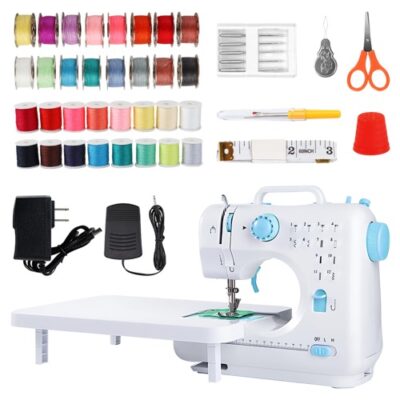
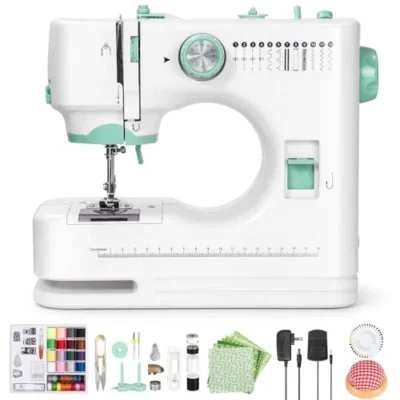
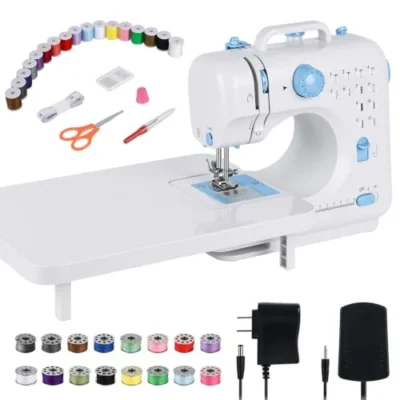
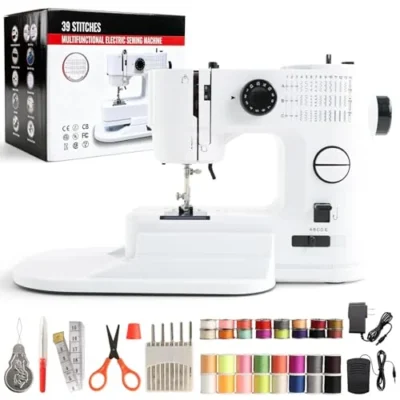
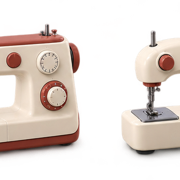
Marvik Forge 16-Stitch Review: Small-Desk Convenience with Mixed Pedal Control
At a Glance
KEY FEATURES
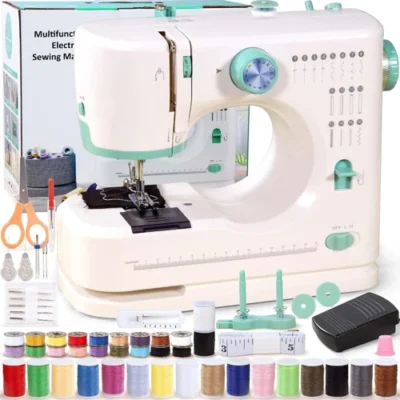
- 16 stitch selections advertised
- Low and high speed settings
- LED light and visible bobbin area
- Accessory storage drawer
- Reverse control listed
PROS
- Compact size suits a small working desk
- Visible bobbin and work light aid observation
- Threading marks and starter supplies helped learners
- An owner completed a shorts-lining repair
CONS
- Pedal modulation receives conflicting feedback
- OFF labeling confused an owner about pedal operation
- A top carry handle was missed
Editorial Rating
Based on supplied customer reviews and verified product documentation
Price and availability subject to change
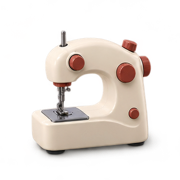
Marvik Forge’s strongest argument is the working space it occupies. Owners describe a compact machine that feels stable on a table, with visible bobbin access, a light and a small storage drawer. The uncertainty is finer speed control: one owner found little variation through the pedal, while another was comfortable learning at a slow pace.
A small machine that can stay on the desk
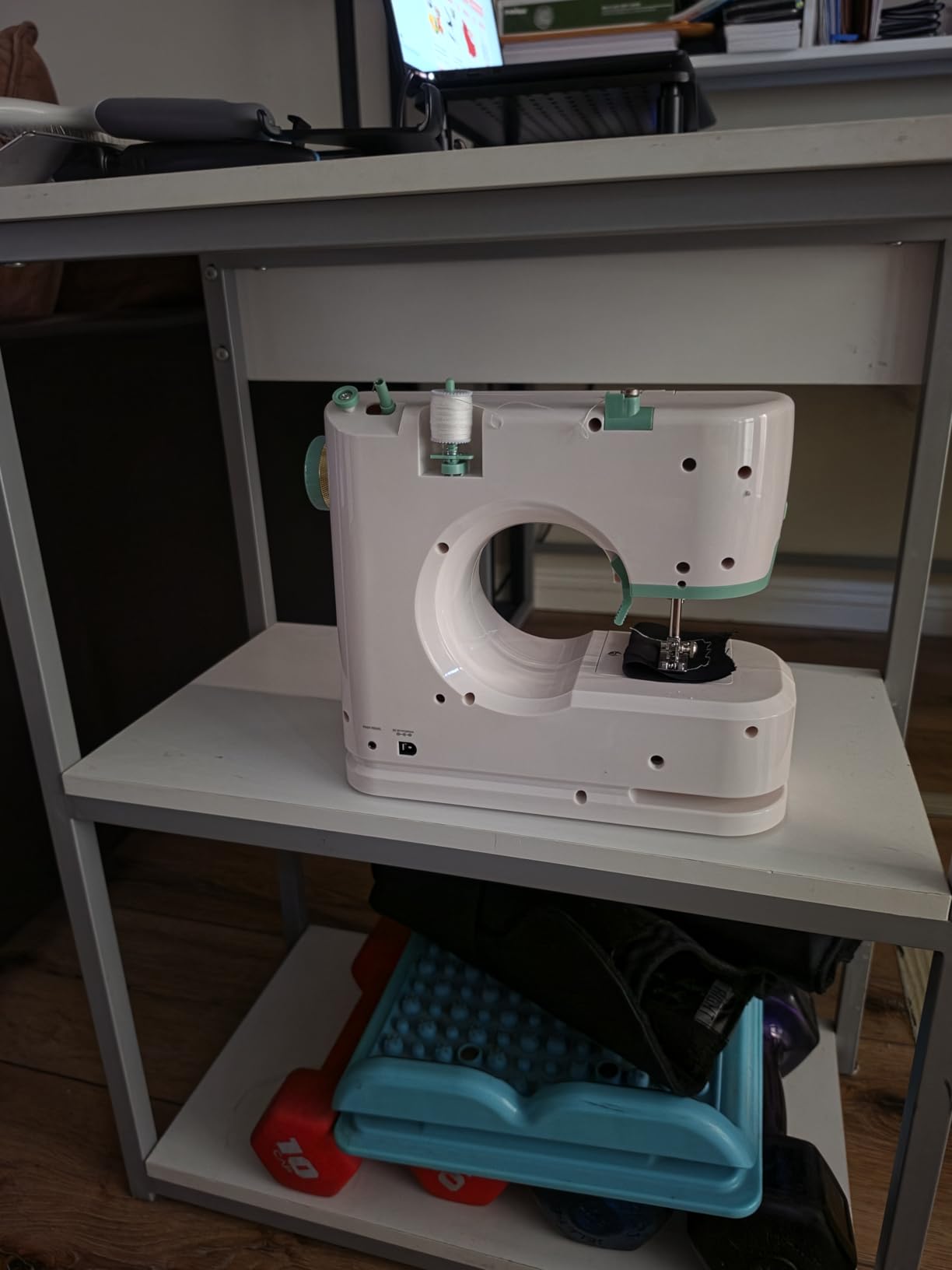
One buyer photographed it on a desk specifically to show the fit. Another compared its size with their regular Singer and liked the solid feel, clear bobbin view and separate light switch. Those are different advantages: storage size determines where it can live, while bobbin visibility helps during sewing.
Supplies stay close
The drawer and organized kit give the small setup a place for spare notions. Owners appreciated the included thread and tools; that is useful for a learner who would otherwise assemble a separate starter box.
Moving it is a different question
The same owner who liked the stable body wished it had a top handle. Being easy to fit on a shelf is not the same as being convenient to carry repeatedly between classes.
Two speeds do not settle the pedal question
| Account | What it tells a buyer |
|---|---|
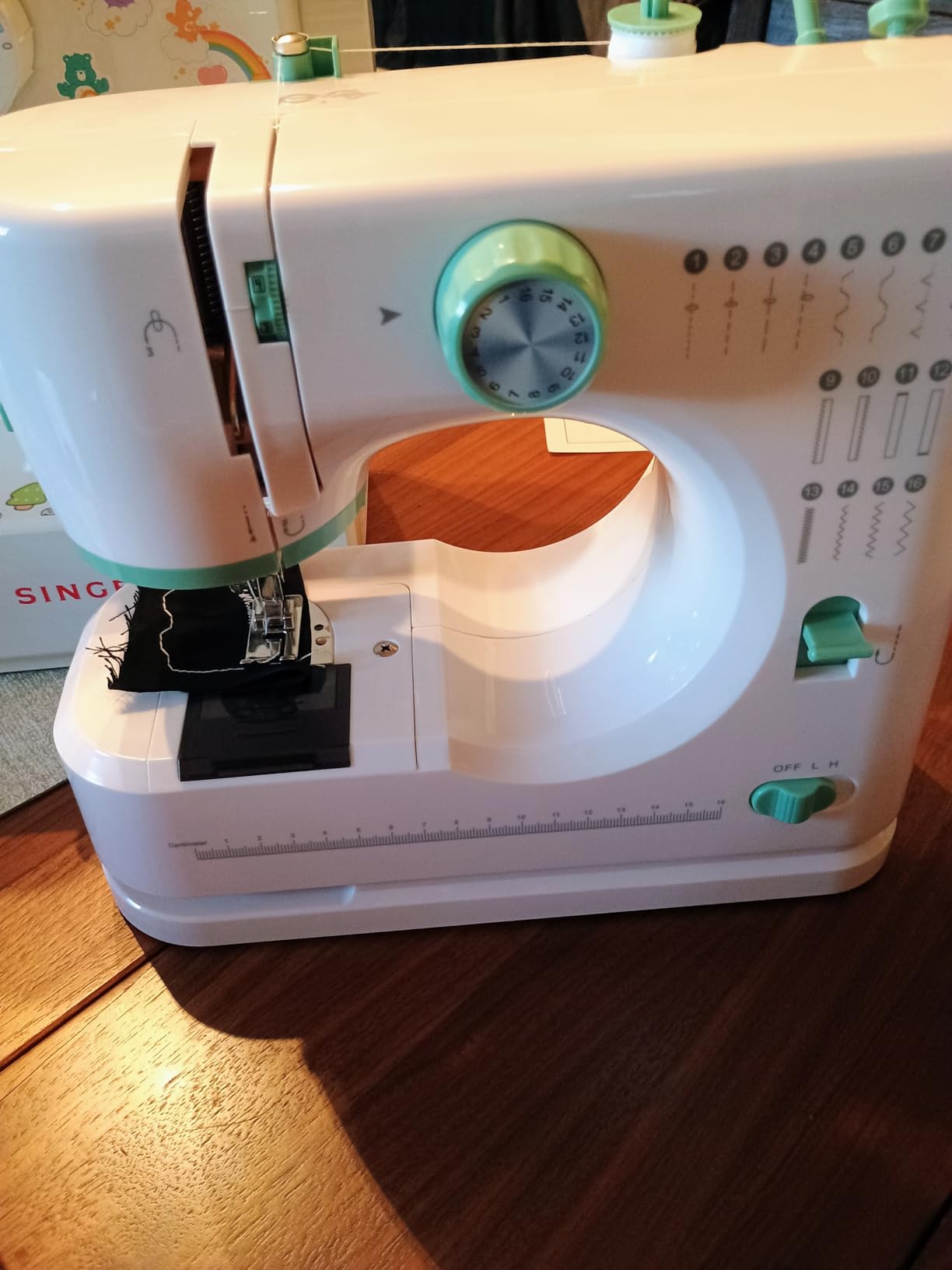
| An owner found little speed variation through the pedal and expected curves to be harder. | Do not assume fine modulation simply because a pedal is supplied. |
| Another beginner found a comfortable slow pace; a third appreciated the low setting. | The lower operating speed can still be useful, without proving a proportional pedal. |
| The listing describes pressure-based slow and fast control. | This claim is not consistently confirmed by the owner evidence. |
The first owner also says the OFF position stopped automatic running but still allowed the connected pedal to operate. That is their description of the controls, not a verified wiring diagnosis. Follow the supplied instructions for isolating power before needle work; do not assume a label means the machine is electrically disconnected.
A repaired waistband, not a six-layer guarantee
A detailed newer Vine account describes reattaching a basketball-short lining to an elastic waistband after trial and error. It is a concrete completed repair. It does not verify the listing’s six-denim-layer claim, automatic thread trimming or twin-needle instructions. Those claims need matching documentation before they become reasons to choose this machine.
The printed thread guide and body markings helped an owner learn the route. Prethreading also helped a beginner start practising, but a factory setup is only the beginning; our mini stitching troubleshooting guide separates ordinary setup checks from problems that require support.
Context for the owner enthusiasm
Six of the seven reviews in the fresh retrieval are marked Vine. Several repeat the previously supplied texts and are counted once. They are useful descriptions of particular experiences, not a representative reliability survey. The concern about a thin cord eventually fraying was a prediction, not a reported failure.
Pros & Cons Analysis
Based on supplied customer reviews and verified product documentation
Pros
- Small footprint without a toy-like desk experience. Owners describe a compact body that feels stable while working. That combination is useful when the machine stays on a small desk; it does not establish measured vibration or metal-frame superiority.
- Visibility is a practical advantage. The visible bobbin and separately switched light were specifically appreciated. Being able to see thread supply and the needle area can reduce interruptions, although it does not itself prevent jams.
- The starting materials help learning. Printed threading guidance, body markings, prethreading and an organized supply kit were useful to different learners. These support initial setup rather than proving that later thread changes will always be easy.
- A real repair expands the evidence beyond practice. The newer owner completed a shorts-lining repair around an elastic waistband after some experimentation. It supports that individual outcome, not a guarantee for every stretch fabric or thick seam.
Cons
- Fine speed control is not settled. Comfortable slow-sewing reports coexist with an owner finding little pedal variation. If careful curves or precise gradual acceleration are central to your work, the marketing description is not enough to resolve the choice.
- The control label deserves attention. One owner reports the pedal still functioning in the position marked OFF. The report could concern mode selection rather than a fault, but the supplied power-isolation instructions need to be understood before changing a needle or supervising a learner.
- Storage portability is stronger than carrying convenience. An owner explicitly missed a handle. A machine that fits well on a desk can still be awkward to move frequently, particularly with its accessories.
Our Verdict
Its desk setup is more persuasive than its performance claims
Consider Marvik Forge for a compact learning station where a light, visible bobbin and nearby supplies matter. The owner-reported repair is encouraging, with limited long-term evidence.
Choose another model if gradual pedal modulation is essential and cannot be confirmed. Do not make six-layer denim, automatic trimming or twin-needle work the purchase justification without exact documentation. The stitch and twin-needle guide explains why those claims need separate checks.
About the editorial rating
Editorial assessment, not an Amazon customer average or a hands-on test. Stitch/control 3.0 balances a completed repair with inconsistent pedal response; setup 3.1 credits guides but reflects OFF-label confusion; project fit 3.0 is for compact learning and small repairs, not advertised denim capacity; build/accessories/value 3.2 reflects stable-feeling placement and useful storage. Vine-heavy early feedback limits confidence; no measured durability or price advantage is claimed.
Frequently Asked Questions
Does the Marvik Forge pedal vary speed smoothly?
The evidence conflicts. One owner found limited pedal variation while others liked a slow pace. Two speed settings do not by themselves verify smooth proportional control.
Can it sew six layers of denim?
That is a listing claim, not a verified capacity in this assessment. A completed shorts repair does not establish a denim-layer rating.
Is it suitable for carrying to classes?
Its small footprint is well supported, but an owner missed a top handle. Consider how you will carry the machine and supplies, not just whether it fits on a desk.
Technical Specifications
| Exact model | Marvik Forge 16-stitch mini, B0GVJ7PVLC |
|---|---|
| Control type | Mechanical stitch dial |
| Primary functions | Small repairs and sewing practice |
| Built-in stitches / applications | 16 selections advertised |
| Speed control | Two settings; proportional pedal response disputed by owner feedback |
| Foot control | Included |
| Lighting | LED with separate switch reported |
| Bobbin / looper system | Bobbin visible through cover in customer photos |
| Thread cutter | Automatic trimming claim not verified |
| Twin-needle support | Listing claim; exact setup and approved needle not verified |
| Reverse sewing | Listed and reported by an owner |
| Dimensions | No independently verified measurement |
| Frame construction | Metal frame advertised; owners report stable feel |