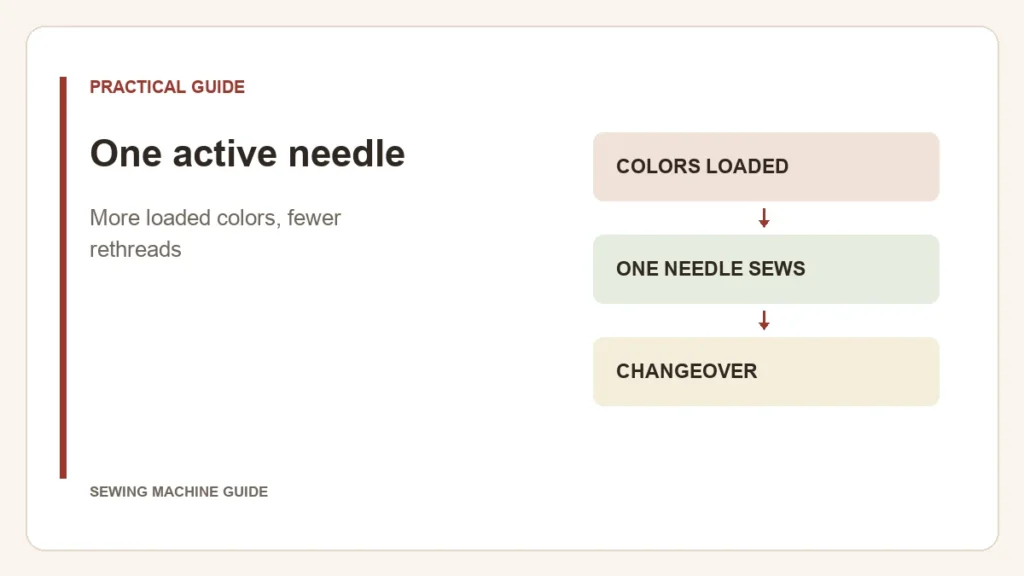
Multiple needles usually mean several thread colors can remain loaded while one needle stitches. They do not mean that several garments are being embroidered at once. The first question is how much of your work is interrupted by color changes.
A design that returns to an earlier color
Consider a hypothetical color sequence: blue, white, red, then blue again. On a single-needle setup, each change requires presenting the next color through the one needle path. A compatible multi-needle setup can keep those colors ready and select the assigned needle. That is the kind of repetition it is designed to reduce.
The Brother ten-needle manual describes the needle bar case moving to the selected color. A design using more colors than are loaded still requires manual spool changes. Needle count is a capacity for that workflow, not a multiplication of simultaneous production.
Color changes are only part of the job
- Hooping and stabilizing the item still take time.
- Placement must be checked before stitching.
- Garment access and excess-fabric management remain important.
- Removing the item and preparing the next one still interrupt a batch.
Record those tasks during a demonstration of your own design. A higher stitch rate or fewer rethreads may matter less if hooping and placement dominate the complete job.
A free arm is not exclusive to multi-needle machines
The Brother PRS100 is a single-needle machine with a tubular free arm. That counterexample matters for caps, sleeves and finished bags: assess the exact frame, accessories and clearance rather than using needle count as a proxy for access.
Choose around the work you repeat
For occasional flat embroidery, an appropriate single-needle machine may already cover the design field and access you need. For repeated multicolor work, keeping colors loaded can remove a persistent task. In either case, compare complete-job demonstrations—including changeover between items.
Neither route removes file-format and design-size limits. Confirm those before treating a machine upgrade as a fix for an incompatible design.