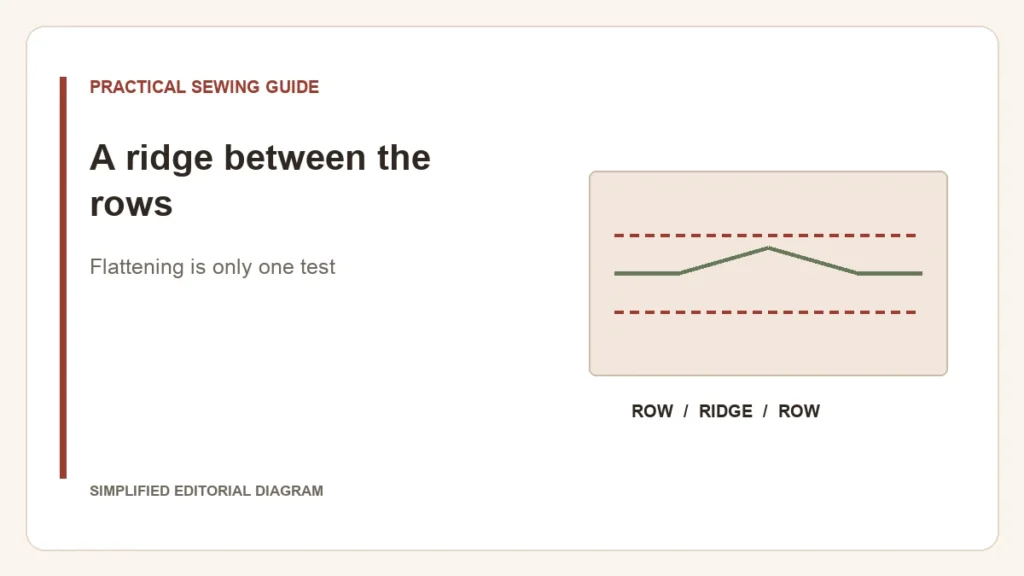
Tunneling is a raised ridge between the needle rows. It is different from missing stitches or a whole hem edge stretching into waves. Start by identifying that shape, because the same word “puckering” is often used for several problems with different causes.
Which shape does the sample have?
| Visible result | Direction of investigation |
|---|---|
| A ridge trapped between complete needle rows | Thread balance and support for that fabric |
| The entire edge ripples | Handling, differential feed and permitted foot-pressure settings |
| A row contains gaps | Needle, threading and stitch-formation checks |
Melissa Fehr’s coverstitch guide for Seamwork identifies excessive looper tension as one cause to investigate for tunneling. Follow your machine’s setup and adjustment directions; its suggestion is not a universal dial number or a reason to change every tension at once.
Keep the hem assembly the same
- Use the project fabric with the intended fold depth, layers and thread arrangement.
- Start from the documented setup, noting the settings before any change.
- Compare a small permitted adjustment on a fresh section. Inspect both the ridge and the stitch formation underneath.
- If a compatible temporary support is used, remove or finish it according to its instructions before judging the final hem.
The goal is not merely to flatten the fabric while it remains stiffened. Check the seam’s required stretch and recovery afterwards. If flattening leaves loose or unstable stitches, the result is not yet acceptable.
Keep a separate route for missing stitches
A looser setting cannot compensate for a bent needle or a missed thread guide. If there are gaps in a row, return to coverstitch formation checks. For two rows made on a conventional bobbin machine, use the twin-needle hem guide; that is a different thread system.
Keep labelled samples of useful changes. If the prescribed adjustments cannot produce a stable, flat hem on the intended material, show those samples to support rather than making a garment depend on an unexplained setting.