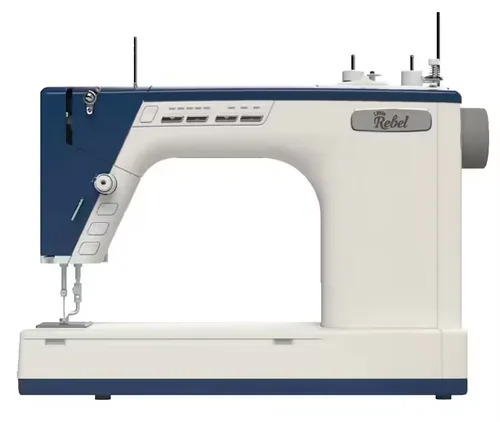
The Little Rebel’s central choice is how you want to quilt: move fabric across a tabletop machine, or move the machine on a frame. It supports both approaches, but buying the machine does not make those setups equivalent or remove the need to practise guiding the work.
Choose the setup before choosing a bundle
Tabletop use
You guide the fabric. Plan support for the quilt outside the machine as well as room through the throat. This is the relevant starting point if you do not want a frame.
Frame use
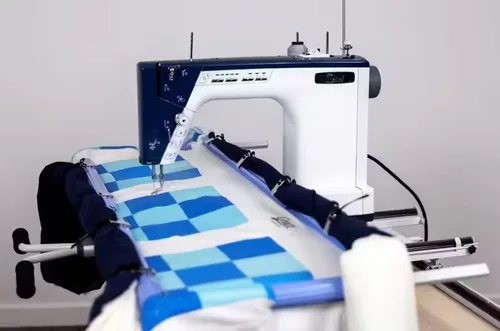
The frame changes how you support the quilt and move the machine. Check the named frame, required hardware and overall footprint in the actual bundle; a product photograph is not an inclusion list.
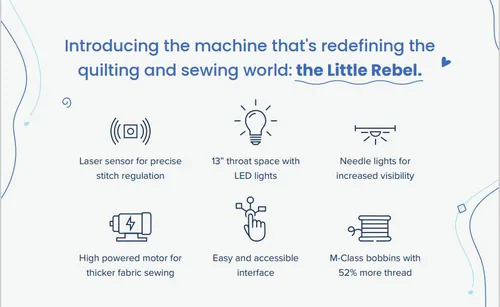
Grace’s Little Rebel documentation lists a 13-inch throat, M-class bobbins and straight-stitch sewing alongside free-motion quilting. Built-in regulation adjusts stitch speed with fabric movement; it is not a robot that follows a design for you.
Owners describe both useful room and a learning curve
The merchant’s machine-review section contains nine accounts. Terry Snodgrass values the throat space and instructions but describes ongoing practice to achieve consistent tabletop quilting. Cyndi Sloop, using a Cutie Breeze frame, praises lighting and the sewing/quilting versatility. Those are different setups, not interchangeable demonstrations.
Judy Jensen reports unsuccessful quilting on a QZone Queen frame, with thread shredding, noise and stiffness. The displayed account gives no confirmed cause or resolution. It is a reason to investigate support, not a basis for diagnosing every machine or calculating a failure rate.
Regulation still depends on the setup
Grace’s quilting instruction booklet explains that fabric movement over the sensor determines speed in regulated mode. The operator still guides the design. Regulation therefore does not establish perfect stitch placement, universal fabric suitability or effortless quilting.
How to use the remaining owner feedback
Some displayed entries contain only brief praise, a number, or a statement that the machine has not been used. They add no detailed sewing evidence. Donna Johnson’s satisfaction concerns straight stitching before trying quilting; it cannot establish quilting performance. Elaina Monteiro likes the machine but misses a built-in thread cutter.
Pros & Cons Analysis
Advantages
- Space for quilt handling: The documented 13-inch throat is relevant to moving quilt bulk, and Terry specifically appreciates the room. External quilt support still matters.
- Two ways to work: Cyndi’s frame experience and Terry’s tabletop account show distinct uses of this format. Choose the approach you want to learn rather than assuming a frame is necessary.
- Useful visibility: Cyndi highlights the lighting around the sewing and bobbin areas. That is a specific handling benefit, not proof of universally easy operation.
Limitations
- Guiding skills still take practice: Terry describes difficulty maintaining even stitches despite useful instructions. Allow for learning the chosen quilting method.
- An unresolved fault report: Judy’s thread-shredding account remains unresolved in the displayed review. Check who will provide model-specific help; do not treat the report as a confirmed diagnosis.
- Thread trimming expectations: Elaina identifies the absence of a built-in cutter as a drawback. If automatic trimming matters to your routine, resolve that requirement before choosing this machine.
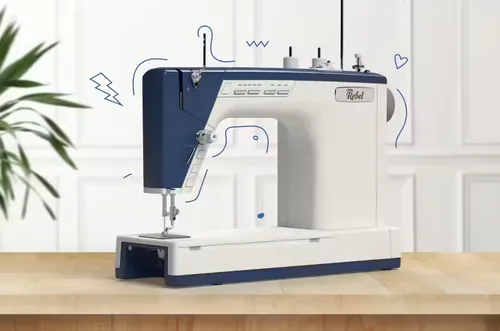
Product illustrations
Our Verdict
Decide how you will quilt, then evaluate the Little Rebel
Consider it when the throat room and choice of tabletop or frame work fit your quilting plans. Budget time for learning and choose a seller who can support your exact setup. It is a straight-stitch and quilting purchase, not a substitute for zigzag sewing, and stitch regulation should not be mistaken for automated design following.