Sewing Machine Guide

  • Home
  • Reviews
  • Best
    • All Best Picks
    • Computerized
    • Embroidery
    • Mechanical
    • Quilting
  • Guides
    • All Sewing Guides
    • Computerized
    • Embroidery
    • Mechanical
  • Comparisons
    • All Comparisons
    • Computerized
    • Embroidery
    • Mechanical
    • Straight-Stitch
  • Favorites
Home / Overlock / Best / Best Sergers for Home Sewing: Two Manual-Threading Options to Consider

Best Sergers for Home Sewing: Two Manual-Threading Options to Consider

A focused Singer S14-78 and SewLaVie 360 shortlist, with owner-reported threading, garment and service trade-offs.

OUR PICKS

Singer S14-78 Review: Knit Edges, Threading and Everyday Setup

Garment seam finishing

Singer S14-78 Review: Knit Edges, Threading and Everyday Setup

Check on:Amazon Jump to details
SewLaVie 360 Serger Review: Open Threading and the First Thread Change

Open threading access

SewLaVie 360 Serger Review: Open Threading and the First Thread Change

Check on:Amazon Jump to details

A good first seam is not the end of a serger demonstration. The useful question is whether you can recreate that seam after replacing the thread or changing the finish. This shortlist considers the Singer S14-78 and SewLaVie 360: two manual-threading machines with documentation and supplied owner accounts.

What the finished garment needs

Both models offer overlock configurations for joining or finishing edges, with differential feed for adjusting fabric advance. Neither makes a coverstitch hem. If parallel T-shirt-style hemming is the main purchase goal, settle that stitch requirement before comparing these machines.

Follow the machine from delivery to its next project

  1. Factory-threaded seam: useful for checking the delivered setup, but it does not show whether you can thread the machine yourself.
  2. Complete rethread: follow the manual from the beginning, then inspect both sides of a scrap seam. This is where access, lighting and clear instructions matter.
  3. Change of fabric or finish: make the documented adjustments, then return to the previous setup. Keep a successful sample and its settings as a reference.

Singer owners describe completed garments, alterations and knit projects, as well as difficult threading and failures. SewLaVie owners give more specific accounts of the accessible front and learning the path, but several reports concern early use or factory threading. That difference supports what to investigate on each model; it does not make one a proven durability winner.

Check the whole workstation

  • Place the pedal and power connection where they will actually be used; Singer owners specifically report cord-length constraints.
  • Work through needle insertion and the looper path yourself, rather than watching someone else do them.
  • Identify who handles service and how the machine reaches them. Retain fault reports alongside successful owner examples.

Use the Singer manual or SewLaVie manual for the exact stitch arrangement. If threading remains physically awkward, compare assisted and manual threading before choosing from this limited shortlist. If the problem is a wavy knit edge after correct threading, investigate differential feed separately.
Garment seam finishing

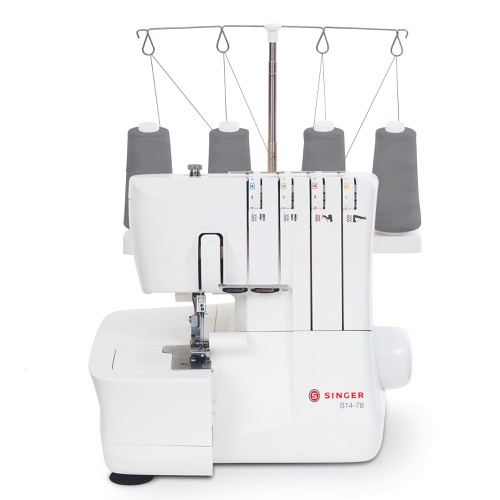
Singer S14-78 Review: Knit Edges, Threading and Everyday Setup

Singer S14-78 Review: Knit Edges, Threading and Everyday Setup
Check on:Amazon

What to know

  • Two-, three- and four-thread arrangements cover different overlock finishes.
  • Differential feed adjusts how the fabric enters the seam.
  • The manual includes rolled-edge setup; it is not a coverstitch conversion.

Best if

  • You finish garments and stretchy fabrics: owners describe completed knit projects and clothing alterations.
  • You are willing to learn with demonstrations: several beginners report successful seams after following video guidance.
  • You need a manageable home setup: owners appreciate its compact footprint and stable placement.

Skip if

  • You struggle with small needle-area tasks: customers describe difficult rethreading and needle insertion, including returns.
  • Your power outlet is far from the table: owners specifically flag short cords and awkward placement.
  • You depend on uninterrupted use: the feedback includes failures and difficulty arranging repairs or obtaining a small replacement part.

The S14-78 has useful customer examples beyond first impressions: knit garments, alterations and satin-edge work appear in the supplied feedback. Several owners got comfortable after video guidance, while others could not achieve satisfactory threading or tension. It is a candidate for someone prepared to learn a manual serger, not a guaranteed easy first machine.

Check the workstation as carefully as the stitch sample. Owners mention short cords, absent printed instructions and the lack of a scrap tray. The feedback also contains motor, pedal and needle problems; one account describes sparks and a stopped motor. Arrange a realistic service route and stop using any unit with an electrical fault.

Stitch familyOverlock; not coverstitch
Thread configurations2, 3 or 4 threads
ThreadingManual needle and looper paths
Differential feedAdjustable, 0.7–2.0
Stitch length1–4 mm
Maximum overedge width7 mm
Presser-foot pressureAdjustable
Speed controlFoot pedal
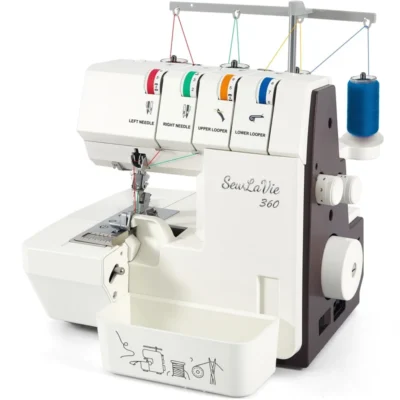
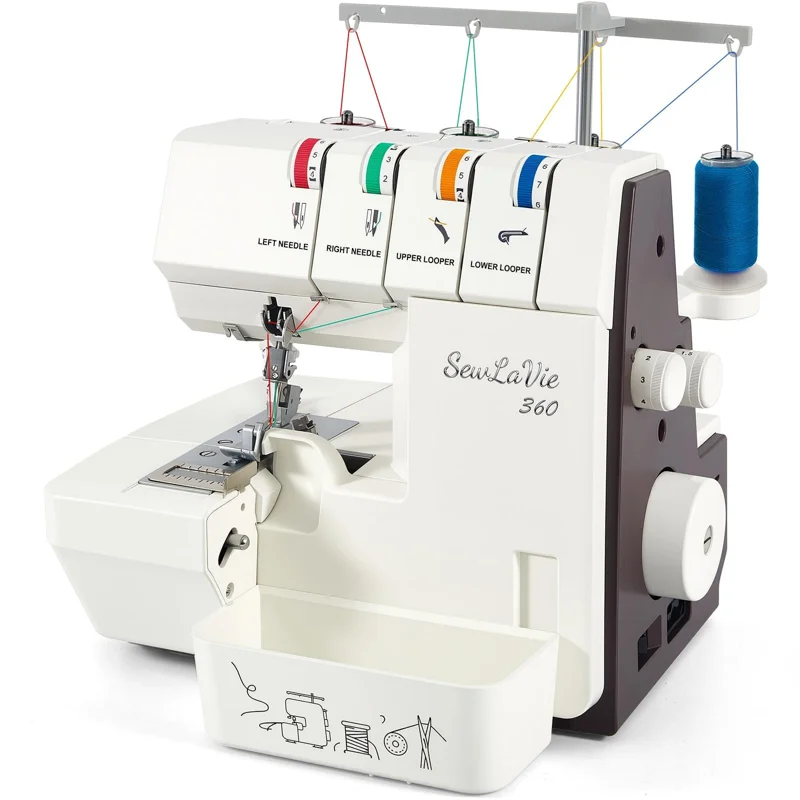
Open threading access

SewLaVie 360 Serger Review: Open Threading and the First Thread Change

SewLaVie 360 Serger Review: Open Threading and the First Thread Change
Check on:Amazon

What to know

  • Manual threading remains necessary despite the accessible front.
  • Differential feed and stitch-length adjustment are separate controls.
  • Two-, three- and four-thread options still require the matching needle and looper setup.

Best if

  • You want to see the looper path clearly: owners specifically value the front access and its usefulness during threading and cleaning.
  • You learn by repeating a demonstrated sequence: supplied owners describe useful videos and successful rethreading practice.

Skip if

  • You want dependable seams without learning tension setup: some owners could not resolve loose stitches and returned the machine.
  • You are uncomfortable with fast starts: a beginner explicitly reports needing practice with the pace.

The SewLaVie 360 is most interesting for how owners describe seeing and reaching its threading area. The opening front, lighting and video help made the sequence more understandable for some users. Others produced good seams while it was still factory threaded; those reports do not establish an easy first rethread.

That distinction matters because two supplied accounts describe unresolved loose stitching or tension trouble after setup changes. One owner returned it after the initially successful prethreaded period. Practice a complete rethread on scraps while help and return options are available, and assess its speed rather than assuming a compact serger will feel slow.

Stitch familyOverlock; not coverstitch
Thread configurations2, 3 or 4 threads
ThreadingManual paths with front access
Differential feedAdjustable
Stitch length1–5 mm
Maximum overedge width7 mm at left needle
Presser-foot pressureAdjustable
Speed controlFoot pedal

Product Comparison

Feature Singer S14-78 Review: Knit Edges, Threading and Everyday Setup SewLaVie 360 Serger Review: Open Threading and the First Thread Change
Product Image
Singer S14-78 Review: Knit Edges, Threading and Everyday Setup
SewLaVie 360 Serger Review: Open Threading and the First Thread Change
Rating
3.5 / 5
3.6 / 5
Category Overlock Overlock
Stitch Quality & Control
3.8 / 5.0
3.6 / 5.0
Ease of Setup & Use
3.1 / 5.0
3.3 / 5.0
Fabric & Project Fit
3.8 / 5.0
4.0 / 5.0
Build, Accessories & Value
3.2 / 5.0
3.4 / 5.0
Rolled hem Supported Documented narrow/rolled hem setup
Buy Now Check on:Amazon Check on:Amazon

Choose after a complete rethread

Singer S14-78: start with the garment work

Its owner accounts include concrete clothing and knit projects. It belongs on your shortlist if you can repeat the threading sequence and arrange a workable pedal, cord and service setup.

Check on:Amazon

SewLaVie 360: investigate the accessible path

The front access is a specific attraction supported by owners. Choose it only after you can rethread and recover a balanced seam yourself; factory-threaded success leaves that question unanswered.

Check on:Amazon

Still unable to thread comfortably? Expand the shortlist to assisted systems. Neither manual machine removes needle changes or tension setup, and neither supplies a coverstitch hem.

Frequently Asked Questions

Can either machine make a coverstitch hem?

No. Their overlock configurations do not become a coverstitch. Use a suitable separate or combination machine for that stitch.

Which is easier to thread?

SewLaVie owners specifically value the open access, but both machines have reports of threading or tension difficulty. Repeat the complete procedure yourself before choosing.

Does a successful first seam prove the setup will be easy?

No. Factory threading can produce a good first sample while leaving rethreading and tension setup untested.

×

About Sewing Machine Guide

Independent sewing machine reviews and practical buying guidance.

Your trusted source for honest, in-depth product reviews and comparisons.

Quick Links

  • Home
  • Reviews
  • Best Articles
  • Comparisons
  • Guides
  • About
  • Contact
  • Privacy Policy

Categories

  • Computerized Sewing Machines
  • Coverstitch Machines
  • Embroidery Machines
  • Handheld Sewing Machines
  • Industrial
  • Mechanical Sewing Machines

© 2026 Sewing Machine Guide. All Rights Reserved.

As an Amazon Associate I earn from qualifying purchases. We may also earn from other retailer links. Affiliate disclosure