An automatic thread cutter is worth prioritizing when it removes an interruption you repeat often. Its usefulness depends on how you finish and restart work—not simply whether the machine can cut a thread.
Where in your sewing would the cutter help?
| Your routine | Likely role of the cutter |
|---|---|
| Many separate short seams | Repeatedly avoids reaching for scissors when removing each piece |
| One long curtain seam | Used relatively infrequently; other controls may matter more |
| Chain piecing | Pieces remain linked during the sequence, so the cutting rhythm differs |
| Frequent repositioning with both hands occupied | An accessible button or supported pedal action may reduce hand movement |
The action can also interrupt you
The Juki TL-2010Q manual documents button and controller cutting. Its supplied customer accounts include appreciation for hands-free trimming, but also unintended heel activation and short thread tails. Those are reasons to try the control from your normal sitting position, not evidence that all cutters behave alike.
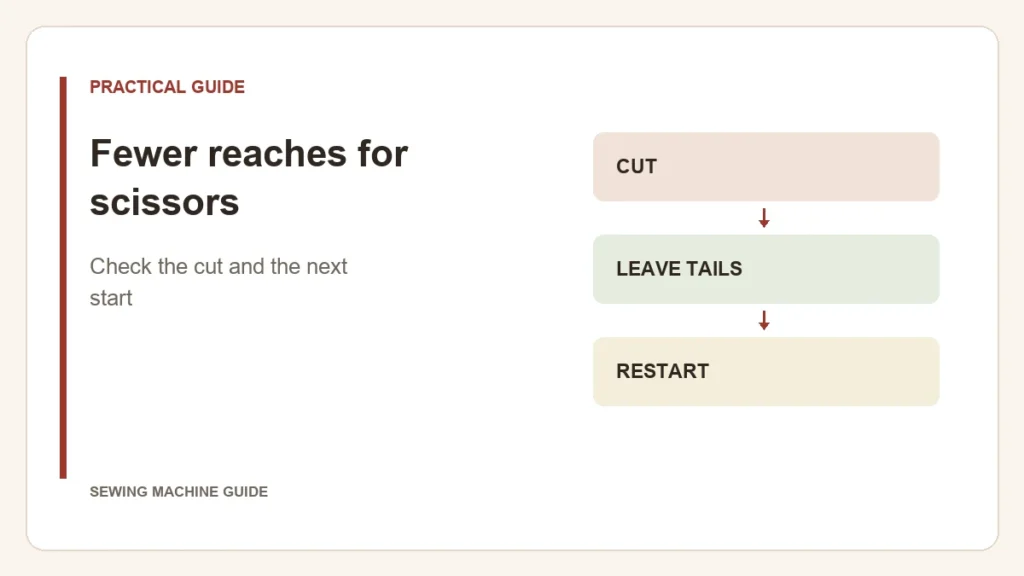
Watch the complete cycle: finish the seam, secure it, cut, remove the work and begin again. If you often need to retrieve a tail or rethread before restarting, some of the saved movement has returned in another form.
Use a repeat-start trial
Ask to sew several short seams with suitable fabric, needle and thread. Follow the model’s securing and cutting instructions each time. Note unwanted pedal cuts, restart quality, tail handling and noise. A single successful trim cannot reveal a recurring restart nuisance.
Cutting does not secure the seam
A cutter severs the threads; reinforcement prevents the seam end from opening. Some machines coordinate the two actions, while others require separate controls. Check the selected stitch’s procedure. The reverse and locking-stitch explanation covers that distinction without assuming every cut button ties off automatically.
Give the cutter priority if repeated reaches genuinely slow your work and the restart is dependable in the demonstration. If you mainly struggle with threading or controlling the first stitches, solve that problem first.