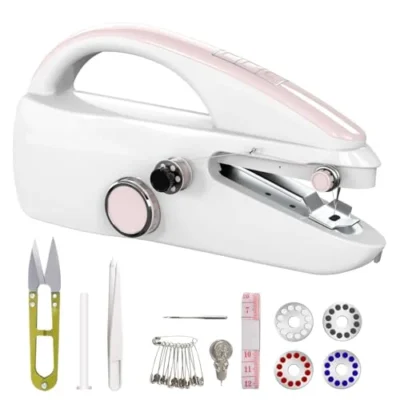
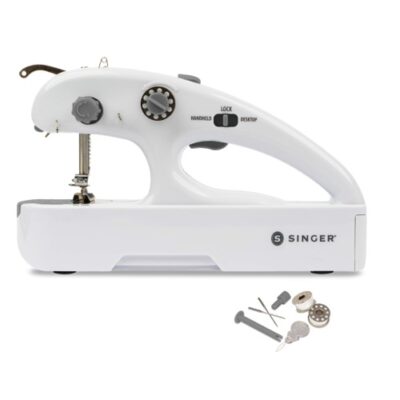
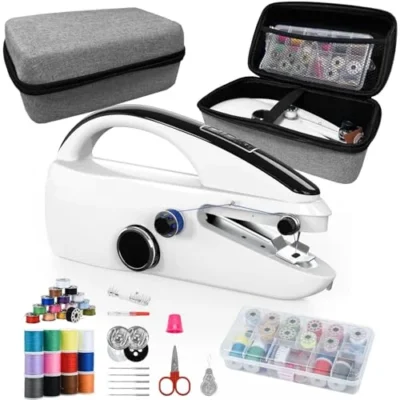
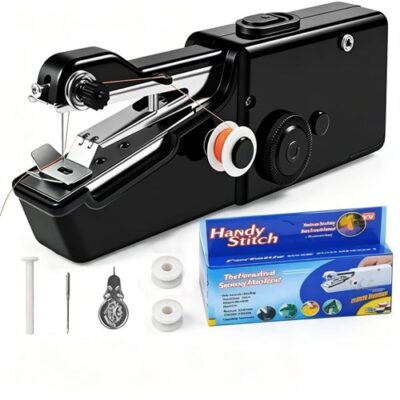
Marirao Handheld Review: Thin Pillowcase Repairs Are Its Strongest Case
At a Glance
KEY FEATURES
- Two speed settings
- USB-powered or four-AA operation
- Single-thread looped stitch described by owners
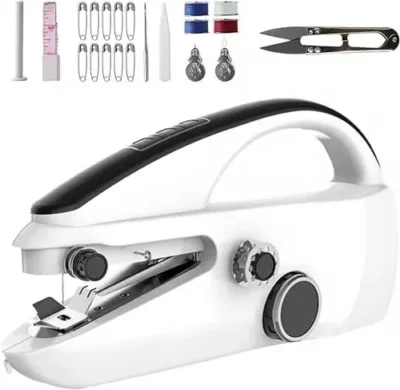
- Needle-position wheel and small accessory kit
PROS
- An owner completed thin pillowcase repairs quickly
- Small body is convenient to carry for minor jobs
- Two speed settings and included tools help some owners
CONS
- Thicker repairs and layered straps defeated some owners
- Seams need careful finishing to avoid unravelling
- Short cable and sideways feeding can restrict handling
- Threading instructions and rethreading caused difficulty
Editorial Rating
Based on supplied customer reviews and verified product documentation
Price and availability subject to change
The Marirao handheld has a useful but narrow success story: one owner quickly repaired thin pillowcase corners, then could not make it stitch a thicker couch cover. That contrast is more informative than the listing’s broad fabric list. It suits small, accessible repairs only if you can manage the sideways feed and secure the seam afterward.
The fabric name is not the whole repair
Two thin layers worked
An owner repaired puppy-damaged pillowcase corners, changed thread colors and found the job quicker than hand sewing. The included needle threader helped, while the small scissors were preferred to the built-in cutter.
The next project did not
The same owner could not form stitches in a thicker couch cover. Another could sew the supplied sample but could not keep a jumper strap aligned or get the needle through the repair.
Those are not contradictory verdicts about every fabric. They show why the complete folded repair matters. Cotton, wool or denim can describe very different thicknesses and seam intersections; a material name in the product listing is not a guarantee for your particular job.
Finishing the seam is part of using the machine
Several retrieved accounts describe a single-thread looped stitch that can pull out, with no familiar reverse-sewing finish. Owners resorted to tying thread ends, sometimes finding the process frustrating. The machine’s speed does not remove that final step.
Do not stop at the motorized stitching. Use the exact model’s finishing instructions and check the completed seam before relying on it. The threading and seam-check guide explains why a handheld’s routine differs from a conventional machine.
USB convenience comes with a short working radius
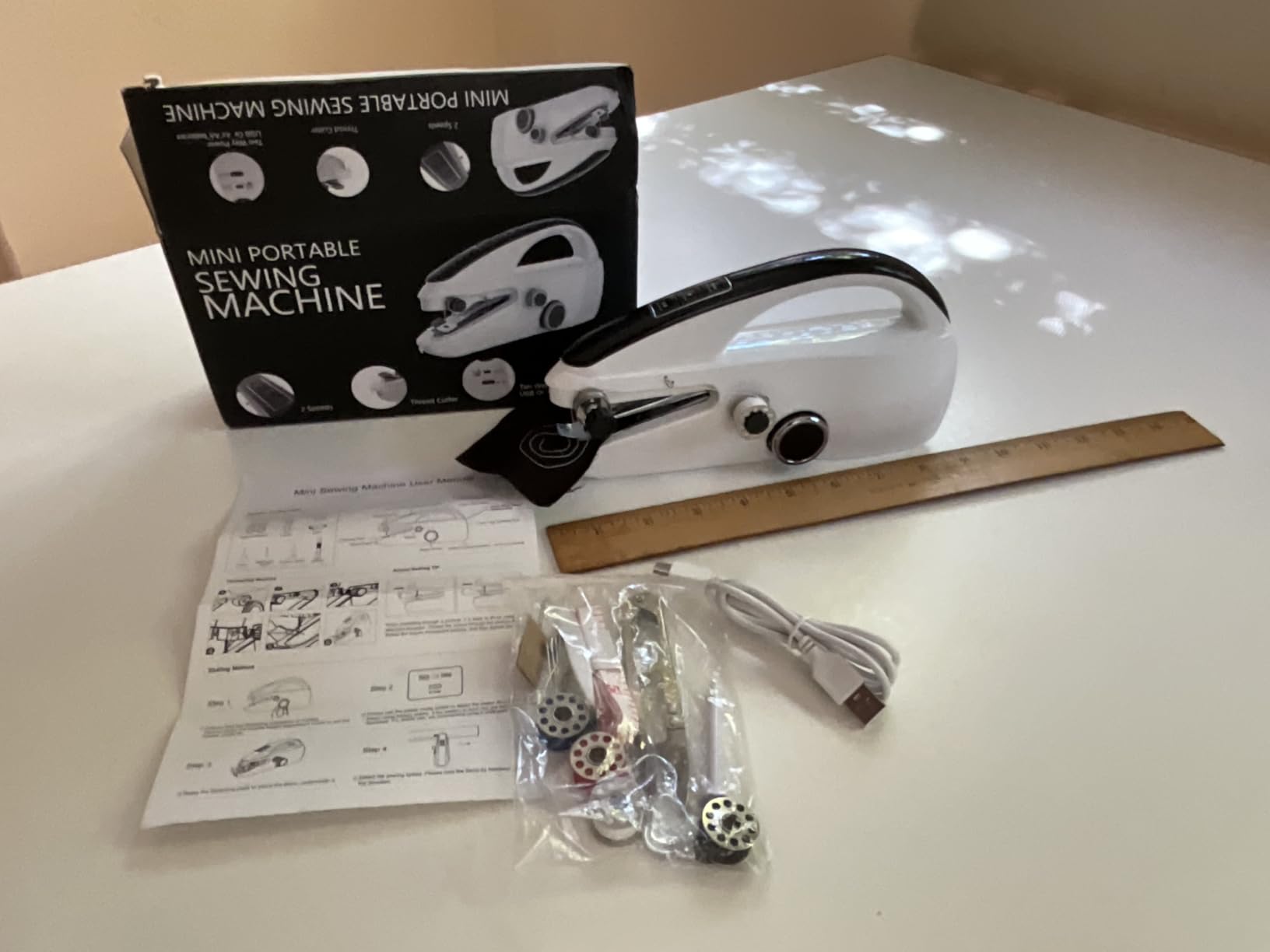
- At an outlet: one owner measured the supplied cable at about 39 inches and had little room left to move the tool after routing it to the table.
- Away from an outlet: four AA batteries provide the listed portable option. USB operation does not recharge them.
- While guiding fabric: an owner found sideways feeding awkward, despite the small body being easy to carry.
Threading guidance divides the owners
The original feedback includes praise for the instructions, but newer accounts describe tiny print and hard-to-follow diagrams. One owner successfully changed colors; another struggled to rethread after the thread slipped out. The best fit is someone willing to learn this specific tool, rather than someone expecting a smaller version of their tabletop machine.
Pros & Cons Analysis
Based on supplied customer reviews and verified product documentation
Pros
- Thin-fabric repairs have a concrete success example. The pillowcase owner completed small corners and changed colors successfully. Their later couch-cover failure keeps the recommendation tied to thin, accessible work rather than all household textiles.
- Portability is a real convenience. Owners appreciate avoiding a full tabletop setup for a minor fix. Four-AA operation can remove the cable, though a portable body does not make every repair easy to align.
- Some controls and supplies earn their place. One account values the slower speed for control; another found the needle threader and scissors useful. These details help a small job without resolving the separate seam-finishing demands.
Cons
- Passing the supplied sample is not enough. A strap repair would not stay aligned or accept the needle, and a thicker couch cover would not stitch. These project-specific failures limit the listing’s broad fabric claims.
- The seam can pull out if its end is unsecured. Multiple accounts describe difficulty completing a single-thread seam without familiar reverse stitching. Factor the finishing routine into the repair time instead of judging only how fast the motor runs.
- The working radius can be smaller than expected. One owner reports a roughly 39-inch cable and awkward sideways feeding. Batteries address the cable constraint, but not the need to guide the repair through the narrow working area.
- Instruction quality is inconsistent in practice. Tiny diagrams and difficult rethreading appear alongside successful thread changes and praise for the directions. A novice may need clearer model-specific help before the tool becomes useful.
Our Verdict
Choose it for the thin repair you actually have
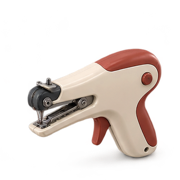
Consider this Marirao for occasional pillowcase corners or similar small, thin repairs when you are prepared to learn its feeding and seam-finishing routine. Successful owners give it a useful role, but not a broad one.
Skip it for thicker covers, layered straps or an effortless replacement for backstitching. Those are exactly where the feedback becomes less convincing. If repairs are frequent or varied, a tabletop mini or conventional machine deserves consideration before another handheld.
About the editorial rating
Editorial assessment, not an Amazon customer average or a hands-on test. Concrete thin-fabric successes and portable operation support a narrow recommendation. Thicker-project failures, awkward feeding, finishing demands and mixed instructions limit the ratings.
Frequently Asked Questions
Can this Marirao repair a thick couch cover?
One owner could repair thin pillowcases but could not form stitches in a thicker couch cover. Do not assume it can handle that project from the listing’s fabric names.
Does the USB cable charge the machine?
The retained account describes continuous USB power, not charging. Four AA batteries are the separate cordless option.
Can it backstitch to finish a seam?
Owners report no reverse setting and describe securing the thread ends separately. Follow the exact finishing instructions and check the seam before relying on the repair.
Why can it sew its sample but fail on a strap?
A real repair may add folded layers, an uneven join and alignment difficulty. One owner specifically encountered that difference; a successful flat sample does not establish strap-repair capacity.
Technical Specifications
| Brand | Marirao |
|---|---|
| Exact model | White-and-black handheld B0H34K4DJT |
| ASIN | B0H34K4DJT |
| Machine class | Handheld sewing machine |
| Primary functions | Small thin-fabric repairs |
| Power / market voltage | USB or four AA batteries; no rechargeable battery established |
| Speed control | Two settings; 378 stitches/min advertised, not tested |
| Stitch formation | Single-thread looped stitch described by owners |
| Reverse sewing | Owners report no reverse function |
| Weight | 8 oz listed, not independently weighed |
| Included accessories | Cable, bobbins and small sewing tools; batteries and wall plug not included in one owner’s kit |
| Cord reach | One owner reports approximately 39 inches |