A handheld sewing machine makes sense when bringing a small tool to an accessible repair is the main requirement. A tabletop mini makes sense when you need somewhere to rest and guide the fabric but have little storage. For regular sewing, a full-size beginner machine deserves consideration before either. These are different working arrangements, not a ladder in which the smallest is automatically easiest.
Start with access and support
Can you reach and guide the seam?
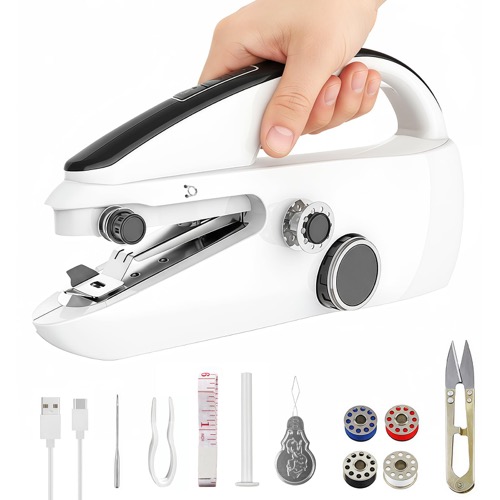
One hand may hold and operate the tool while the other manages the fabric. Think through the actual repair position.
Where will the fabric rest?
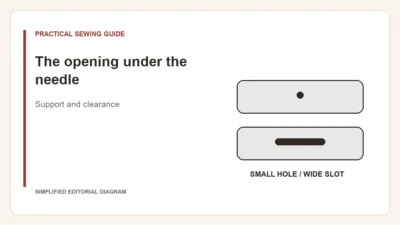
A firm surface can make guiding easier, but the opening and presser-foot clearance still limit what fits.
A short opening near an edge is different from the middle of a broad piece. Even when a handheld reaches the spot, the rest of the fabric can obstruct the controls or make the seam hard to see. Conversely, lifting a whole item onto a table can be worthwhile if it gives you a clearer view and comfortable control.
On a narrow screen, scroll across the table to compare all columns.
| Work you expect | First format to consider | What to verify |
|---|---|---|
| A very occasional tiny repair | Needle and thread | Whether machine setup would save any time at all. |
| A reachable short seam with minimal storage | Handheld mender | Stopping, sightline, threading and secured seam ends. |
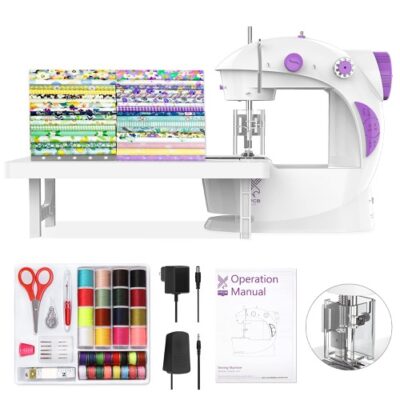
| Light projects at a shared table | Tabletop mini | Usable control, fabric support and the exact stitch features. |
| Repeated garments or changing materials | Full-size beginner machine | Needed stitches, adjustment, support and room for future projects. |
Storage is only one part of convenience
A small body is easy to put away. It can also mean tiny thread guides, a cramped needle area and less space to manage the work. The supplied handheld files contain both successful repairs and owners who found rethreading slower than taking out a larger machine.
Imagine the second session, after the original thread is used up. You must find the instructions, prepare the power source, thread the machine and finish the seam. If that complete routine is unpleasant, the small storage footprint may not deliver the convenience you expected.
Separate start/stop behavior from the number of speeds
“Two speeds,” “handheld mode” and “desktop mode” describe different things. Singer Quick+ changes its button behavior between handheld and desktop operation. Ninonly advertises two speed modes. Neither description alone tells you whether the control feels comfortable in your hand.
A mini’s foot pedal may likewise be an on/off switch rather than proportional speed control. Before buying for a beginner, identify the actual behavior rather than assuming that a familiar-looking pedal or trigger works like a larger machine. A slow, repeatable start and a comfortable stop matter more than a large accessory count.
The seam requirements decide the feature list
List what the job needs: a straight seam, stretch allowance, edge finishing, reverse, or access around a particular folded join. Then establish whether the exact machine supplies those capabilities. A title that names denim or crafts does not show whether your complete construction will fit and feed.
A two-thread mechanism is not two needles. USB power is not proof of charging. Extra bobbins are supplies, not extra stitch programs. Keeping those distinctions straight makes it easier to compare a handheld with a mini without inflating either specification.
Choose the working position that suits the repair
A handheld is worth considering for a small, accessible repair where bringing the tool to the fabric is useful. A tabletop mini is more relevant when resting the work and guiding it with both hands will make the seam easier to manage. Neither format guarantees beginner-friendly threading or gradual speed control.
For repeated clothing alterations, compare a conventional beginner machine as well. For a few isolated stitches, a hand needle may be simpler to prepare than either powered format. The right choice is the one that lets you guide, finish and repeat the intended seam comfortably. Once you know the working position you need, the handheld shortlist and Singer versus Ninonly comparison compare specific handheld choices. For regular alterations, start with the beginner-machine shortlist.