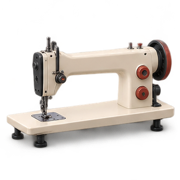
DODOQ Manual Patcher Review: Reach Awkward Repairs, Expect Setup Work
At a Glance
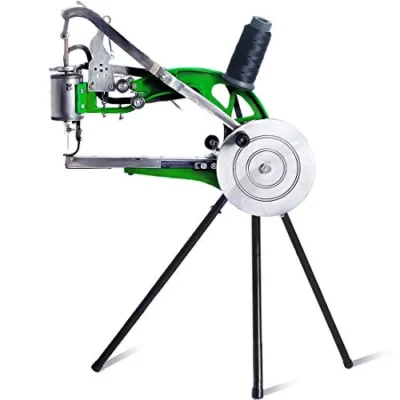
KEY FEATURES
- Hand-operated patcher format
- Narrow repair arm
- Rotating presser-foot arrangement listed
- Cotton and nylon thread use advertised; sizes unverified
PROS
- Owners complete patches and leather repair projects
- Narrow-arm access suits awkward repair locations
CONS
- Rough finishing and setup problems can prevent useful sewing
- Tripod stability and working height need attention
- Feed marks and small bobbins affect the finished job
Editorial Rating
Based on supplied customer reviews and verified product documentation
Price and availability subject to change
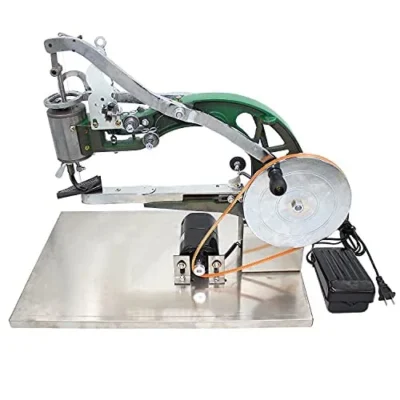
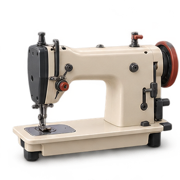
The DODOQ manual patcher makes sense when reaching a repair is the problem. Owners describe stitching patches onto vests, working on hat bills and making leather items. Its narrow arm and turning foot offer an approach a flatbed cannot always provide. The tradeoff is substantial: rough finishing, an awkward stand and difficult setup appear alongside those successful jobs.
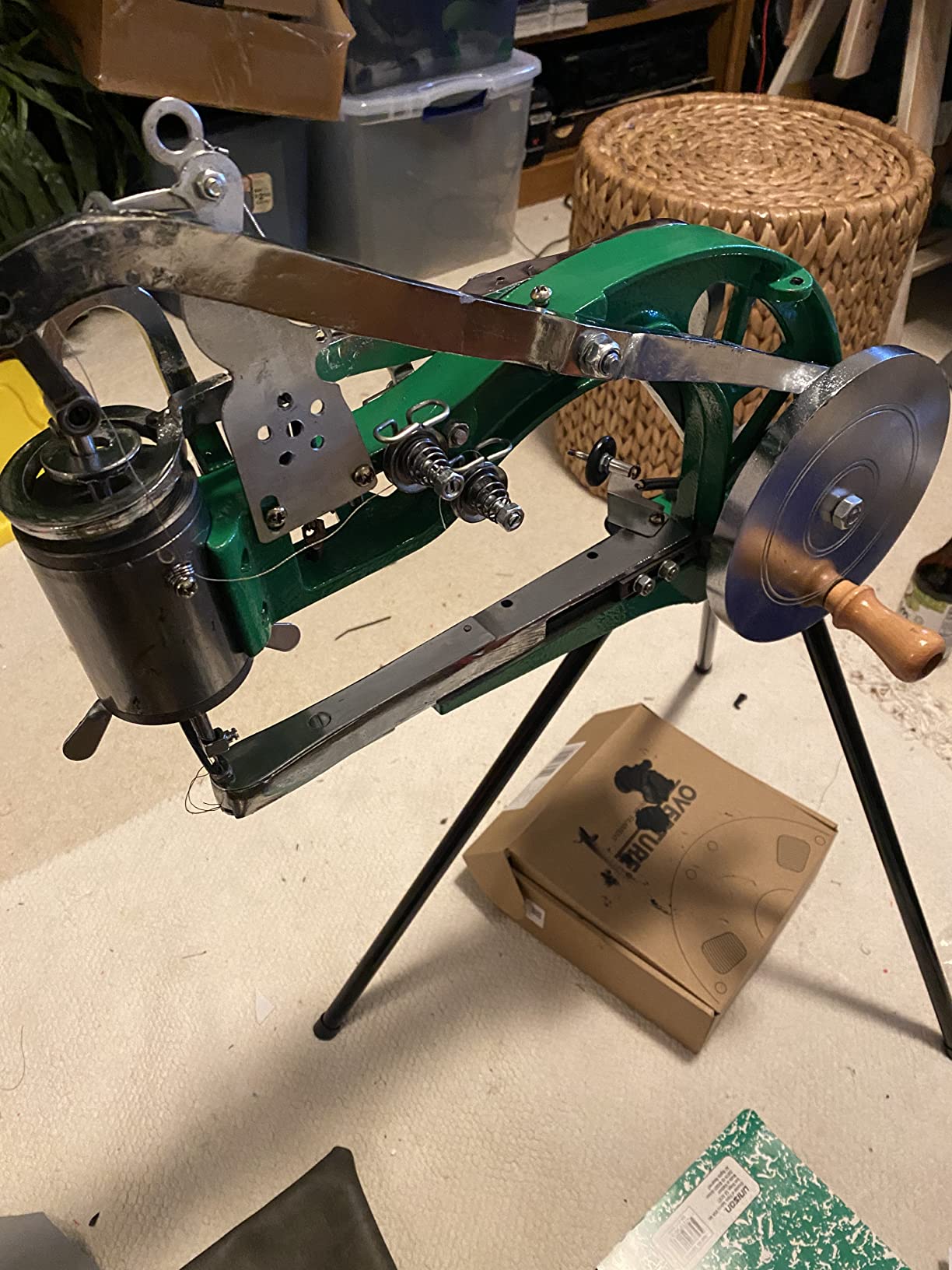
A repair machine with a different route to the seam
Working around an existing object
A vest-patch account and another involving hat bills support the machine’s practical repair role. You still need to position the material and guide the seam; reaching a spot does not guarantee a tidy result there.
Making leather items from scratch
One owner completed a holster and belt, while another found that stitching wandered and marked the finish. Those opposing results make surface quality and preparation more important than a broad claim that the machine sews leather.
The stand is part of the working setup
Several owners describe the supplied tripod as unstable or inconveniently low. Some built their own supports. That tells a buyer to assess the complete workstation before ordering, not to assume the small footprint means a comfortable machine that can be used anywhere.
- Support: the machine and work need a stable arrangement.
- Reach: operating the hand crank and guiding a repair must both be comfortable.
- Session length: a small bobbin can interrupt a longer job; a belt maker reports running out before finishing the belt.
Rough parts can turn the purchase into a setup project
Accounts mention burrs, oil, misalignment, broken thread and parts that needed attention. Some technically experienced buyers made their machines useful; others spent considerable time without achieving a workable seam. An experienced helper therefore improves the learning arrangement without guaranteeing that a defective unit can be made serviceable.
Why this review does not prescribe a needle or thread combination
The supplied accounts include individual needle choices and modified machines, but they do not establish an authoritative compatibility specification for this exact offer. The listing’s cotton/nylon wording also does not mean the machine uses two threads simultaneously. Get the exact needle system and approved thread range from the supplier before buying replacement parts.
If the job is closing filled sacks, the bag closer versus cobbler patcher guide explains why that calls for a different machine.
Pros & Cons Analysis
Based on supplied customer reviews and verified product documentation
Pros
- Access with a purpose: vest patches and hat-bill work give this design a concrete repair role. The advantage is getting the work under the foot, not a demonstrated improvement in stitch quality over a conventional machine.
- Useful results are possible: the holster and belt account shows more than an unloaded demonstration. It remains one owner’s result, alongside buyers who could not obtain satisfactory stitching.
Cons
- Preparation can dominate ownership: reports of rough parts, misalignment and persistent thread trouble make this a poor choice for someone expecting a ready-to-use household machine. Time spent adjusting a unit is a real cost even when the purchase eventually succeeds.
- The supplied support can be frustrating: repeated complaints about the tripod and height concern how the whole machine is used. A buyer needs to account for a stable workstation, rather than judging portability from the machine alone.
- Visible leather can suffer: foot marks, wandering stitches and oil appear in the accounts. Penetrating the material is only part of completing a presentable repair.
- Long runs need interruptions: owners flag the small bobbin, including one belt that outlasted its thread supply. This matters more for continuous construction than for a short patch.
Our Verdict
Choose access only when you can accept the preparation
DODOQ is worth investigating for occasional awkward repairs when the operator understands mechanical setup and has a suitable support arrangement. It is a weak match for someone whose first leather project must be finished neatly and immediately.
- Most persuasive use: a short repair that a flatbed cannot conveniently reach.
- Reason to choose another route: finish-sensitive work, dependable production or no appetite for resolving rough setup.
Confirm parts compatibility and support for the actual supplied machine. A familiar-looking casting is not enough to establish interchangeable parts or equivalent quality.
About the editorial rating
Editorial assessment, not an Amazon customer average or a hands-on test. Useful awkward-access repairs earn credit; inconsistent setup, finish marking and support ergonomics substantially reduce the recommendation. Scores are editorial judgments about the supplied evidence, not measured tests.
Frequently Asked Questions
Does DODOQ use electricity?
This offer is a hand-operated patcher. Customer motor conversions are not part of the reviewed stock machine.
Is it a bag closer?
No. A patcher supports and feeds a repair around its narrow arm; a bag closer makes a different kind of closure along a sack opening.
Can it leave marks on leather?
Some owners report feed-foot marks and damaged finishes. A successful seam on another owner’s material does not establish an unmarked result on yours.
Technical Specifications
| Machine class | Manual repair patcher |
|---|---|
| Control type | Hand crank |
| Primary functions | Repair access and short seams |
| Power / market voltage | Manual; no electrical supply required |
| Feed system | Turning foot arrangement; exact adjustment limits not verified |
| Bobbin / looper system | Small bobbin described by owners |
| Exact model | DODOQ B08X6KN698; no separate model code verified |