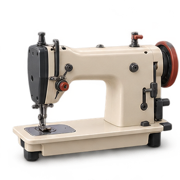
Consew CP206RL Review: Portable Walking Foot, Workshop Setup
At a Glance
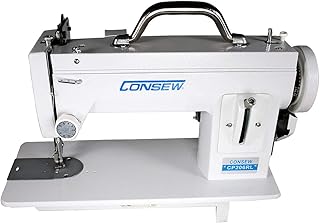
KEY FEATURES
- Single-needle walking-foot lockstitch with reverse
- 800-spm maximum and 6 mm stitch length
- 220 mm workspace and built-in 110V motor
- 41-pound machine with pedal and carrying case
PROS
- Owners report useful feeding on leather, vinyl, upholstery, canvas and awning work
- Portable case format avoids a permanent industrial table
- Long straight stitch and reverse suit heavy craft construction
CONS
- Many owners needed oiling, break-in or mechanical adjustment before reliable use
- Low-speed torque and pedal control receive recurring criticism
- Specialty feet, piping compatibility and replacement parts can be difficult
Editorial Rating
Based on supplied customer reviews and verified product documentation
Price and availability subject to change
The Consew CP206RL occupies a useful gap between a domestic “heavy-duty” machine and a table-mounted industrial head. Its walking foot, 6 mm straight stitch and 41-pound case can travel to leather, canvas or upholstery work. The 86 supplied reviews also make clear that portability does not turn industrial-style mechanics into plug-and-play ownership.
Portable means a case instead of a table
At 41 pounds, the CP206RL can move between a bench, jobsite and storage case, but it is not a machine to carry casually to class. The built-in 110V motor and electronic pedal remove the separate table and belt installation of a conventional industrial system. They also limit motor upgrade options and contribute to recurring owner comments about low-speed control.
Walking foot is not the same as compound feed
The presser foot walks while the lower feed advances the work. That helps stacked leather, vinyl, canvas and upholstery move without the upper layer lagging as badly as it might under a static foot. The needle itself does not travel with the material, so the machine should not be described as triple feed.
| Job | Evidence | Watch point |
|---|---|---|
| Leather and vinyl goods | Common positive use | Match needle, thread and foot clearance. |
| Canvas, awnings and covers | Successful owner projects | Support large work so it cannot drag. |
| Piping and specialty operations | Mixed to poor | Owners report limited foot compatibility. |
| Fine garment versatility | Weak fit | Straight stitch only and coarse setup focus. |
Expect a commissioning process
Owner feedback repeatedly mentions tight mechanisms, oiling, tension springs, timing, thread breaks and pedal behavior. Some machines improved after lubrication and break-in; others arrived with faults or failed parts. These accounts do not support casual internal adjustment without the manual, but they do support buying from a seller who can provide setup and parts help.
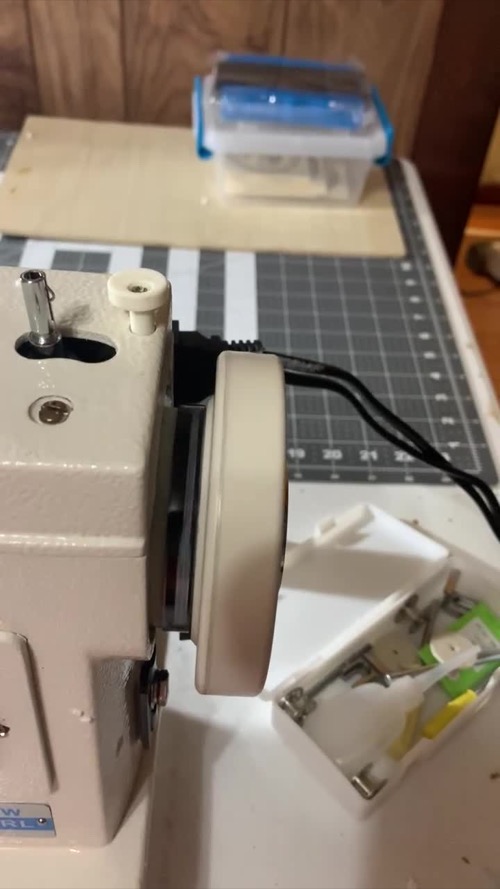
- Read the oiling map and inspect for shipping movement before powering on.
- Turn the handwheel manually to confirm free motion and correct needle clearance.
- Start with known thread and scrap below maximum thickness.
- Check forward and reverse balance plus low-speed pedal response.
- Test the actual foot or piping operation before assuming accessory compatibility.
The right buyer is part mechanic
A bag maker, upholsterer or marine-canvas worker may accept adjustment in exchange for a walking foot that does not require a permanent industrial table. Someone expecting domestic-machine convenience, very slow servo control or broad presser-foot availability is likely to be frustrated. The CP206RL can fill its niche, but the supplied owner record says dealer preparation and mechanical confidence materially change the experience.
Low-speed control separates occasional work from daily production
Heavy assemblies often need careful first penetration and slow control across a thickness change. Several owners wanted more torque or smoother response at the bottom of the pedal range. Some report improvement after correct oiling and break-in, but the built-in motor does not become a modern table-mounted servo. Test starts, corners and bulky transitions—not only a fast straight run.
If the machine will earn income every day, compare the full workstation rather than the head price. Dealer setup, a servo-driven compound-feed machine, standard industrial feet and a permanent table can cost more initially while saving adjustment and accessory time. The CP206RL earns its advantage when the case format and 220 mm arm are worth those compromises.
Customer photos
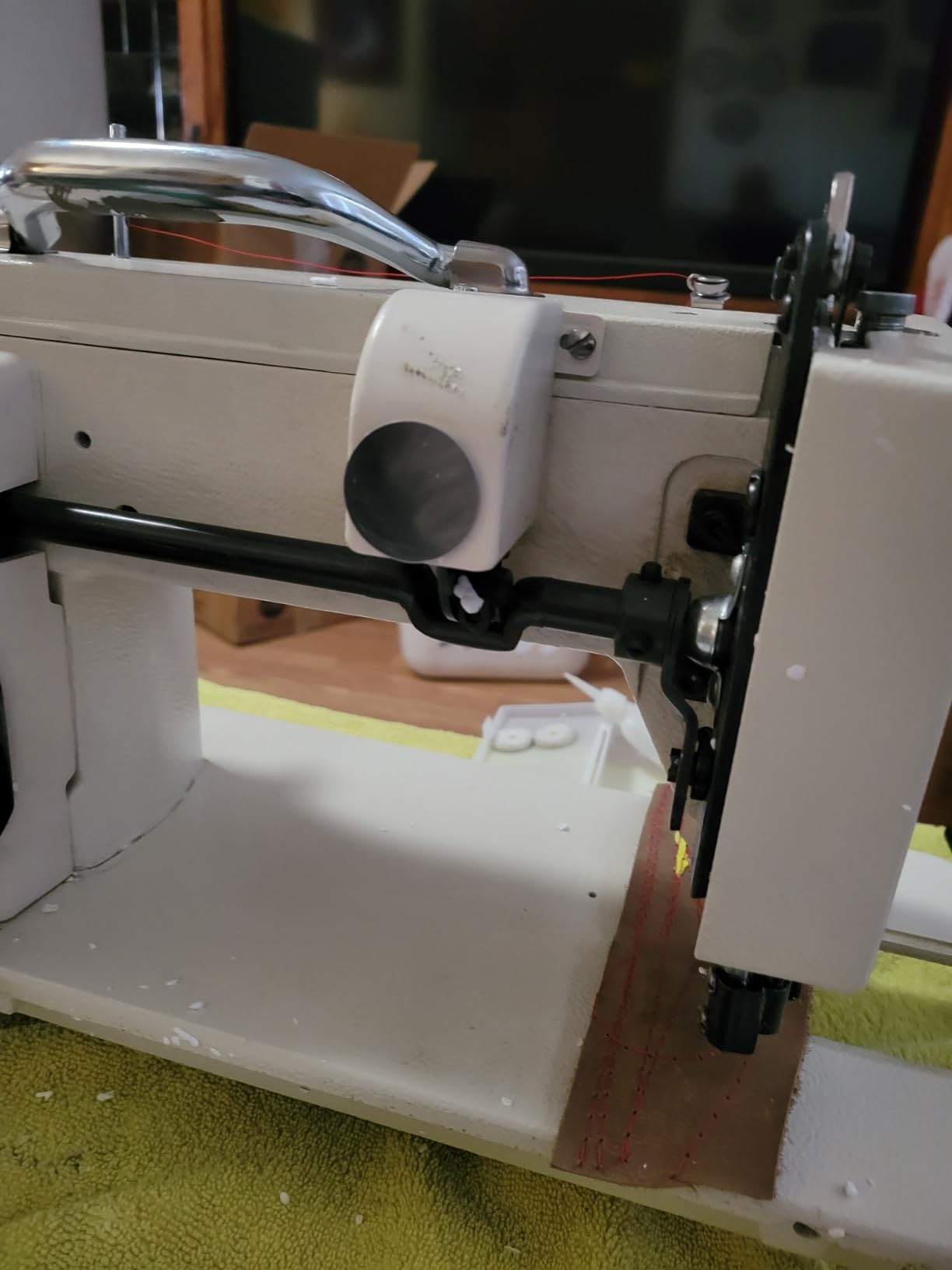
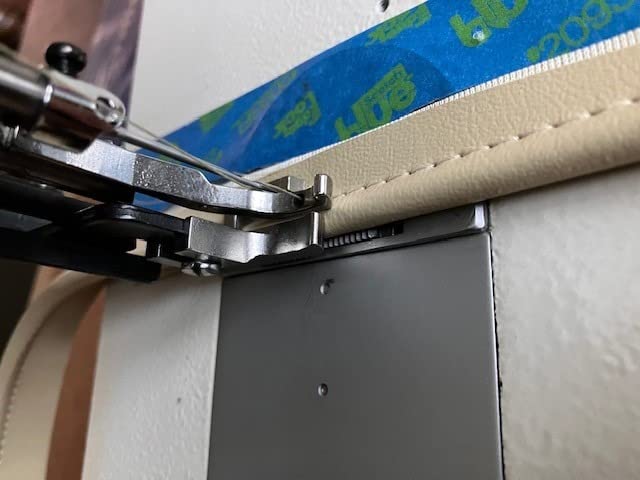
Pros & Cons Analysis
Based on supplied customer reviews and verified product documentation
Pros
- The walking foot helps keep stacked or grippy materials moving through straight seams.
- Owner projects include upholstery, awnings, leather, vinyl, bags and other work that challenges ordinary domestic feed.
- Consew publishes a 6 mm maximum stitch, 220 mm workspace and 800-spm ceiling.
- The case-and-built-in-motor format is transportable compared with a full industrial table installation.
Cons
- The supplied pool contains substantial tension, timing, thread-break and out-of-box adjustment complaints.
- Owners frequently discuss oiling and break-in; this is not a maintenance-free domestic appliance experience.
- The 1/10-hp motor and pedal can feel abrupt or weak at very low speed before proper setup.
- This drop-feed walking-foot design is not the same as a triple/compound-feed industrial machine.
Our Verdict
Bottom line
The CP206RL is portable in form, industrial in setup expectations, and best bought by someone willing to tune and maintain a mechanical walking-foot machine.
Where it earns its place
It handles straight seams in leather, vinyl, canvas and upholstery without requiring a permanent table-mounted head.
Where buyers get surprised
- Forty-one pounds is transportable, not lightweight.
- Oiling, break-in, tension and timing may need hands-on attention.
- It is a walking-foot drop-feed machine, not full compound feed.
Recommendation
Choose it for occasional mobile heavy-material work when local mechanical support or your own adjustment skill is available. Choose a dealer-set-up servo industrial machine when slow control and daily production matter more than portability.
Frequently Asked Questions
Is the Consew CP206RL a compound-feed machine?
No. Consew describes it as a drop-feed walking-foot lockstitch machine. It does not add needle feed like a true triple-feed industrial model.
What materials is it designed for?
Consew lists leather, vinyl, upholstery, synthetics, canvas and coated or laminated products among its applications.
How much does it weigh?
Consew publishes a net weight of 18.6 kg, or 41 lb.
Does it sew zigzag?
No. It forms straight lockstitch with reverse. Consew identifies the CP146RL as the related zigzag model.
Does it need setup before use?
The owner record strongly supports checking oiling, timing, tension, pedal response and fasteners before production work, ideally with dealer or technician support.
Technical Specifications
| Machine class | Portable single-needle walking-foot lockstitch machine |
|---|---|
| Control type | Electronic foot pedal with mechanical stitch and tension adjustments |
| Primary functions | Leather, vinyl, canvas, upholstery and other straight-seam heavy-material work |
| Built-in stitches / applications | 1 straight lockstitch with reverse |
| Maximum sewing speed | 800 stitches per minute |
| Speed control | Electronic foot pedal |
| Maximum stitch length | 6 mm / 4.2 stitches per inch |
| Bobbin / looper system | Horizontal oscillating hook |
| Workspace right of needle | 220 mm / 8.625 inches |
| Included presser feet | Walking-foot assembly; specialty compatibility is limited |
| Warranty | Confirm current Consew/dealer terms |

Juki TL-18QVP Haruka Review: Micro-Lift, Layered Seams and Setup Limits
Bernette B08 Review: Straight-Stitch Speed With a Narrow Purpose