SewLaVie 1130 Review: Speed Control, Stitch Choice and Thick-Seam Limits
At a Glance
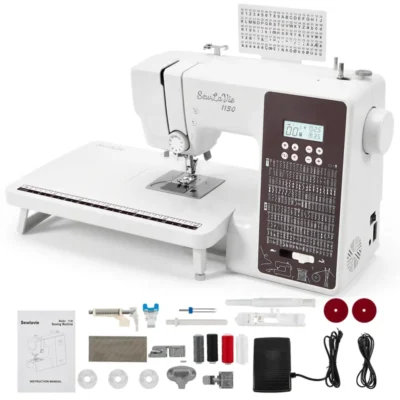
KEY FEATURES
- Speed-control slider with a pedal-speed limit
- Start/stop and needle-position controls
- LCD stitch selection and lettering patterns
- Drop feed, free arm and extension table
PROS
- Speed slider and pedal-free sewing appeal to owners
- Decorative choices are appreciated beyond basic seams
- A completed lap quilt supports practical quilting use
- Some owners find it convenient to move and store
CONS
- Two owners struggled with the needle threader
- Heavy seam feeding receives conflicting feedback
- LCD settings are not equally approachable for everyone
Editorial Rating
Based on supplied customer reviews and verified product documentation
Price and availability subject to change
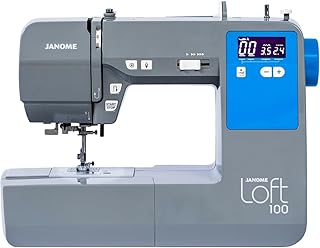
The SewLaVie 1130 is worth considering when a basic mechanical machine feels restrictive: you want selectable decorative work, a way to slow the machine down and the option to sew without a pedal. The strongest reason to consider it is that control package. The advertised stitch total alone says much less about whether it will suit your sewing.
A speed limit that works with the pedal too
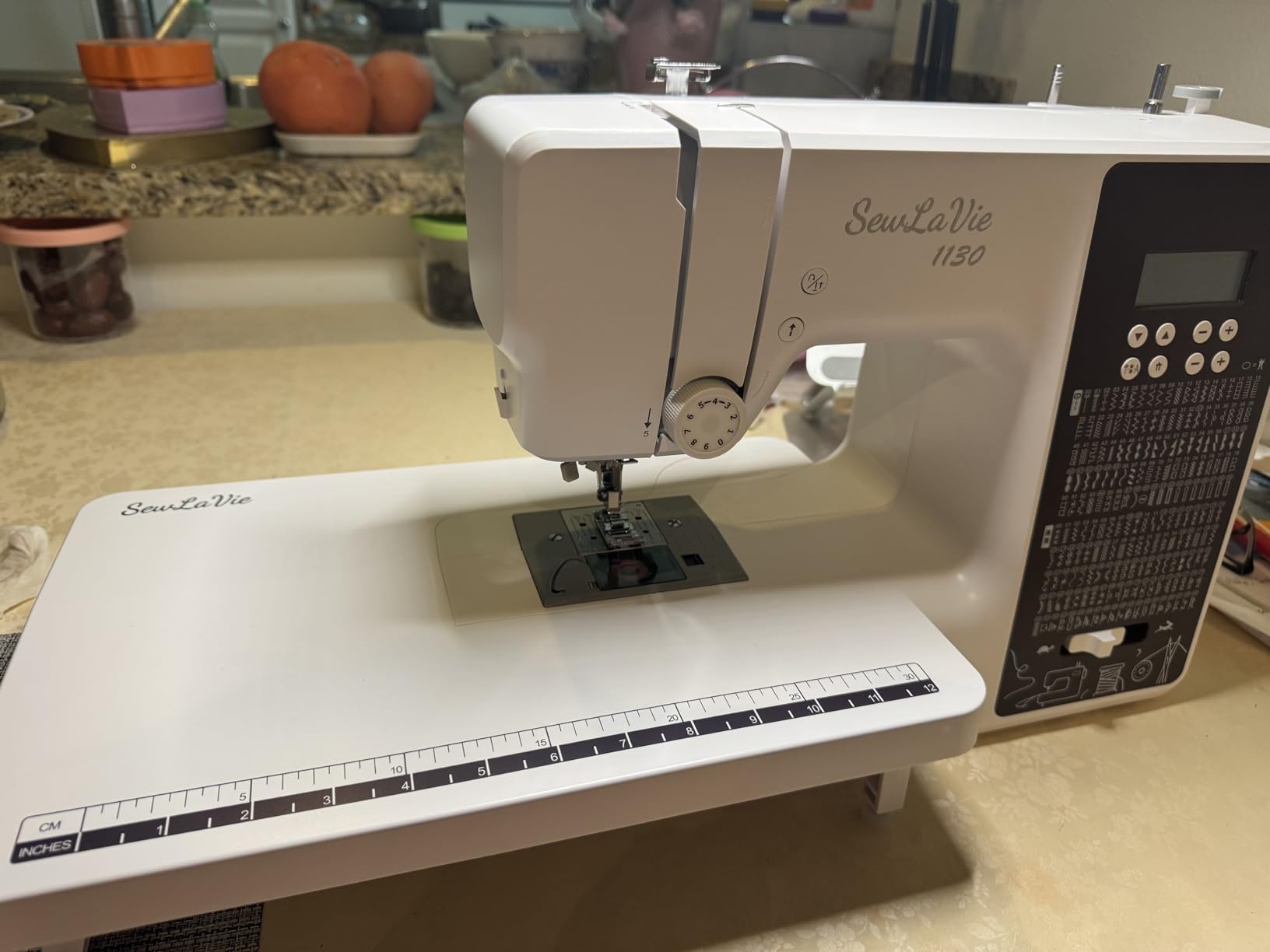
One owner singles out the speed control for helping with precision; another appreciates having a pedal-free option. These are different needs, and the 1130 accommodates both. Its model-specific manual explains a useful detail: the slider sets an upper speed limit even when the pedal is fully depressed.
Working with your foot
The pedal controls speed within the slider setting. This can make a deliberate pace easier to maintain without depending entirely on ankle pressure.
Working without the pedal
The start/stop button operates with the foot controller disconnected. The manual says the button cannot be used while the controller is connected; it is an alternative operating mode.
The reverse control also handles needle positioning when the machine is stopped. That is useful for turning a corner with the needle holding the fabric, but it adds a button function to learn. One experienced owner moving from mechanical machines welcomed the extra capabilities while explicitly questioning whether the number of settings made it a beginner’s machine.
What the 300-pattern claim actually includes
- 143 standard patterns: the listing’s first group of stitch selections.
- 57 twin-needle selections: these form part of the advertised total, rather than 57 entirely separate sewing operations.
- 100 lettering patterns: useful for stitched characters, not evidence of hoop embroidery or digitized design import.
An owner particularly liked the stitch chart and decorative choices, while another described smooth, even stitching after years of using manual machines. Their accounts support an opportunity to explore decorative sewing. They do not establish that every selection will become useful, or that all 300 have been evaluated. Buy for the seams and controls you expect to use.
A finished lap quilt is stronger evidence than a layer-count slogan
One customer reports completing a lap quilt. Others appreciate the supplied table for fabric support, although a buyer who liked the accessories explicitly had not yet tried quilting. These accounts should stay separate: owning a quilting foot does not establish a successful quilting result.
Thick seams produced different experiences
One owner describes hemming heavy work jeans successfully. Another reports difficulty feeding especially thick seams despite otherwise liking the machine. The listing’s nine-layer denim claim is therefore not a dependable promise for a folded hem: fabric weight, seam shape and setup all affect the job.
The manual documents drop feed for free-motion work and a removable table for free-arm access. Those functions broaden the tasks available, but neither a table nor a longer stitch menu makes the machine an industrial replacement. If dense intersections are your main reason for upgrading, these mixed reports deserve more weight than the maximum layer claim.
Needle threading and cutting: two different conveniences
Two supplied owners could not get the needle threader working satisfactorily. Other accounts describe easier setup, so the evidence does not establish a universal defect. It does mean the threader should not be the sole reason to choose this machine for an accessibility need. The manual identifies a thread cutter on the machine body; we have not verified an automatic thread-trimming function, despite one customer describing an auto cutter.
Moving beyond a familiar mechanical machine
Owners who praise easy setup coexist with a short negative report about usability and an experienced sewist who expects a learning curve. The most convincing fit is someone willing to learn the display and button functions in exchange for electronic speed control. If you prefer direct dials and ordinary repair work, the SewLaVie 996P follows that simpler mechanical approach.
Pros & Cons Analysis
Based on supplied customer reviews and verified product documentation
Pros
- Control can matter more than stitch quantity. An owner values the speed adjustment for precision, while another prefers starting without a pedal. The manual confirms a slider limit during pedal use too, giving these reported conveniences a clear practical basis.
- Decorative work offers room to experiment. A buyer praises patterns missing from their other machines and likes the numbered chart. That supports creative variety, without treating the advertised total as 300 independently tested functions.
- There is an actual quilting outcome. One owner completed a lap quilt; table-support praise from others adds context. This is more meaningful than accessories alone, although it says little about maneuvering a large bed quilt.
- Portability receives useful support. Two longer accounts describe moving the machine easily. Another comments on uneven weight distribution, so convenient storage should not be confused with a perfectly balanced carrying experience.
Cons
- The threader is a point of friction. Two customers describe being unable to use it successfully, including one familiar with several machines. A buyer who needs effortless needle threading should weigh that evidence alongside the positive setup reports.
- Denim success is conditional. A work-jeans account is positive, but another owner reports feeding trouble at thick joins. Neither provides a standardized capacity test, and a strong flat-sample result does not settle the folded-seam question.
- The extra controls need learning. An experienced mechanical-machine user finds the layout workable but would not call it a beginner machine. That counterpoint matters alongside enthusiastic first-time reports: more functions can mean more decisions before sewing.
Our Verdict
Choose the controls you will use every session
The 1130 is a reasonable candidate for a sewist who wants a deliberate pace, occasional lettering and more decorative options without immediately moving to a separate embroidery machine. The owner evidence is strongest for everyday usability and individual completed projects.
- A good reason to choose it: the speed slider and pedal-free option address a specific frustration with your present setup.
- A reason to keep looking: dependable needle threading or repeated bulky denim joins are non-negotiable.
Its broad menu gives room to learn, but the supplied feedback does not establish long-term service life. Compare the complete offer and support arrangements with an established computerized alternative before treating the feature count as the deciding advantage.
How we scored this machine
Editorial judgment, not Amazon stars or measured testing. The four equally weighted categories consider stitch control, setup, project fit and build/accessory value. Speed limiting and reported project outcomes support the assessment; threader problems, conflicting thick-seam results and limited ownership history temper it. Accessories add utility, without establishing a durability or price-value winner.
Frequently Asked Questions
Can the 1130 sew without a foot pedal?
Yes. The manual specifies start/stop operation with the controller disconnected. With the pedal connected, use the pedal; the slider still sets the upper speed limit.
Does it embroider designs in a hoop?
The documented functions are sewing stitches and lettering. They do not establish hoop embroidery or imported embroidery-design capability.
Can it reliably sew nine denim layers?
The listing advertises that capacity, but owner accounts disagree about thick seam feeding. A fixed layer count does not describe every denim weight or folded intersection.
Does it have an automatic thread cutter?
The manual identifies a body-mounted thread cutter. We have not verified automatic trimming and do not treat one owner statement as confirmation.
Technical Specifications
| Brand / model | SewLaVie 1130 |
|---|---|
| Machine type | Computerized sewing; not hoop embroidery |
| Advertised patterns | 300 total: 143 standard, 57 twin-needle, 100 lettering |
| Speed control | Slider; also caps foot-pedal speed |
| Pedal-free sewing | Start/stop with controller disconnected |
| Needle positioning | Up/down control while stopped |
| Bobbin | Top drop-in |
| Buttonhole | Automatic buttonhole with dedicated foot |
PooLin EOC02 Review: Beginner-Friendly Controls With Thick-Layer Limits
Singer 6700C Review: Fast Computerized Control With Heavy-Duty Limits

Janome 3160QOV Review: A Class Machine with Useful Quilting Controls