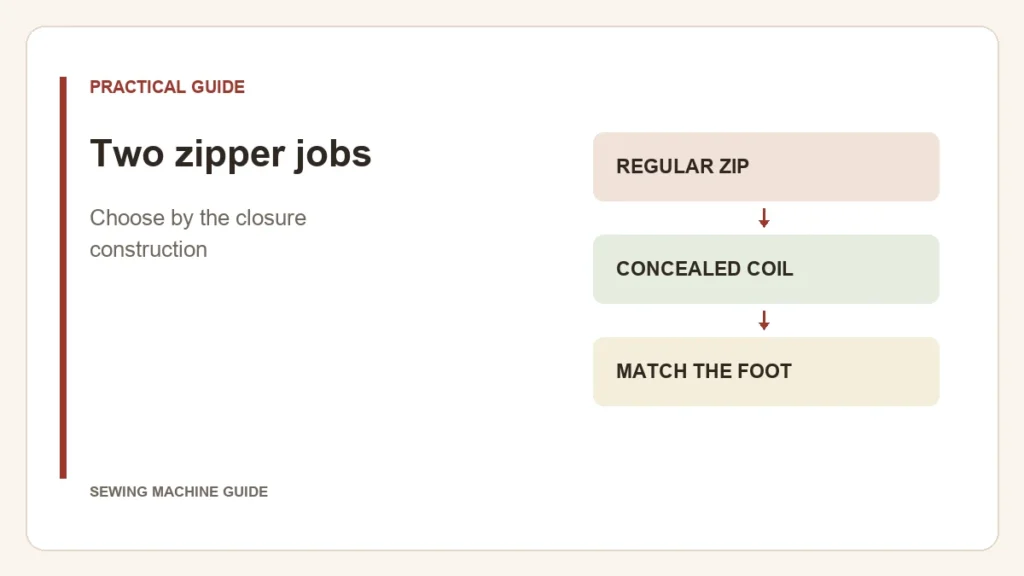
An invisible-zipper foot does not make a regular zipper invisible. It is shaped to guide the coils of a concealed zipper. A regular zipper foot provides access beside teeth or hardware. The zipper construction determines which shape helps.
Turn the foot over
A narrow or offset sole
A regular zipper foot lets the needle work close beside the zipper. Its shape also helps reach the seam below an installed concealed zipper.
Two channels underneath
An invisible-zipper foot carries the coils in grooves, one side at a time, so the needle can stitch close to them in the intended position.
One zipper can involve both feet
For a concealed zipper, the grooved foot guides the coils while the two halves are attached. Closing the remaining seam below the zipper is a separate operation. Bernette’s accessory instructions distinguish these stages; a regular zipper foot can be useful for reaching that lower seam. Owning the specialized foot does not make the regular one redundant.
Singer describes the grooves and centered needle opening on its concealed-zipper foot. That narrow opening is also a reason to check needle alignment rather than selecting zigzag by habit.
Confirm the fit before trying the zipper
- Use the exact machine’s compatibility information, including its shank or attachment system.
- Select the stitch and needle position permitted for the foot.
- With power off, perform the manual’s clearance check. The needle must not touch the foot.
A similar-looking snap-on accessory is not enough to establish compatibility. Resolve attachment and shank differences before ordering.
A regular foot can be used for a concealed zipper with an appropriate technique, but it does not provide the same coil-guiding grooves. If that guidance is what you struggle with, practice the installation on a spare zipper and matching fabric. Judge the closed zipper: it should run smoothly, avoid catching fabric and conceal the stitching as the construction intends.