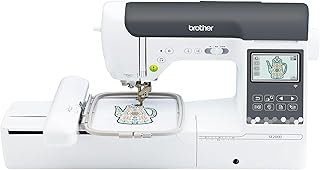
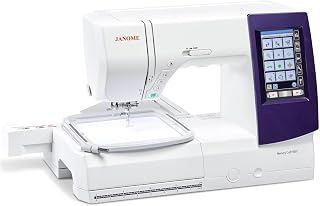
The best sewing and embroidery machine in this roster is the Brother SE2000 for a home sewist who genuinely needs both workflows. Its 241 sewing stitches, 850-spm ceiling, 5×7 embroidery field and onboard wireless touchscreen make the combination substantial on both sides. The Janome Memory Craft 9850 is the better alternative when a 6.7×7.9 field, 9 mm sewing width and USB-led workflow fit the studio better.
A combination machine saves floor space, not learning time. The buyer must understand ordinary threading, buttonholes and fabric feed as well as hooping, stabilizer, design files and embroidery tension. We ranked sewing capability, native embroidery field, control independence, mode-change friction and recurring owner themes from the stored exact-product evidence.
First decide whether one body should do both jobs
A combo is useful when one budget and table must cover garments, repairs and embroidery. It is less efficient when embroidery should run while another machine constructs seams. A dedicated sewing machine plus embroidery-only machine can cost more space but preserve simultaneous workflows and simplify service interruptions.
The SE2000 has the fewest structural compromises
Its 5×7 field avoids the common 4×4 ceiling, while 241 sewing stitches, ten buttonholes, speed control, needle stop and a knee lift make the sewing side credible. Wireless transfer and a color screen do not remove the need to learn compatible files, stabilizer and thread handling.
The MC9850 trades wireless convenience for field and sewing breadth
Janome’s 6.7×7.9 field is larger than 5×7, and its 9 mm stitch width, automatic tension, 1,000-spm sewing ceiling and color touchscreen suit a permanent mixed-use station. It uses USB rather than built-in wireless transfer, which can be an advantage for a buyer who prefers local file handling.
Brother SE2000
A useful 5×7 field and mature sewing controls make the broadest one-machine case.
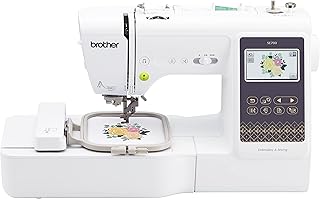
Brother SE700
Choose 4×4 only when measured projects fit and lower cost matters.
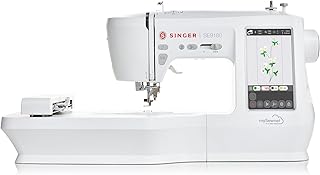
Singer SE9180
A seven-inch display and 7×4.7 field appeal, but support and exact connectivity need verification.
SE700 keeps the concept accessible but fixes the field at 4×4
Its 103 sewing stitches, speed slider and ten buttonholes make the ordinary-sewing side useful. The permanent 4×4 embroidery maximum is the important cost boundary. Choose it for patches, pockets and compact motifs; do not plan to solve larger designs by buying a bigger hoop.
PooLin EOC03 and Singer SE9180 require stronger acceptance tests
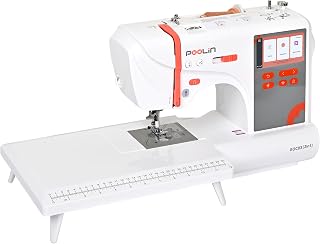
The EOC03 offers a 4×9.25 field and claimed 207-stitch sewing menu, but only seven supplied owner texts split between approachable creativity and severe lower-thread nesting. The SE9180 combines a seven-inch screen with a 7×4.7 field, yet recurring tension, threader, screen and support complaints narrow the recommendation. Official materials also conflict on parts of its connected workflow.
| Buyer situation | Best direction | Reason to reverse |
|---|---|---|
| One machine for garments plus medium embroidery | Brother SE2000 | Choose MC9850 for a larger field and USB-led studio |
| Compact small-project learning | Brother SE700 | Move up if designs exceed 4×4 |
| Permanent premium mixed-use table | Janome MC9850 | Choose Brother if wireless transfer is central |
| Large screen at a different price tier | Singer SE9180 | Reverse when support or connectivity ambiguity is unacceptable |
| Long narrow hoop on a newer platform | PooLin EOC03 | Reverse when evidence confidence must be high |
Test both modes before the first real project
- Inventory mode-specific parts. Confirm embroidery unit, hoop, foot controller, sewing feet and power accessories.
- Complete ordinary sewing first. Test straight stitch, zigzag, reverse, speed control and a full buttonhole.
- Run a built-in design. Use stable fabric, correct stabilizer and known thread to remove file variables.
- Transfer one custom file. Exercise every USB, wireless or app route you intend to depend on.
- Switch back to sewing. Confirm the machine recovers cleanly after embroidery-unit removal and settings changes.
The SE2000 is the most balanced launch choice, the MC9850 the larger-field USB-led alternative, and the SE700 the rational compact entry. The SE9180 and EOC03 can fit narrower buyers, but their support, evidence or connectivity conditions should be accepted explicitly rather than hidden behind large screens and long feature lists.