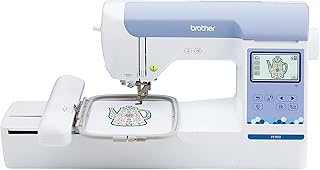
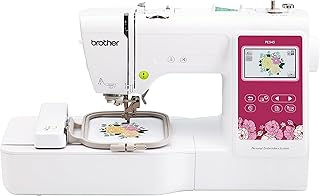
The best embroidery machine for beginners in this group is the Brother PE900 for a learner who can justify a 5×7 field from the start. Its larger native area avoids splitting many names and medium motifs, while the onboard color screen, USB and wireless routes keep the machine useful without making a phone the only control surface. The PE545 is the better lower-scope choice when 4×4 projects are genuinely enough.
Beginner embroidery is a chain: hooping, stabilizer, thread path, design compatibility, transfer and recovery after a break. A large design library cannot rescue a weak link. We compared field size, independent machine control, transfer routes, threading help, support burden and recurring owner friction using documentation and supplied exact-product reviews.
Choose the embroidery field before choosing the screen
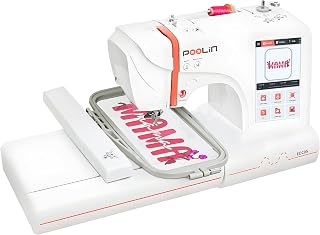
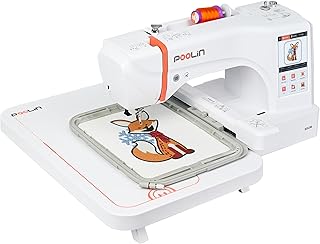
A 4×4 field suits patches, pockets, compact monograms and small motifs. A native 5×7 field accommodates longer names and medium rectangular layouts without splitting. The PooLin EOC05’s 4×9.25 field adds length but keeps a four-inch width; the EOC06 expands to 11×7.9 and asks a beginner to manage a much larger machine and project scope.
Why the PE900 is the safer long-term beginning
It is embroidery-only, so its purpose is clear, and its 5×7 field is materially more flexible than the Brother 4×4 machines. Color sorting and jump-stitch trimming can reduce repetitive work. Owners praise finished results and wireless transfer, while threading, tension and damaged-arrival reports make a disciplined first-week test necessary.
Brother PE545
Onboard touchscreen, USB and wireless routes make a contained 4×4 learning path.
PooLin EOC05
A 4×9.25 hoop suits names and borders when four inches of width is enough.
PooLin EOC06
An 11×7.9 field creates room but also a larger setup, weight and troubleshooting burden.
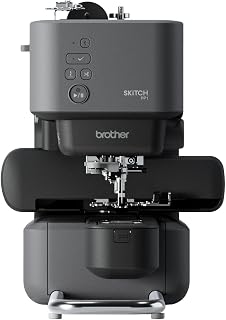
The Skitch is easy to frame but harder to own independently
Its magnetic 4×4 frame can simplify positioning on some finished small items. The machine requires Artspira and places much of normal control on a compatible phone. Supplied owners report attractive successes alongside recurring pairing, firmware, bobbin and support frustration. Choose it for the frame-and-app workflow specifically, not because compact automatically means beginner-friendly.
| First-project plan | Field direction | Likely fit |
|---|---|---|
| Patches, pockets and compact monograms | Native 4×4 | Brother PE545 or Skitch |
| Longer names and medium motifs | Native 5×7 | Brother PE900 |
| Long, narrow lettering or borders | 4×9.25 | PooLin EOC05 |
| Large single-field designs | Up to 11×7.9 | PooLin EOC06, with a steeper setup commitment |
Budget for learning materials, not only the machine
- Use stabilizer matched to fabric and design density.
- Start with known embroidery thread, bobbin thread and a fresh needle.
- Distinguish transferring a valid file from digitizing artwork into stitches.
- Confirm included hoops and the native stitch field; a larger accessory hoop cannot expand it.
- Test support contact, firmware and every planned transfer route during returns.
Is a larger-field machine always easier for a beginner?
No. It reduces rehooping for large designs but increases footprint, fabric handling, design cost and the consequences of a long failed stitch-out. Choose the smallest field that still fits the real project plan with growth room.
The PE900 is the strongest start for a learner who already sees 5×7 projects ahead. The PE545 is the conventional compact path, the EOC05 offers a useful long-hoop alternative with visible support, the EOC06 suits an ambitious large-field learner, and the Skitch belongs only to a buyer who actively wants app-dependent magnetic framing.