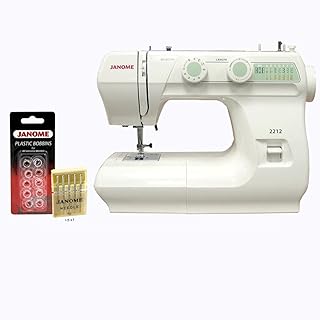
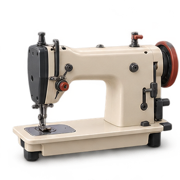
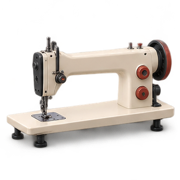
Janome HD1000 Review: All-Aluminum Simplicity With an Old-School Bobbin
At a Glance
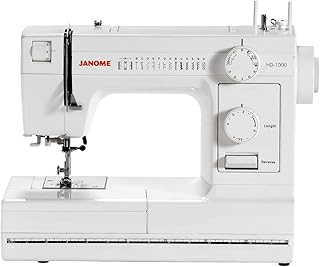
KEY FEATURES
- All-aluminum interior frame and body
- 14 stitches and four-step buttonhole
- Front-loading vertical bobbin
- 860-spm speed and included hard cover
PROS
- Owners praise its quiet, planted feel and direct mechanical controls
- The aluminum body appeals to buyers avoiding lightweight plastic construction
- It handles a broad domestic fabric range with correct needles
CONS
- The front-loading bobbin has a steeper learning curve than a drop-in system
- A four-step buttonhole is slower than the HD3000 one-step routine
- Some units arrive misadjusted or develop tension and feeding faults
Editorial Rating
Based on supplied customer reviews and verified product documentation
Price and availability subject to change
The HD1000 is deliberately unmodern. It offers 14 stitches, manual tension, a vertical bobbin case and an aluminum body that owners often describe as quiet and solid. Its value depends on whether that simplicity feels reassuring or unnecessarily old-fashioned.
The weight is doing useful work
At 16.8 pounds, the HD1000 is movable but planted. Owners compare it favorably with lighter machines that bounce or sound hollow. Stability supports straight tracking; it does not create more presser-foot clearance or a walking-feed mechanism.
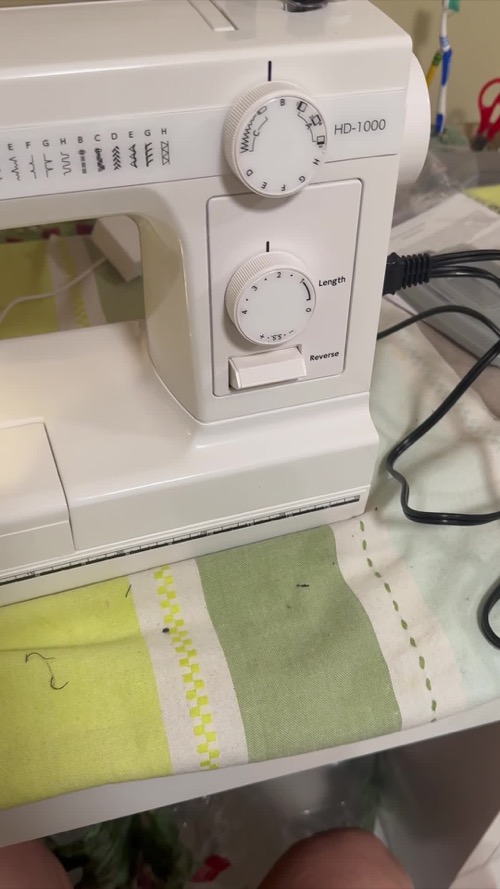
Fourteen stitches keep decisions visible
The machine covers straight, zigzag, stretch and a small decorative set. A four-step buttonhole requires moving through the sequence deliberately. A sewist who makes frequent garments may prefer the HD3000 one-step routine; an alterations-focused owner may rarely care.
The bobbin case is the learning curve
- Insert the bobbin in the case in the manual’s direction.
- Seat the case until its finger aligns with the race notch.
- Hold the upper thread while turning the handwheel toward you.
- Pull both threads behind the foot before beginning the seam.
Several satisfied beginners say the system became straightforward after setup. Negative reports include machines that would not form stitches or arrived poorly adjusted. A complete demonstration on scrap separates a learning issue from a unit that needs exchange.
What “heavy duty” should mean here
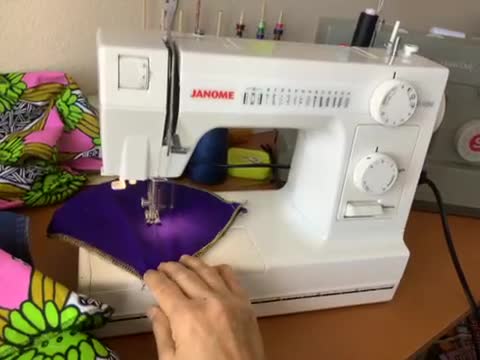
The aluminum body is a durability signal, not a material-capacity specification. Successful owners still match needle, thread and presser foot to the fabric and slow down at seam intersections.
Buying a refurbished Janome HD1000
Before ordering, confirm who performed the refurbishment, whether worn parts were replaced or merely inspected, and whether the seller provides a written return window and warranty. Verify that the foot control, front-loading bobbin case, standard feet, hard cover and manual are included; replacement accessories can erase an apparent discount.
- Inspect the body, spool pins, presser bar, needle plate and bobbin area for shipping damage or missing parts.
- Wind a bobbin, pick up the lower thread and sew every planned stitch on scrap.
- Test reverse, feed-dog lowering and the complete four-step buttonhole sequence.
- Listen for scraping or knocking and check both sides of the seam for balanced tension.
- Use the return period immediately if the machine cannot form a reliable baseline stitch after correct threading and a fresh needle.
A documented dealer refurbishment with meaningful return protection can be sensible. An unexplained “refurbished” label with no service record or warranty deserves more caution than a clearly graded used machine.
Pros & Cons Analysis
Based on supplied customer reviews and verified product documentation
Pros
- Many supplied owners bought the HD1000 specifically for a simple, non-computerized platform.
- The 16.8-pound aluminum body stays planted and is repeatedly described as quiet.
- Owners report successful garments, quilts, repairs and moderately heavy layers.
- The included hard cover and straightforward dials suit long-term backup-machine use.
Cons
- The vertical front-loading bobbin requires correct case insertion and lower-thread pickup.
- Four-step buttonholes require more operator involvement than a one-step system.
- Negative accounts include poor factory adjustment, tension trouble and machines that could not form a reliable stitch.
- Its 5 mm width and 14-stitch library are intentionally limited.
Our Verdict
Mechanical simplicity with a specific personality
The HD1000 is for the sewist who wants a solid, quiet machine and accepts a front-loading bobbin and modest stitch library.
The all-aluminum frame and body are more than visual nostalgia: owners notice that the machine stays planted and avoids the hollow feel of inexpensive plastic-bodied alternatives. Fourteen stitches cover ordinary construction, repair and finishing without electronic menus.
The old-school parts require old-school setup
- Learn bobbin-case insertion and lower-thread pickup from the manual.
- Practice the four-step buttonhole before using final fabric.
- Use a project-matched needle instead of asking the frame to overcome a dull one.
HD1000 or HD3000?
Choose the HD1000 for the aluminum body, narrower 5 mm format and simple front-loading architecture. Spend more on the HD3000 for a top drop-in bobbin, one-step buttonhole, adjustable foot pressure, wider stitch and broader standard foot set. The 100 supplied owner reports support the HD1000 as a dependable basic machine when correctly adjusted, but they also show that a bad unit should be exchanged promptly rather than treated as a learning challenge. Keep the hard cover on between sessions to protect the open mechanical setup from dust.
Frequently Asked Questions
Is the Janome HD1000 all metal?
Janome describes an all-aluminum interior frame and body. Presser feet, knobs and covers can still include other materials; “all metal” should not be read as every visible part.
What type of bobbin does it use?
It uses a front-loading vertical oscillating-hook bobbin system, which differs from the top drop-in system on the HD3000.
Can it sew denim?
Many owners report successful denim and repair work with the correct needle and setup. It remains a domestic machine, so dense seam intersections should be approached slowly and kept level.
Does it make a one-step buttonhole?
No. The HD1000 uses a four-step buttonhole.
How does it compare with the HD3000?
The HD3000 adds a top-loading bobbin, 18 stitches, wider zigzag, adjustable foot pressure and one-step buttonhole. The HD1000 is smaller, lighter and uses an aluminum body with front-loading bobbin.
Technical Specifications
| Machine class | Domestic mechanical sewing machine |
|---|---|
| Control type | Mechanical dials, levers and foot control |
| Primary functions | Garments, repairs, home décor and basic quilting |
| Built-in stitches / applications | 14 stitches |
| Maximum sewing speed | 860 stitches per minute |
| Speed control | Foot control |
| Maximum stitch length | 4 mm |
| Maximum stitch width | 5 mm |
| Needle stop up/down | No |
| Needle threader | Built in |
| Bobbin / looper system | Front-loading vertical oscillating hook |
| Workspace right of needle | 6.4 inches |
| Included presser feet | Zigzag, zipper, hemmer, ultra-glide/even-feed bundle components; verify exact listing |
| Buttonholes / eyelets | 1 four-step buttonhole |
| Extension table | Optional |
Singer 4452 Review: The Accessory Bundle Is the Real Upgrade
Bernette B33 Review: Mechanical Simplicity Without Speed Control
Janome MOD-15 Review: Quiet Mechanical Basics for First Projects