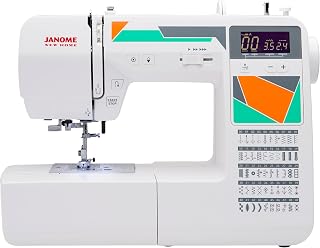
Singer 6600C Sterling Review: Computerized Speed With Low-Speed Questions
At a Glance
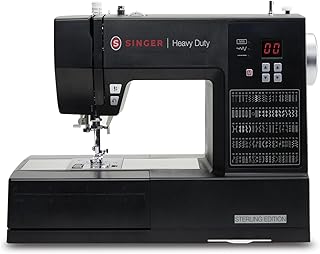
KEY FEATURES
- Computerized selection with LCD
- 215 applications and six one-step buttonholes
- Needle stop and drop feed
- 1,100-spm published maximum
PROS
- Push-button stitch selection and recommended settings reduce guesswork
- Owners report smooth work on rope bowls, vinyl and ordinary garments
- Needle stop and six buttonholes distinguish it from mechanical HD models
CONS
- Several owners describe poor control at the lowest pedal range
- Timing, feed-dog and bobbin-case faults appear in negative reports
- No separate speed-limiting slider is documented
Editorial Rating
Based on supplied customer reviews and verified product documentation
Price and availability subject to change
The 6600C Sterling adds an LCD, push-button selection, needle stop and six buttonholes to Singer’s fast domestic platform. That makes it more than a color or stitch-count variation. It also raises a precise question: can the delivered machine control its power slowly enough for the buyer’s work?
The screen reduces setup friction
The display presents the selected stitch and settings, while needle up/down supports corners and pivots. Owners coming from older machines describe the modern controls as a meaningful upgrade. These features make the 6600C a better garment and decorative choice than a basic mechanical HD when they work correctly.
Rope bowls show both sides of the design
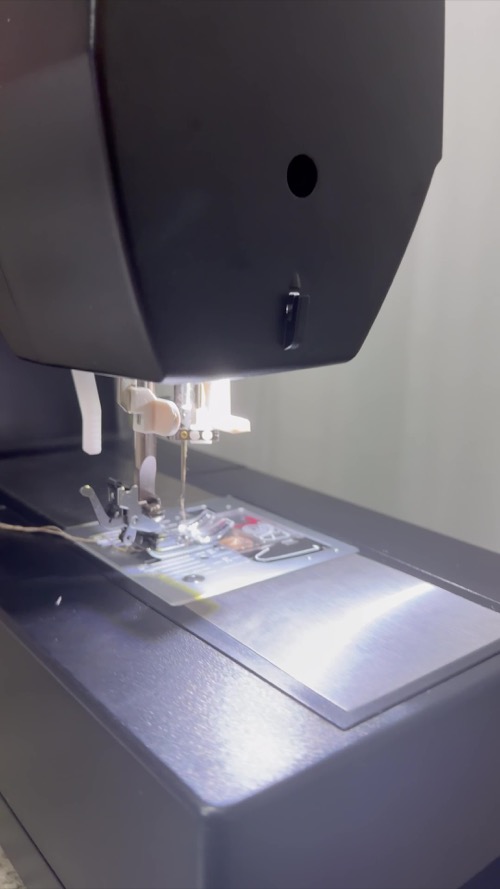
A positive owner bought the machine for rope bowls and found it easy, quiet enough and good value. Other owners report marine vinyl and leather success. A sharply negative account says the pedal jumps to high speed and the bobbin case can be struck when heavy work shifts the setup. The machine can have power without offering ideal low-speed finesse.
A seven-day control audit
- Day one: thread, wind and sew every basic direction on stable cotton.
- Day two: test one-stitch starts, reverse and needle stop.
- Day three: lower and restore the feed dogs exactly as the manual directs.
- Day four: make buttonholes in stabilized fabric.
- Days five to seven: repeat the planned thick-material seam at controlled speed.
Who should stay mechanical?
If a buyer wants four basic feet, direct dials and no display, the 4423 is simpler. The 4452 packages more thick-material accessories. The 6600C earns its premium only when its digital settings, needle stop and buttonhole range appear in real projects—and only when the specific unit passes the slow-speed test.
Pros & Cons Analysis
Based on supplied customer reviews and verified product documentation
Pros
- The computerized display shows stitch information and recommended settings.
- The 100 built-in stitches behind 215 applications provide more creative range than the mechanical Singer HD models.
- Needle up/down, drop feed and six one-step buttonholes add real workflow control.
- Positive supplied owners describe smooth operation on rope bowls, marine vinyl and leather-like materials.
Cons
- One detailed owner says the pedal behaves almost like a single fast speed, which makes thick transitions harder to control.
- Several reports describe out-of-time machines, feed dogs that would not recover or defective threaders.
- A high published maximum does not guarantee high torque at an intentionally slow start.
- The exact Amazon listing is a Sterling accessory package, so included extras should be inventoried separately from core machine specs.
Our Verdict
Computerized convenience, mechanical acceptance test
The 6600C is the Singer Heavy Duty model to consider when needle stop, digital selection and buttonhole variety matter as much as motor speed.
Its display, 100 built-in stitches, six one-step buttonholes and 1,100-spm ceiling create a broader workflow than the dial-controlled 4423/4432/4452 family. Positive owners use it for rope bowls, vinyl and ordinary sewing and describe the operation as smooth.
The slow end matters more than the fast end
- Practice one-stitch starts and corners before testing dense material.
- Confirm feed dogs rise after the prescribed handwheel movement.
- Run all six buttonhole routines and several widths during the return period.
Decision
Choose the 6600C for a sewist who wants computerized guidance inside a familiar domestic heavy-duty body. Skip it if exceptionally gentle pedal control is essential or if thick production seams are the primary job. The 54 supplied owner reports contain enough timing, feed and early-failure accounts to justify a cautious rating. A properly functioning unit can be versatile; a misadjusted one should be exchanged rather than “broken in” through months of frustration. Record a slow-start video during testing if pedal behavior seems abnormal, and save it with the receipt.
Frequently Asked Questions
Is the Singer 6600C computerized?
Yes. It uses push-button stitch selection and an LCD that displays the stitch and settings.
How many built-in stitches does it have?
The Sterling model is sold with 100 built-in stitches delivering 215 listed applications, plus six one-step buttonhole styles.
Does it have a speed slider?
Singer publishes a 1,100-spm maximum, but the official model page does not document a separate electronic speed-limiting slider. Speed is primarily controlled by the pedal.
Can it sew rope bowls and vinyl?
Some supplied owners report success with rope bowls, marine vinyl and leather-like material. Those reports do not define a maximum capacity, so test the exact stack and use the correct needle.
What failures appear in the reviews?
Negative supplied accounts include abrupt pedal response, timing problems, feed dogs that did not operate correctly, a failed needle threader and early breakdown.
Technical Specifications
| Machine class | High-speed domestic computerized sewing machine |
|---|---|
| Control type | Computerized buttons and LCD with foot control |
| Primary functions | Garments, home décor, quilting and decorative sewing |
| Built-in stitches / applications | 100 stitches / 215 applications |
| Maximum sewing speed | 1,100 stitches per minute |
| Speed control | Foot control; separate limiter not documented |
| Maximum stitch width | Adjustable; maximum not published on current US page |
| Needle stop up/down | Yes |
| Needle threader | Built in |
| Bobbin / looper system | Top drop-in Singer Class 15 transparent bobbin |
| Workspace right of needle | 6.4 inches |
| Included presser feet | All-purpose, zipper, buttonhole, blind-hem and satin-stitch feet |
| Buttonholes / eyelets | 6 one-step styles |
| Extension table | Optional |
| Feed-dog control | Drop feed |
Juki HZL-F600 Review: Box-Feed Precision With a Serious Learning Curve
Brother SE700 Review: Accessible 4×4 Sewing and Embroidery
Bernette B37 Review: Versatile Everyday Sewing With Clear Limits