Janome Memory Craft 9850 Review: Capable Combo, Demanding Bobbin Care
At a Glance
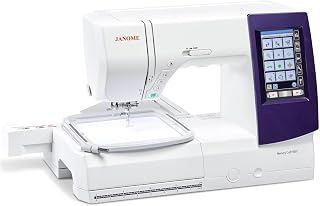
KEY FEATURES
- 200 sewing stitches and 175 embroidery designs
- 6.7 × 7.9-inch maximum embroidery field
- USB design transfer and full-color touchscreen
- Automatic tension, cutter and 1,000-spm sewing
PROS
- Owners like the smooth 9 mm sewing stitches and clear on-screen guidance
- The larger-than-5×7 field gives embroidery room without a huge cabinet
- Switching between ordinary sewing and embroidery is straightforward
CONS
- Several owners struggle with bobbin-case seating or bobbin winding
- The needle threader receives repeated complaints
- It uses USB rather than built-in wireless transfer
Editorial Rating
Based on supplied customer reviews and verified product documentation
Price and availability subject to change
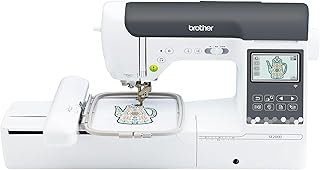
The Memory Craft 9850 is a genuine two-workflow machine. Its ordinary sewing side reaches 1,000 stitches per minute, offers 200 stitches and uses automatic tension; the embroidery side adds two useful hoops and a field larger than the entry-level 4×4 class. The tradeoff is a lower-thread system that demands correct handling.
The sewing side deserves equal billing
Owners mention smooth running, beautiful decorative stitches and on-screen prompts that name the foot or setting. A sewist replacing an older mechanical machine can keep making garments while learning embroidery, rather than maintaining two unfamiliar machines immediately.
A field that changes what fits in one hooping
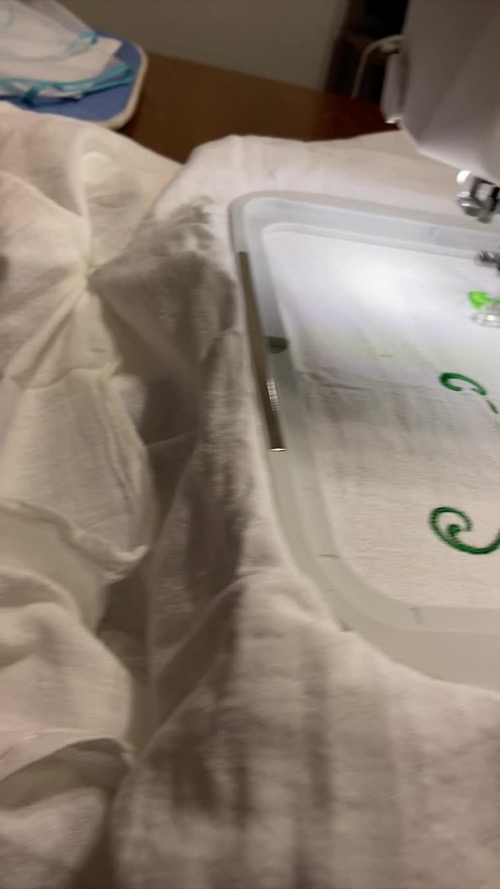
The 170 × 200 mm field accommodates designs that exceed the common 4×4 and 5×7 boundaries. It does not create multi-needle production: every color stop still needs attention, and hats or assembled bags may remain awkward to hoop.
Owners praise the manual and touchscreen prompts when moving between sewing and embroidery.
Several owners describe reseating, winding or lower-thread failures.
Build a bobbin routine before a design library
- Use the specified bobbin and wind it evenly.
- Photograph the correctly seated case before the first cleaning.
- Thread with the presser foot raised so the upper thread enters the tension path.
- Run an included design on stabilized cotton before importing a custom file.
A buyer who depends on the automatic threader should also test it with the intended needle and thread. One owner with limited vision says the feature never worked reliably; other buyers do not report that problem. Essential convenience features deserve repeated acceptance testing.
When a dedicated machine is better
If regular sewing already has a permanent station, an embroidery-only model avoids converting the bed and can remain threaded for one workflow. If embroidery is occasional and always small, a less expensive 4×4 combo may be enough. The MC9850 earns its place when both sewing quality and the 6.7 × 7.9 field prevent an immediate second-machine purchase.
Pros & Cons Analysis
Based on supplied customer reviews and verified product documentation
Pros
- Supplied owners describe the screen prompts and manual as approachable.
- The 200-stitch sewing side is substantial enough to serve as a primary domestic machine.
- Two included hoops cover 5.5-inch-square and 6.7 × 7.9-inch work.
- Owners praise the look of the 9 mm decorative stitches and the machine’s smooth operation.
Cons
- Multiple supplied accounts describe the bobbin case moving, failing to stay seated or being difficult to reinstall.
- The built-in needle threader does not work reliably for every owner, including one buyer who needed it for limited vision.
- A few reports describe fabric being pulled into the needle plate or projects interrupted by lower-thread problems.
- USB transfer is functional but less convenient than a current wireless ecosystem.
Our Verdict
The combo case is credible
The MC9850 is one of the few combination machines here whose regular-sewing side does not feel like an afterthought.
It pairs 200 sewing stitches, automatic tension, a 9 mm maximum width and 1,000-spm ceiling with a 6.7 × 7.9-inch embroidery field. Owners use it as a primary sewing machine and appreciate the guided transition into embroidery. That makes it a sensible single-station choice for garments that will regularly receive names, motifs or appliqué.
Maintenance tolerance is part of fit
- Learn the exact bobbin-case orientation before removing it for cleaning.
- Test the needle threader repeatedly if vision or dexterity makes it essential.
- Keep the correct bobbins, needles and stabilizer dedicated to the machine.
Final choice
Buy the MC9850 when the larger field and full sewing capability will both be used, and when USB transfer is acceptable. Skip it for embroidery-only production, phone-first design transfer or a buyer who wants no interaction with bobbin setup. The 35 supplied reviews give meaningful owner coverage but also a consistent warning: when the lower-thread path is wrong, the machine can derail a project quickly. A dealer demonstration or a very deliberate return-window test materially improves the purchase.
Frequently Asked Questions
What is the Janome MC9850 embroidery area?
Janome publishes a maximum embroidery area of 6.7 × 7.9 inches, or 170 × 200 mm.
Can the MC9850 work as the only sewing machine?
Yes. It has 200 sewing stitches, automatic tension, a 1,000-spm ceiling, a free arm and ordinary presser-foot controls, so the sewing side is more than a minimal add-on.
How do designs transfer to the machine?
The documented transfer method is USB. It supports Janome JEF and JEF+ embroidery formats.
What problem appears most often in owner feedback?
Bobbin-case seating and lower-thread handling are the clearest recurring concerns. The needle threader also receives several negative comments.
Who should not buy this combo?
Skip it if you need multi-needle color changes, cap production, wireless transfer or a machine dedicated solely to embroidery volume.
Technical Specifications
| Machine class | Domestic sewing and embroidery combination machine |
|---|---|
| Control type | Computerized color touchscreen |
| Primary functions | Garment sewing, quilting and programmed embroidery |
| Built-in stitches / applications | 200 sewing stitches; 175 embroidery designs |
| Maximum sewing speed | 1,000 stitches per minute |
| Speed control | Slider, start/stop and foot control |
| Maximum stitch length | 5 mm |
| Maximum stitch width | 9 mm |
| Needle stop up/down | Memorized |
| Needle threader | Built in |
| Bobbin / looper system | Top-loading full rotary hook |
| Workspace right of needle | 8.1 inches |
| Included presser feet | Sewing, buttonhole, satin, zipper and embroidery feet among standard set |
| Buttonholes / eyelets | 6 one-step buttonholes |
| Extension table | Optional |
PooLin EOC06 Review: An 11×7.9 Field With Support-Dependent Setup
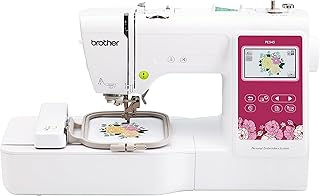
Brother PE545 Review: A Friendly 4×4 Embroidery Starting Point
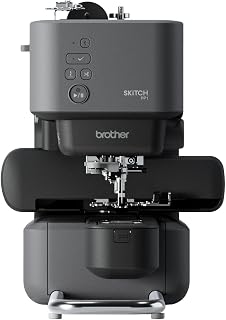
Brother Skitch PP1 Review: App-First Embroidery With Tradeoffs