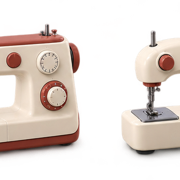
Verdanika 725 Review: Easy Storage, Demanding Setup
At a Glance
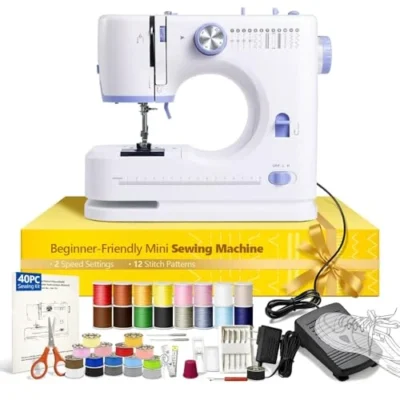
KEY FEATURES
- Compact tabletop model 725
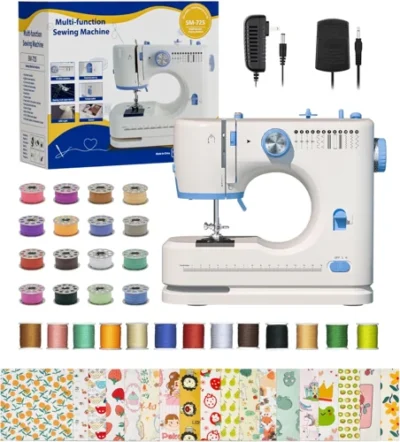
- 12-pattern selector pictured
- Low/high switch and external pedal
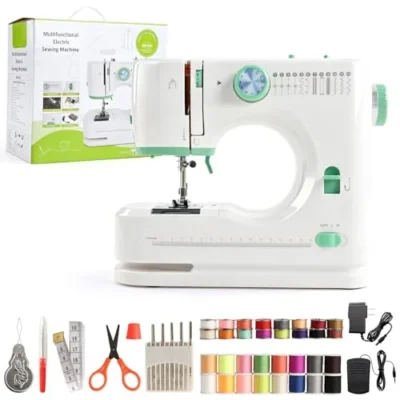
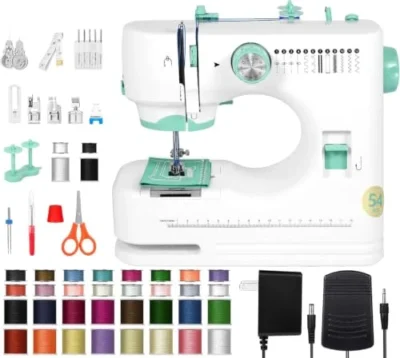
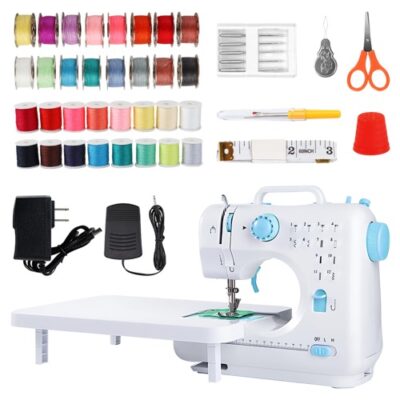
- Thread and bobbin starter kit advertised
PROS
- Owners value compact storage and easy transport
- Completed light repairs and learning projects are reported
- Filled bobbins and matching thread simplify gathering starter supplies
CONS
- Threading can be cramped and difficult to learn
- Folded seams and thicker materials caused stalls or jams for owners
- Some owners find the lightweight machine less stable
- Separate owners report selector alignment or limited stitch-length differences
- One experienced owner reports poor supplied thread quality
Editorial Rating
Based on supplied customer reviews and verified product documentation
Price and availability subject to change
The white Verdanika 725 appeals to people who want to clear the table after a small sewing job. Owners describe storing it in an apartment, moving it between rooms and taking it on trips. The harder decision is whether that convenience compensates for cramped threading and inconsistent results at thicker parts of a seam.
Buying back table space can cost setup time
One apartment owner finds the machine easy to store and praises its stitch results. Another uses it for travel because a larger machine is impractical to carry. A returning sewer also describes making a pillowcase with the supplied accessories. These accounts give the portable format a useful purpose beyond simply being small.
The awkward part can come before sewing
An experienced owner finds the thread path fiddly, the supplied thread prone to splitting, and the space around the needle hard to reach. Another says learning to thread it was difficult despite acceptable sewing once set up. Those reports conflict with owners who found threading easy; they matter if the machine will be put away and set up again frequently.
For occasional repairs, compact storage can be valuable. But if your hands or eyesight make small threading points difficult, a larger machine may be more convenient in use even when it occupies more shelf space.
A straight run and a folded corner are different jobs
Where the reports are encouraging
Owners describe hemming pants, fixing seams, making a pillowcase and learning with small projects. One family reports a completed blanket and shirt. Those are actual project accounts, though the fabrics and seam construction are not specified well enough to make them universal capability claims.
Where the work stops
A detailed negative account describes sewing straight sections of thin pillowcase fabric successfully, then struggling at folded corners and overlaps. Another owner reports a stall at a jeans side seam. A third describes repeated jamming while trying to attach jersey to an elastic waistband.
The useful distinction is the seam you need to finish. Thin fabric can still become difficult where layers overlap, and a machine that completes one hem may struggle with another construction. Our mini-machine denim guide explains why folded hems and flat fabric should not be treated as equivalent.
Teaching can work, but it is not effortless
One owner helped a niece learn before letting her practice independently; another says children completed simple straight-stitch projects alongside an adult. An experienced sewer initially found the machine frustrating, then liked it more after spending several hours with it. These experiences support guided practice, not a claim that a small machine is inherently safe or easier for every beginner.
- Allow time for familiarization: several positive accounts describe getting comfortable with threading or tension, rather than immediate mastery.
- Keep the first goal modest: the strongest repeated use case is light mending and practice, not replacing a daily garment-making machine.
- Separate accessories from ease of use: filled bobbins and matching thread are convenient, but the detailed thread-quality complaint shows that a large kit does not guarantee an uncomplicated start.
Light to carry does not always mean steady to sew on
Owners disagree about stability. Some find the machine sturdy, while a travel user says it is less stable than a heavier machine. Another describes sliding or rattling at higher speed. If your sewing involves guiding material that resists feeding, those accounts give a reason to prioritize a stable setup over minimum weight.
There are also separate control complaints: one owner says the stitch-selector pointer does not line up cleanly, and a different owner finds little useful difference between the selected stitch lengths. They do not establish that every unit behaves this way. They do weaken the case for choosing the 725 for fine detail merely because it offers multiple patterns.
This is the white model 725, not the black 505
This review covers B0GXQFC6JW, listed as model 725. Its product image shows a different body and a single-row stitch chart compared with the black model 505 covered in our existing Verdanika review. Both advertise 12 patterns. The catalog and images distinguish the offers; they do not establish which machine is more reliable or justify moving customer accounts between them.
Pros & Cons Analysis
Based on supplied customer reviews and verified product documentation
Pros
- It fits a sewing space that must be cleared afterwards. An apartment owner values easy storage, and a traveler describes taking it by car and air. This supports the portable use case without establishing the protection needed for every trip.
- Light sewing has concrete outcomes. Accounts describe hems, seam repairs, a pillowcase and supervised practice. The examples justify considering it for modest projects; unspecified fabric and seam details prevent a general garment or quilting recommendation.
- Ready-wound supplies are a convenience. Several owners appreciate matching thread spools and filled bobbins. This reduces the initial gathering of materials, but does not establish thread quality or eliminate subsequent threading and bobbin setup.
Cons
- The small thread path can outweigh simple controls. A detailed account describes awkward access around the needle and thread guides, while another finds the instructions inadequate for learning to thread. Other owners find setup easy, so the limitation is a material difference in experience rather than a universal failure.
- Seam transitions can expose the machine’s limits. Owners describe jeans-side-seam stalls, difficulty at thin-fabric overlaps, and jamming on a jersey-and-elastic repair. Those specific failures qualify the successful hem reports. They do not provide a measured thickness limit or establish the cause of every jam.
- Portability has a stability tradeoff. A travel user finds it less stable than larger machines, and another reports movement or rattling at higher speed. This concerns handling during work, distinct from the advantage of lifting and storing the machine.
- Pattern selection did not deliver the expected control for everyone. One owner reports an offset selector pointer; another describes similar stitch lengths across selections. These are separate unit experiences, not proof that the pictured chart is false, but they matter for precise decorative or fine sewing.
- The thread kit is not an unqualified benefit. One experienced owner reports splitting and breaking supplied thread. That complicates threading and can interrupt sewing; it should not be attributed to the machine’s feed mechanism without further evidence.
Our Verdict
Choose for storage convenience only when the jobs stay modest
The 725 has a reasonable role in light repairs and guided learning where a full-size machine would be difficult to keep out. Completed projects and positive storage experiences support that role. Cramped threading, fabric-overlap failures and control complaints make it a less convincing shortcut to effortless sewing.
- Worth considering: occasional simple repairs, practice with help available, and a table that needs to be cleared between sessions.
- Look beyond it: frequent garment work, jeans side seams, demanding knit repairs or fine stitching where consistent adjustment matters.
For those workloads, compare the controls and working space of a full-size machine before paying for a compact kit.
Editorial rating: 3.1 out of 5
The score is an editorial assessment of the supplied experiences, not a laboratory result or Amazon star average. The four equally weighted judgments are:
- Stitch quality and control — 3.2: useful light-work outcomes are qualified by seam-transition failures and adjustment complaints.
- Ease of setup and use — 2.9: easy-start reports coexist with detailed threading frustration and a significant learning period.
- Fabric and project fit — 3.1: occasional light repairs and practice have support; bulky seams and some knit repairs are weak points.
- Build, accessories and value — 3.2: portability and a useful starter assortment are offset by movement and thread-quality complaints. This weighs practical usefulness, not a current-price comparison; long-term service is unestablished.
Frequently Asked Questions
Is this the same model as the black Verdanika 12-stitch machine?
No. This exact offer is B0GXQFC6JW, catalog model 725. The black offer reviewed separately is B0FNXDTN8F, model 505, with a different pictured body and chart.
Is it easy to thread?
Accounts conflict. Some owners find setup easy; others describe cramped access, poor instructions or low-quality thread. Do not assume a small machine removes the learning needed for threading.
Can it repair jeans or stretchy clothing?
There are reports of stalls at jeans side seams and jams on jersey combined with elastic. Successful lighter repairs do not establish performance on those constructions.
Does the starter kit make it ready for every project?
No. Filled bobbins and matching thread are convenient, but one experienced owner reports poor thread quality. The kit does not establish suitability for all fabrics or eliminate learning setup.
Technical Specifications
| Exact model | 725 (Amazon catalog model) |
|---|---|
| Built-in stitches / applications | 12 patterns advertised and numbered in product image |
| Speed control | OFF / L / H switch pictured; two settings advertised |
| Primary functions | Light repairs and guided learning projects |
| Foot control | External pedal pictured; proportional response not verified |