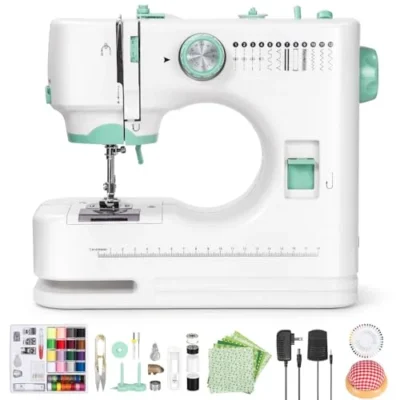
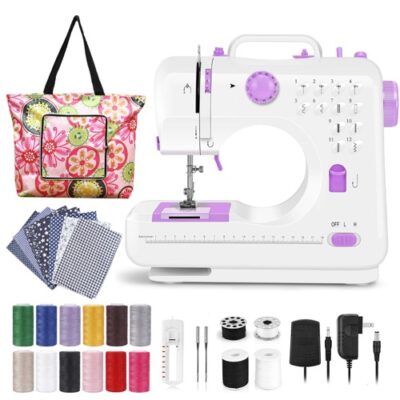
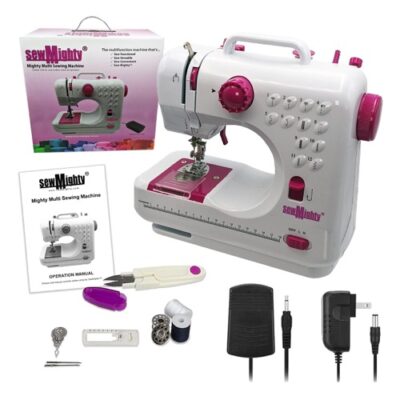
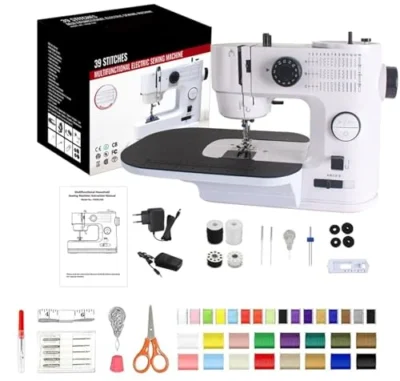
BJSWNLY 12-Stitch Review: Light Repairs, Short Reach and Fiddly Threading
At a Glance
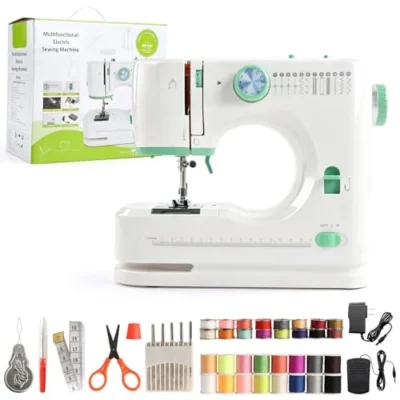
KEY FEATURES
- 12 listed stitch selections
- Reverse sewing listed
- LED and bobbin winding listed
- Foot-pedal and body-switch operation
PROS
- Owner completes light hemming and a bag lining
- Battery operation is useful to one buyer
- Compact storage suits occasional repairs
CONS
- Short lead and spool fit restrict setup
- Pedal modes can be confusing
- Persistent tension and threading problems are reported
Editorial Rating
Based on supplied customer reviews and verified product documentation
Price and availability subject to change
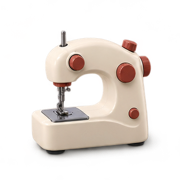
The BJSWNLY 12-selection mini can support light household sewing, but its small controls deserve as much attention as its stitch chart. Owners report a light-trouser hem and tote-bag lining, alongside short leads, restricted spool fit and a machine that would not stitch properly even with experienced help.
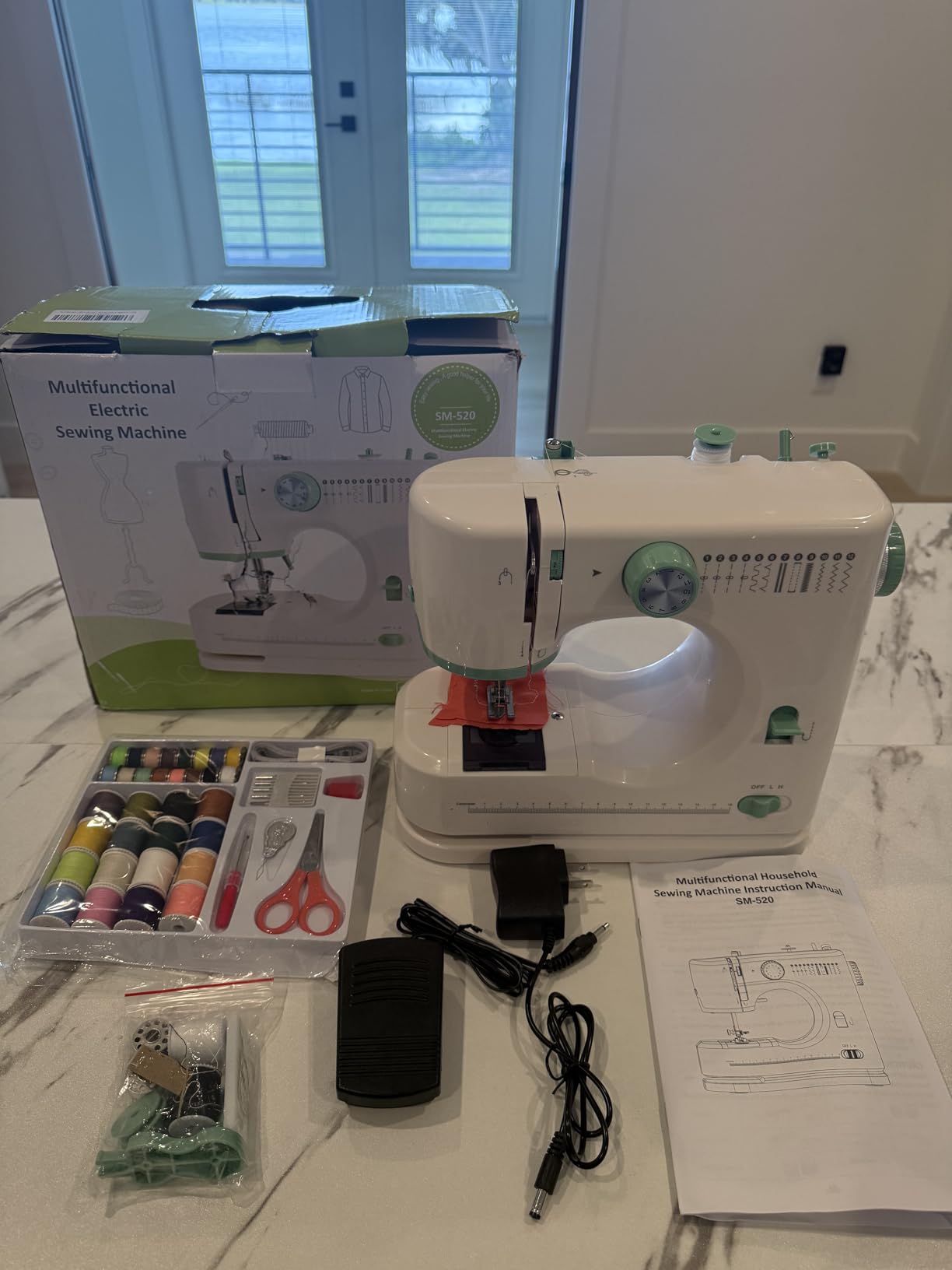
A light hem and a bag lining are useful examples
One detailed owner completed both tasks and found the slower operation helpful. The same account describes trouble crossing a denim seam and fiddly bobbin handling. Keeping those outcomes together gives a more useful assessment than treating the successful hem as proof that the machine handles any pair of jeans.
- Small repairs: there is evidence of useful light sewing.
- Seam intersections: folded or joined sections can demand more than a flat sample.
- Changing thread: bobbin access and compatible spool size remain part of every future project.
The controls do not behave like every full-size machine
An owner describes a pedal that works with the body switch off, while low and high body-switch positions produce continuous operation. Another could not obtain the expected second pedal speed. These accounts establish a need to understand the exact modes, not a measured proportional pedal response.
Short leads and small spools affect daily use
One owner estimates the lead at 27 inches; another also calls it short. A detailed account reports restricted spool fit. These are practical concerns for a machine bought to move between rooms: the outlet, table and available thread all need to suit the setup.
Not every difficult start is a lesson to push through
A buyer describes tight tension, skipped stitches and thread tangling that persisted despite help from an experienced family member. Another finds the manual faint. Neither account establishes a universal defect, but it would be unfair to dismiss all trouble as inexperience.
How to read the advertised 12 selections
The offer includes stitch settings as well as shapes; an owner identifies several straight-stitch lengths. It is not a verified inventory of 12 fundamentally different sewing operations. Reverse and twin-needle support are listed separately.
The stitching troubleshooting guide covers basic checks without assuming every jam can be corrected by rethreading.
Pros & Cons Analysis
Based on supplied customer reviews and verified product documentation
Pros
- Useful work beyond a demonstration: the hem and lining show what a limited household role can look like. The same owner’s denim difficulty keeps the recommendation appropriately narrow.
- A portable power option has some support: an owner reports successful battery use. That does not establish running time or performance equivalence to the adapter.
- Easy storage is a real attraction: occasional users value a machine that can be put away. The complete working arrangement still needs room and a suitable power position.
Cons
- The small setup can be restrictive: cord reach and spool clearance affect routine use, not just unpacking. A nominally portable body does not solve those constraints.
- Starting modes require understanding: switch-like pedal observations and continuous body-switch operation challenge assumptions carried over from another machine. A proportional speed range is not established.
- Some trouble persists with help: the experienced-helper account describes unsuccessful attempts to obtain normal stitches. The evidence does not justify treating every problem as beginner error.
Our Verdict
A light-repair option with a setup burden
Consider this BJSWNLY when the projects are modest and the short-lead, small-spool arrangement suits your table. The successful hem and lining give it a concrete use case.
For thick seam crossings, comfortable variable-speed control or an uncomplicated first lesson, investigate a more accommodating machine. Those needs are not answered by 12 settings or a twin-needle claim.
About the editorial rating
Editorial assessment, not an Amazon customer average or a hands-on test. Concrete light sewing earns credit; persistent stitch trouble and constrained controls, cord and supplies reduce everyday usability confidence.
Frequently Asked Questions
Does the pedal have continuously variable speed?
That has not been verified. Supplied accounts describe operating modes that differ from familiar full-size pedal control.
Can I use any full-size thread spool?
An owner reports restricted fit. Confirm holder clearance rather than assuming every spool will fit.
Is battery operation supported?
One supplied owner reports successful battery use; runtime and equivalence to mains operation are not established.
Technical Specifications
| Built-in stitches / applications | 12 selections, including length variations |
|---|---|
| Speed control | Low/high listed; proportional pedal response unverified |
| Reverse sewing | Listed |
| Lighting | LED listed |
| Foot control | Included |
| Weight | 4.6 lb listed |
| Dimensions | 12 × 11 × 6 inches listed |
| Twin-needle support | Advertised; stitch restrictions not independently verified |