Auggs Green 16-Application Review: Small Repairs with Serious Failure Reservations
At a Glance
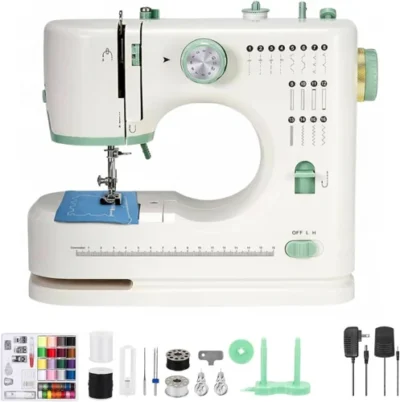
KEY FEATURES
- Green 16-application offer
- 42-piece accessory kit advertised
- Low/high selected speeds
- Twin needles advertised
PROS
- Shared listing feedback includes useful small repairs
- Compact format appeals for occasional portable work
CONS
- Electrical-failure reports materially weaken the recommendation
- Control and threading can frustrate beginners
- Bulky seams remain a poor reason to choose it
Editorial Rating
Based on supplied customer reviews and verified product documentation
Price and availability subject to change
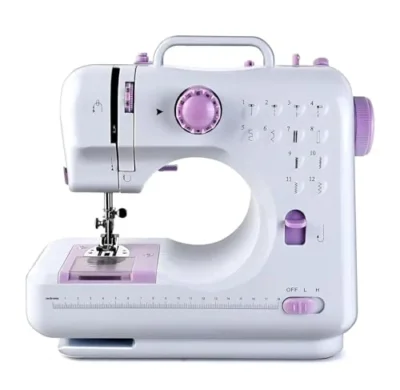
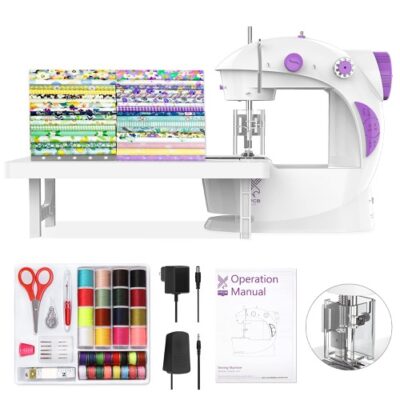
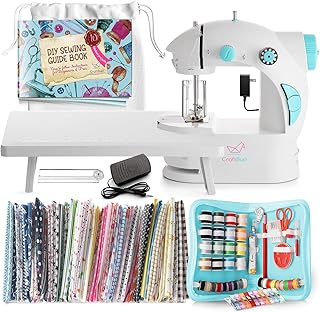
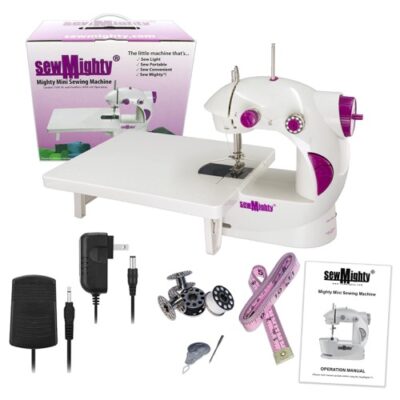
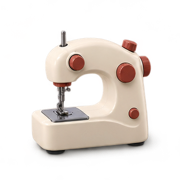
The green Auggs offer is marketed as a compact 16-application machine with a 42-piece kit. Its customer pool contains useful light-repair experiences, but also electrical-failure reports and explicitly different 12-stitch variants. That combination calls for a cautious assessment rather than treating the whole pool as proof of this green machine’s capabilities.
The strongest positive case is a small repair away from the main machine
A parent describes repairing a torn costume at a dance event. Another owner uses a small machine for household mending instead of bringing out a larger one. These accounts illustrate why a portable machine can be useful, but their variant details do not establish a green-specific performance advantage.
Useful scope
A short hem, costume adjustment or light craft seam is a plausible reason to consider this format. The project has to fit the working area as well as the nominal stitch selection.
Where the idea breaks down
Owners describe difficulty with denim, bulky seam transitions and tidy topstitching. A machine that starts a flat sample may still fail at the joined section that finishes a repair.
The adverse reports change the recommendation
An account identifying the green 16-stitch offer describes an immediate electrical fault and no further testing. Other supplied accounts report smoke, a tripped breaker or operation that did not stop as expected. We cannot independently establish their causes or prevalence, and mixed variants limit how broadly each can be applied. They are still too consequential to omit.
Control and setup are separate from portability
- One beginner wanted a slower setting and clearer explanations of the stitch choices.
- An owner found threading cramped for hands and eyes.
- Short-cord and repeated thread-break accounts weaken the idea of effortless setup anywhere.
The current green offer lists low/high speed selection and a pedal. Those features do not establish a gradual pedal response or a measured minimum speed.
Which customer claims are kept separate?
Several comments explicitly describe purple machines or 12 stitches. We do not use them to verify the green offer’s chart, accessory contents or stitch total. Similar praise repeated elsewhere in the supplied catalog is not counted as independent support either. The listed 16 applications should not be read as 16 independently verified stitch patterns.
Pros & Cons Analysis
Based on supplied customer reviews and verified product documentation
Pros
- A practical portable role exists: the costume-repair example explains the appeal of having a small machine available away from home. Its uncertain variant prevents using that outcome as proof of green-model reliability.
- Less setup space can help occasional sewing: customers value storing a mini and bringing it out for short tasks. The complete kit, power lead and fabric still need a usable workspace.
Cons
- Fault reports outweigh gift appeal: the green-specific electrical account and other serious reports prevent an uncomplicated beginner recommendation. They are attributed experiences, not a calculated risk rate or an established engineering diagnosis.
- A small machine can be harder to manage: requests for a slower pace and complaints about cramped threading show why fewer controls do not automatically make learning easier.
- Seam transitions remain uncertain: reported denim and folded-seam trouble means a useful straight section cannot be extrapolated to the whole repair. Buying for heavier work would overreach the evidence.
Our Verdict
Not a first-choice starter on this evidence
Auggs has the appeal of a compact repair kit, and the shared customer pool includes successful sewing. The exact green offer’s unresolved failure evidence is the more important consideration.
We would choose a machine with clearer model-specific support and operating documentation for a new learner, particularly when the intended user is a child. If compact storage is essential, compare the mini-machine shortlist by control and project requirements rather than application count.
About the editorial rating
Editorial assessment, not an Amazon customer average or a hands-on test. Portable repair potential receives limited credit. Exact-offer electrical concerns, mixed-variant evidence and handling reservations substantially limit recommendation confidence.
Frequently Asked Questions
Are all supplied accounts about the green 16-application version?
No. Some explicitly identify purple or 12-stitch variants. Their claims are not treated as exact green-model specifications.
Does 16 applications establish 16 distinct stitch patterns?
No. The advertised count has not been independently reconciled to a complete chart of distinct patterns and settings.
Is this recommended as a first machine for a child?
Not on the available evidence. Serious failure accounts and control difficulties outweigh the compact kit’s appeal for that role.
Technical Specifications
| Built-in stitches / applications | 16 applications advertised; distinct-pattern total unverified |
|---|---|
| Speed control | Low/high listed; minimum speed unverified |
| Foot control | Included |
| Twin-needle support | Advertised; approved stitch combinations not verified |
| Weight | 5 lb listed |
| Dimensions | 11 × 9.5 × 4.9 inches listed; not independently measured |