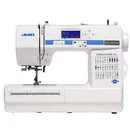
The Juki HZL-LB5100’s extra stitches are worth considering when they cover repairs or embellishments you actually perform. Moving from the LB5020’s 20-pattern library to 100 patterns does not, by itself, buy more sewing speed. The useful distinction is what the expanded menu lets you select.
Look first for darning and reinforcement
The LB-series manual separates the 100-stitch model’s functions from those of the 20-stitch version. Its broader set includes darning, tacking and eyelet operations, alongside additional decorative choices. Those are more concrete reasons to upgrade than simply multiplying the headline count.
Think about a pocket corner, a worn area or a decorative opening you plan to make. Determine which documented operation addresses it, which foot it requires and whether you will use it repeatedly. A programmed repair pattern still needs correctly positioned fabric and a suitable setup; it is not an automatic diagnosis of the damage.
The specifications that do not increase
Juki’s LB5100 brochure gives a maximum speed of 700 stitches per minute, three buttonhole types, a 7 mm maximum stitch width and a 5 mm maximum stitch length. The stated weight is 5.6 kg. These figures prevent a misleading assumption that the larger library necessarily means a larger or faster machine.
Speed adjustment, start/stop operation, needle up/down and lock stitching provide the everyday controls. A wide table is an optional accessory rather than an automatic inclusion. The LB5020 review is the appropriate comparison if those shared controls matter more than the extra patterns.
Make one utility sample and one decorative sample
A useful demonstration can be short. Choose an operation from the expanded repair menu and follow the manual on scrap. Then make a decorative row using the specified foot and suitable backing or stabilizer. Check whether selecting and adjusting each pattern feels clear enough to repeat without searching through the whole book.
That exercise separates genuine use from novelty. If your projects do not benefit from either sample, the additional library may not justify paying more. If darning or reinforcement is a recurring task, however, it may be the reason to choose the LB5100 rather than another compact machine.
Stay within a domestic sewing brief
The pattern range is not proof of industrial feeding, automatic thread trimming or the capabilities of Juki’s DX line. Assess bulky materials and large projects separately, and do not force a stalled machine. Purchase decisions should also include the exact foot package and available service, especially when considering older stock.
This is a source-based assessment of the LB5100’s functional differences. The sample exercises are proposed checks; no measured stitch-quality or durability results are claimed.