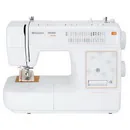
The Husqvarna Viking H Class E20 is a mechanical garment-and-repair machine with an adjustable stitch setup and a one-step buttonhole. Its traditional removable bobbin case is a more useful buying detail than a generic promise of “easy threading.”
Begin underneath the sewing bed
The E20 manual shows a front-access bobbin case that is removed for loading. It is not a top drop-in system. If you already understand this arrangement, it may feel familiar; if you are learning from a top-loading-machine video, the different access and threading route deserve attention.
The same manual describes bringing the bobbin thread up before sewing. Follow that sequence instead of assuming a quick-set tail cutter has already positioned it. The threading guide explains the general distinction without replacing the E20 diagram.
A hem, an edge and a buttonhole
For ordinary seam construction, the E20 provides stitch selection plus separate length and width adjustments. Its manual gives a 5 mm maximum zigzag width and documents both basic and stretch sewing. Select settings for the fabric rather than carrying a dense zigzag setup into the next straight seam.
For garment closures, the E20 uses a one-step buttonhole process with a buttonhole lever. That saves the operator from manually selecting four stages, but positioning, stabilization and a practice opening remain necessary. Check that the correct foot is present on a secondhand or incomplete offer.
For fabric handling, the machine provides presser-foot pressure adjustment and a feed-dog lowering lever. Those are distinct controls: pressure changes the foot’s contact, while lowered feed teeth are for specifically documented techniques. Neither is an invitation to force a thick seam.
Do not import E10 assumptions
A similarly named H Class machine can have a different buttonhole workflow or equipment. Use the E20’s own parts diagram and instructions when selecting feet, learning the lower-thread route or following maintenance guidance. A familiar white casing is not sufficient evidence of matching internals.
We also avoid assigning a modern lighting specification to every E20 from a current retailer description. Check the individual unit and the correct manual revision, particularly when replacing a light or buying a used machine from another market.
What would make this a good individual purchase?
- The model and electrical rating are clearly identified.
- The controller, bobbin case and required feet are supplied.
- Ordinary seams remain balanced after rethreading and a bobbin change.
- The one-step buttonhole completes correctly on a supported fabric sample.
- The seller explains returns and service rather than relying only on the brand name.
If those checks pass, the E20 offers a useful direct-control setup for domestic garments and repairs. If troubleshooting loops is the immediate issue, use the bunching diagnostic before treating the tension dial as the first remedy.
Reviewed against the H Class E20 instruction manual on September 9, 2026. We have not measured this model’s sewing performance or verified a current seller package.