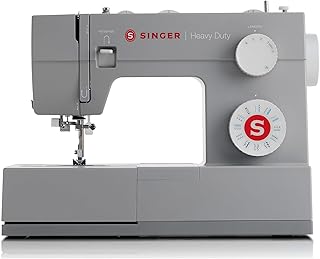
Singer 4423 vs 4452 is mostly a package comparison. Both use the same 1,100-stitch-per-minute mechanical concept, top drop-in Class 15 bobbin, 4-mm stitch length, 6-mm width and pedal-only speed control. Choose the 4452 when its additional feet, clearance plate and needles are items you would otherwise buy. Choose the 4423 when the bundle premium exceeds the value of those exact accessories.
First remove the features that do not change
These near twins share the same headline speed, stitch dimensions, bobbin class, one-step buttonhole workflow, free arm and lack of electronic speed limiting. Neither publishes a separate low-speed ceiling, automatic cutter or programmable needle stop. The comparison uses 93 supplied 4423 owner texts and 100 supplied 4452 texts, plus exact-model specifications; no physical site test was performed.
The 4452 upgrade lives in the carton
The 4452 lists 32 stitches or 110 applications, compared with 23 stitches or 97 applications on the 4423. The more consequential difference is its additional even-feed or walking foot, non-stick foot, clearance plate and heavy-duty needles. Those accessories can support certain layered or sticky-surface tasks, but they do not transform the internal platform into an industrial walking-foot machine.
Accessory value depends on the seams you actually make
Pay for the shared machine first
It provides the common high-speed mechanical foundation without forcing an accessory bundle.
Buy coordinated extras once
Its added feet and clearance plate can be cheaper and simpler than assembling the same kit separately.
Slow control remains pedal-dependent
A beginner who needs a fixed speed cap should compare computerized machines.
A walking foot can help move layered fabric more evenly, and a non-stick sole can reduce drag on some surfaces. Those are technique and accessory benefits, not permission to sew every thick material. Needle choice, seam bulk, presser-foot clearance and feed behavior still define the safe workload.
The owner files challenge the heavy-duty label in different ways
4423 owners report successful repairs and ordinary household sewing, but thick-material results are inconsistent. Threading accuracy, missing advertised bonuses and short service experiences appear in the evidence. The 4452 file includes denim, vinyl and webbing successes alongside tension, bird-nesting, skipped-stitch and early-failure reports. Neither sample justifies a universal durability claim.
The correct conclusion is narrower: the 4452 bundle may improve setup for certain projects, while the machine still requires careful threading and an honest domestic workload. The 4423 is not automatically weaker simply because fewer accessories arrive in the box.
Separate accessory assistance from permanent machine capability
The walking foot can help synchronize layers, the non-stick sole can reduce drag and the clearance plate can help the presser foot approach a raised seam. Each addresses a specific handling problem. None changes motor control, stitch geometry, workspace, bobbin class or the absence of an electronic speed limiter. That distinction prevents an accessory success from becoming an unsupported durability claim.
It also protects against bundle drift. Seller photos may show thread, needles, bags or feet that are promotional rather than standard. Save the exact listing at purchase, inventory the delivered carton and return an incomplete package promptly. The 4452 should win only on confirmed useful items, not a larger-looking product image.
If the two offers are close, give the 4452 credit only for the compatible feet and plate that match a planned seam. If the gap widens, price those same components separately for the 4423. This simple calculation turns a confusing model hierarchy into a transparent package decision.
Needles are consumables, so they should receive less long-term weight than a specialty foot that will be used repeatedly. Likewise, a clearance plate is valuable only for the specific raised seams it helps approach. Rank each bonus by expected monthly use, replacement cost and whether an equivalent is already in the sewing room. The result often makes the correct model obvious.
| Question | Better answer | Why |
|---|---|---|
| Do you need the walking and non-stick feet now? | 4452 | The standard package can avoid separate purchases. |
| Do you already own compatible specialty feet? | 4423 | Paying twice for accessories adds no machine capability. |
| Is the 4452 premium greater than the useful extras? | 4423 | The shared mechanical foundation dominates. |
| Do you need a fixed slow-speed ceiling? | Neither | Both are pedal-controlled without a limiter. |
Calculate the upgrade instead of guessing
Record the same-day price difference, then price only the 4452 accessories you would genuinely buy in compatible form. If that useful-accessory total exceeds the premium, the 4452 can be the better package. If not, the 4423 preserves the same core speed and stitch geometry for less. Do not assign value to a foot that will remain unopened.
Run the same acceptance test on both machines
- Confirm the exact model and package. Inventory every foot, plate, needle and power item against the seller listing.
- Thread from the manual. Small deviations can create nests or tension symptoms.
- Test pedal starts. Both machines should begin predictably at the lowest useful speed.
- Sew ordinary and intended layered samples. Use correct needles and avoid turning a domestic test into abuse.
- Make a buttonhole and reverse seam. Verify core functions before concentrating on the bonus feet.
The Singer 4423 review examines the shared platform without the larger package, while the Singer 4452 review separates its accessories from machine capability. You can also browse more mechanical sewing machines.