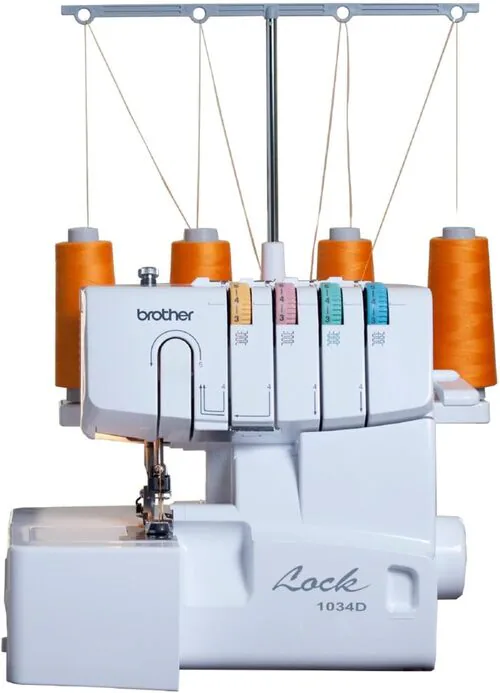
The 1034D is worth comparing when finishing raw edges has become a repeated task. It uses a different threading and cutting routine from an ordinary sewing machine, so the purchase should start with that workflow.
Overlock and rolled-hem functions
Brother’s 1034D specifications list three- and four-thread overlock options, narrow and rolled hems, differential feed and color-coded threading guides. These are the functions to compare with your projects; they are not evidence that the machine will be “zero stress” for every beginner.
Pros & Cons Analysis
Benefits and limits of the documented features.
Advantages
- Differential feed gives you an adjustment to evaluate when an edge stretches or gathers. It is more informative to see a sample on your fabric than to rely on a claim that all knits feed perfectly.
- The documented rolled-hem option offers an additional edge finish without choosing the machine by decorative stitch totals. Consider how often you would actually switch configurations.
Limitations
- This overlock feature set is not a coverstitch feature set. If parallel rows on a folded knit hem are the main requirement, compare the 2340CV.
- Noise, long-term reliability and recurring thread problems need evidence beyond the published feature list.
Our Verdict
Choose it for the edge-finishing routine
Shortlist the 1034D if its overlock functions match your sewing and manual threading is acceptable. Judge an existing unit by a complete demonstrated seam and the condition of its controls and accessories. Keep ordinary sewing tasks in the plan rather than treating a serger as a universal machine.